Cinnamon as an Aphrodisiac

Mentioned several times in the Bible, and in ancient Chinese writings, the fragrant spice known as cinnamon has been enchanting civilizations across the world.  Originally from Sri Lanka, cinnamon is derived from the inner bark of the cinnamon tree (part of the Evergreen family).  Cinnamon sticks, as we know them today, are pieces of the dried bark which naturally curls under heat.  These are then kept as sticks, or ground down into the powdery substance that most people use today.

The history of this well-traveled spice is quite colorful.  Those in ancient Egypt and Rome would use cinnamon for its sublime taste in various cuisines, and as incense.   It was also used for the embalming process during mummification, and taken medicinally.  The Romans would burn cinnamon as part of a funeral pyre, or in honor of the recently deceased.   During the Middle Ages, only the very elite could afford the spice, as most seasonings of that time where exorbitantly expensive.  Cinnamon was also valued for its preservative qualities when applied to meat, due to phenols which inhibit bacteria growth responsible for spoilage.  The fragrant aroma of cinnamon also helped to mask the stench of aged meat.

Cinnamon has many health benefits.  In addition to being a viable source of fiber, calcium, magnesium and iron, this natural substance can also lower cholesterol, aid in weight loss, and regulate blood sugar.  According to the U.S.  Department of Agriculture, use of cinnamon has been shown to suppress the growth of lymphoma and leukemia cancer cells.

From a feng shui perspective, cinnamon is very yin in essence, as are most spices.  Because it is more sweet than savory, its nature is even more yin than other seasonings.  As for the  elemental connection, it has  strong wood element, as it’s quite literally tree bark.  Its comforting brown hue is an example of the earth element.  I also feel that cinnamon has a bit of fire attached to it as well, as it conjures a natural warmth on the tastes buds.

Cinnamon has also been used throughout time as an aphrodisiac.  For both men and women, the use of cinnamon as part of one’s regular diet has been shown to naturally increase sex drive, due to its ability to  enhance blood circulation, gently heating up the body from the inside.  According to a study performed by the The Smell & Taste Research Foundation, located in Chicago, of the over two hundred scents tested on men, Cinnamon was the victor in causing and sustaining male arousal.   In feng shui terms, this makes complete sense.  Passion, romance, and sex are all controlled by the fire element.  The wood element feeds fire.  Cinnamon is wood, and therefore the use of this wooden spice assists in feeding the flames of passion.

There are many ways to add cinnamon to one’s way of living.  Below are the ones I personally use:

  • Sprinkle some on Hot Cocoa.
  • Sprinkle some on Vanilla Yogurt or Apple Sauce.
  • Add it to your Coffee!  Not only do I sprinkle it on top, but I mix a tablespoon of cinnamon in with the coffee grounds, when making a full pot.  It tastes sensational.
  • Cinnamon Toast.   I spread coconut oil over my toast, sprinkle cinnamon, and spread it all around.  Delicious and satisfying.
  • Aromatherapy.  Light cinnamon scented candles to heighten the romantic mood.  These are available from a variety of distributors, but the best time to buy this scent of candle is after the winter holidays; they’ll usually be on sale.
  • Mulled Wine and Sangria.   Whole cinnamon sticks are a great enhancement during autumn and winter.  Allow the stick to just lounge about the glass within the beverage; this adds a festive enticement to both beverages.  (This can work for other drinks as well)
  • Add to anything Pumpkin or Sweet Potato related.

And some other things I haven’t tried, but am going to:

  • Sprinkle some on Oatmeal.
  • Enchilada Sauce.  Add a teaspoon or two to canned (or fresh) enchilada sauce while it’s on the stove.  It adds a little mole flare to it.
  • Honey Tea.   One part cinnamon to two parts honey, combined in hot water, makes a delicious, healthy tea.  A tea bag could also be added  for further flavor.
  • Essential Oil.  Cinnamon scented oil is another way to influence a room’s chi and scent.
  • Cinnamon Buns.  Cinnamon buns are one of the best breakfast foods after a night of romantic bliss.  Those Cinnabon people are quite clever.
  • Sprinkle on top of Roasts, be it ham, pork, or lamb.
  • Lotion.  Various lotions and massage oils on the market today are cinnamon scented.  I need to purchase some.

Another way of using Cinnamon goes all the way back to biblical times – literally.   Proverb 7:17 is about a seductress luring a man to bed.  It indicates that the woman in question used cinnamon, myrrh, and aloe to “perfume” her chamber.   Aloe has a sweet, woody aroma, whereas myrrh has a very distinct, nutty scent.  Combining these two with enticing cinnamon, and you have an ideal olfactory recipe for creating a deeply sensual environment.  Try adding some more cinnamon to your world, and you may notice a very definite increase in passion…

Descanso Gardens and the Camellia Lounge

Outside the hustle and bustle of the City of Angels lies a heavenly oasis known as Descanso Gardens.  This fine estate was once the home of E. Manchester Boddy, the newspaper publisher of the popular Los Angeles Illustrated Daily News.  After purchasing a one-hundred and sixty acre tract in La Canada, he hired James E. Dolena, the then architect-of-the-stars, to design an impressive twenty-two room home for him, his wife, and his two sons.   The beautiful house, constructed in 1937, encompassed many luxurious amenities of the era, including a built-in sound system, and a separate foyer for Boddy’s private office where he conducted business.  The three bedrooms of the home each had their own bathroom and sitting room as well.

From a feng shui perspective, the house is beautiful designed.  James E. Dolena used geothermal principles when planning the layout of the home.  Not only does this aid in creating a temperate climate within, it also helps air flow (and chi) move around freely.   In addition to the high ceilings, built-in bookcases, and enormous kitchen, the home offers a glimpse into a vintage way of life.  Although the furniture showcased is not original to the home,  each piece is of the era, and remarkably preserved. This includes a gorgeous grand piano which my friend Andrea was dying to play – but the velvet ropes guarding the display dissuaded us from touching.   Further information on the house, gardens, and the Boddy family is displayed throughout, including many historical photographs.  Only the downstairs level is open to the public, but I do hope they make some of the upstairs available soon.  I would love to see the whole house in all of its preserved glory.  Friendly docents are available, should one have questions while walking about the house.  Boddy and his family resided here until 1953 when he sold the estate to Los Angeles County.  Shortly thereafter, Descanso Gardens became open to the public.

Across the driveway from the main house is the original garage, which has been converted into the Sturt Haaga Gallery.  Unfortunately, on the day we visited, the gallery was closed for installation of a new exhibit.  But we did explore the outside of the structure.  I was most taken with the grand vertical garden along one wall of the gallery.  I would estimate it to be about fifteen feet tall, with a variety of rich, thriving plants.  I would love to have a smaller version of this in my own home environment.  I was a little disturbed by the statue on the right, until I realized those orbs on the sculpture were pomegranates.   The pomegranate, in feng shui folklore, is an auspicious symbol of fertility because it’s full of ripe seeds.  It’s also symbolic of familial happiness, and luck for one’s descendents.  This fruit is also rich in antioxidants.  A good way to get more pomegranate energy into one’s life is to eat the seeds raw, or toss them into a salad or smoothie.   Pomegranates also grow on the property.

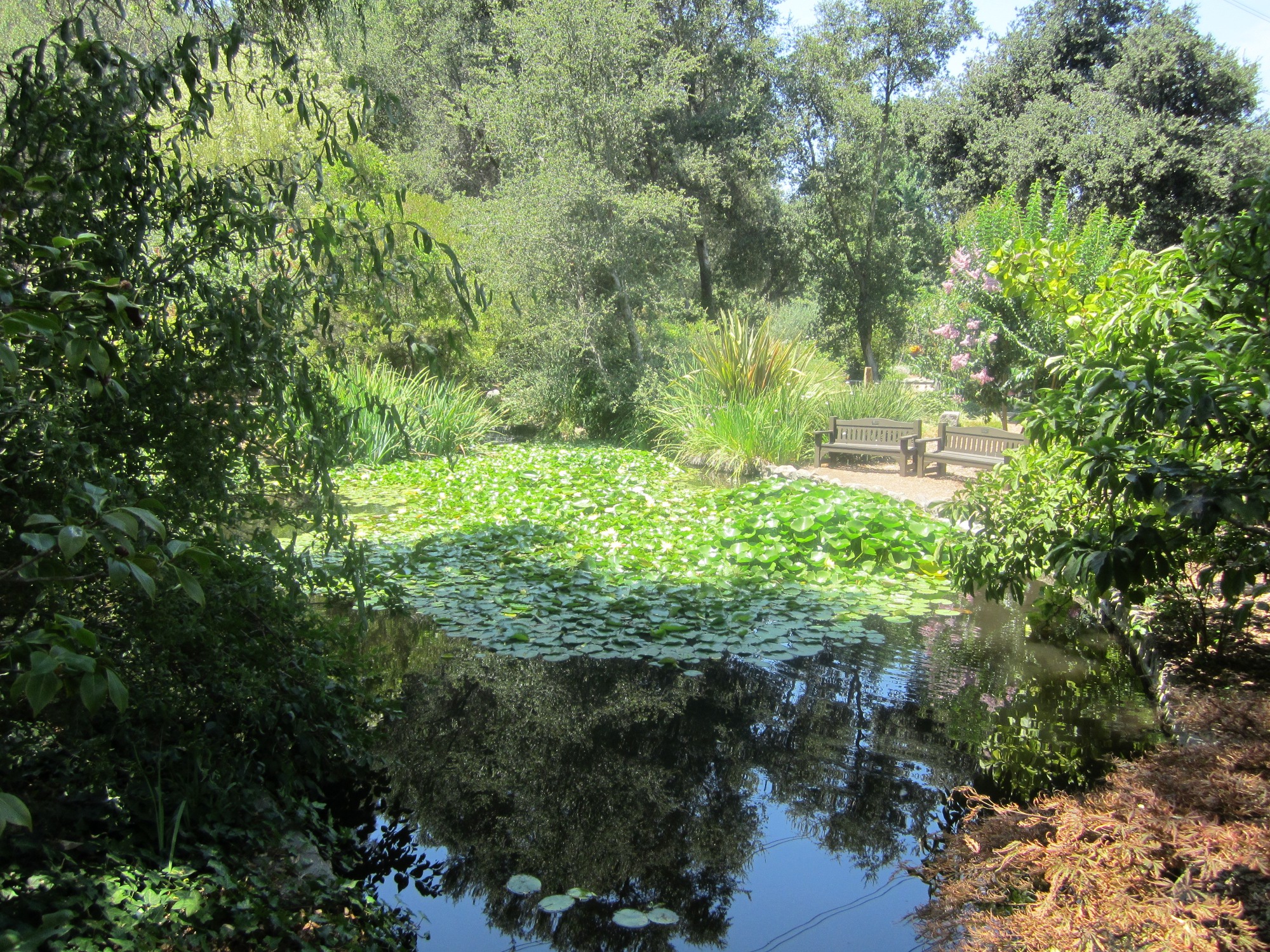
This cooling waterfall was hidden down a garden path we found.  Metal, earth, water, and wood are all alive here, with the fiery energy of the sun radiating down.

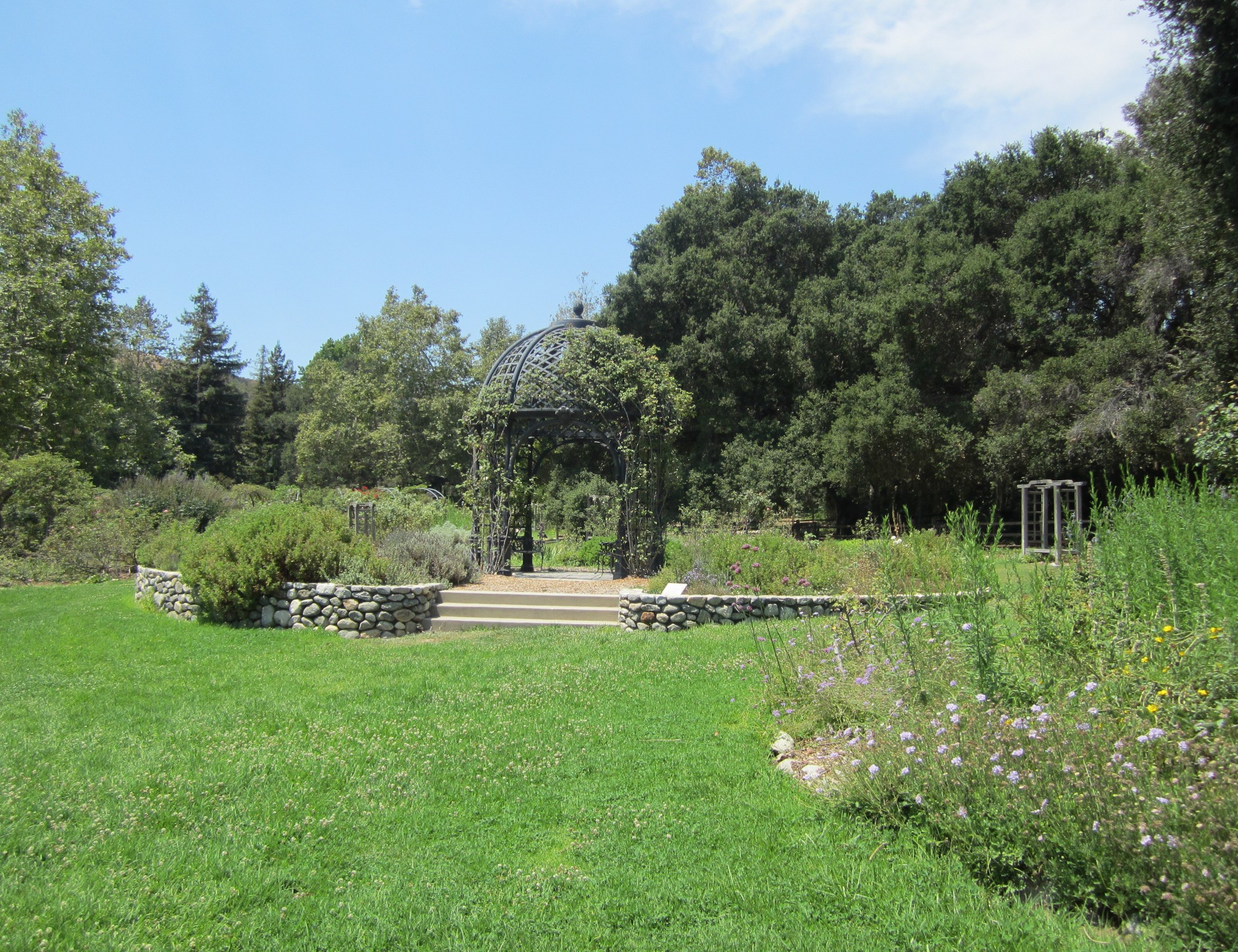
Throughout the grounds there were all sorts of beautiful, open spaces like the lawn above.  I could sit underneath the shade of those trees all day, reading a Stephen King novel.

For the young (and young-at-heart), there is a hedge maze of miniature proportion.  Known as The Children’s Secret Garden, this lavish area was funded by a secret admirer of Descanso.  The walls of the hedges are about three feet high.  In the center of the maze is an opening complete with miniature wooden benches and chairs; child-sized models of similar ones found throughout the park.  As charming as those were, I was taken with the stone statues of friendly animals, two of which are pictured above.

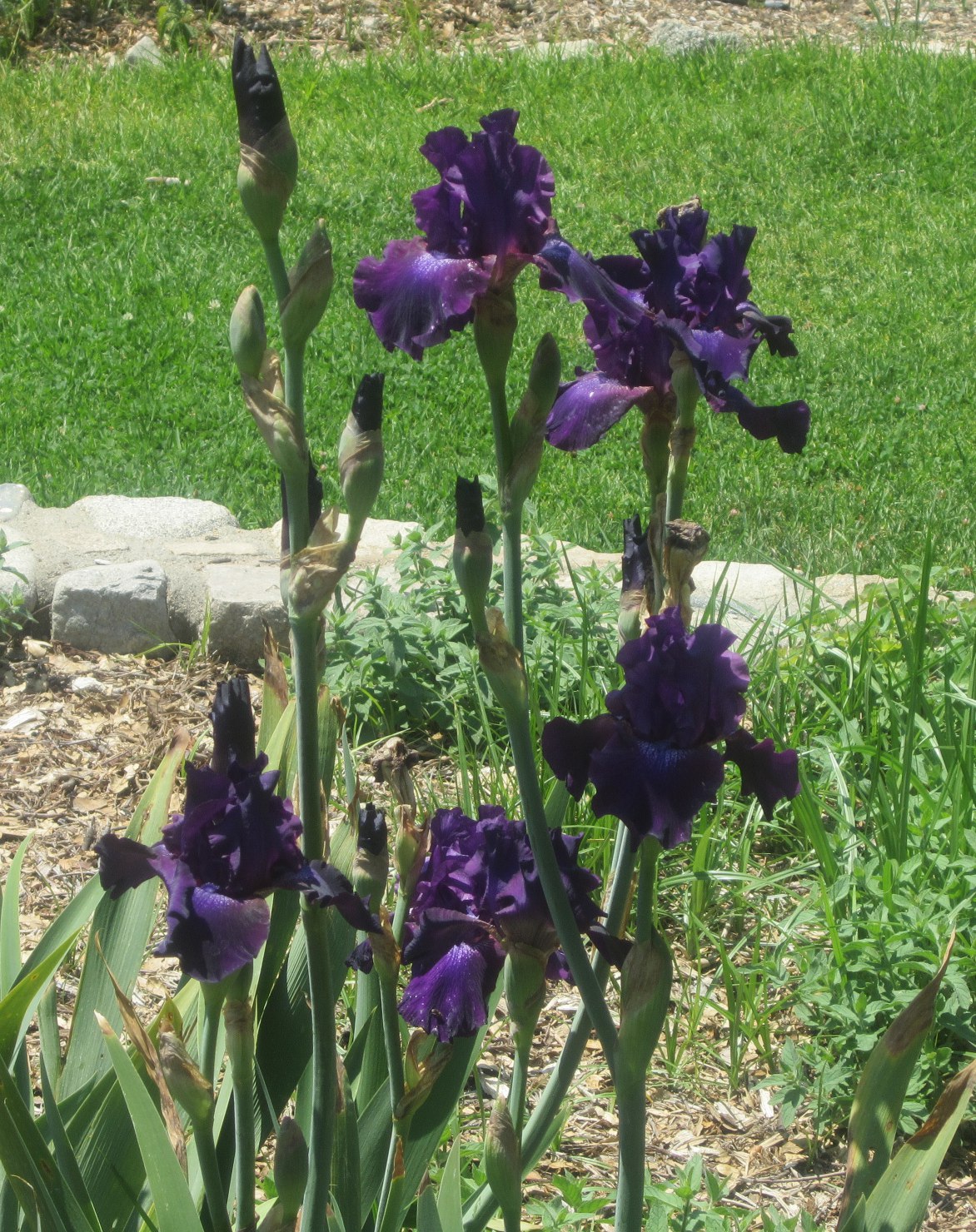
Descanso is also home to the largest collection of Irises in Southern California.  Being that we visited the gardens in August, many of these were out of season.  But these vibrant purple ones continue to thrive.

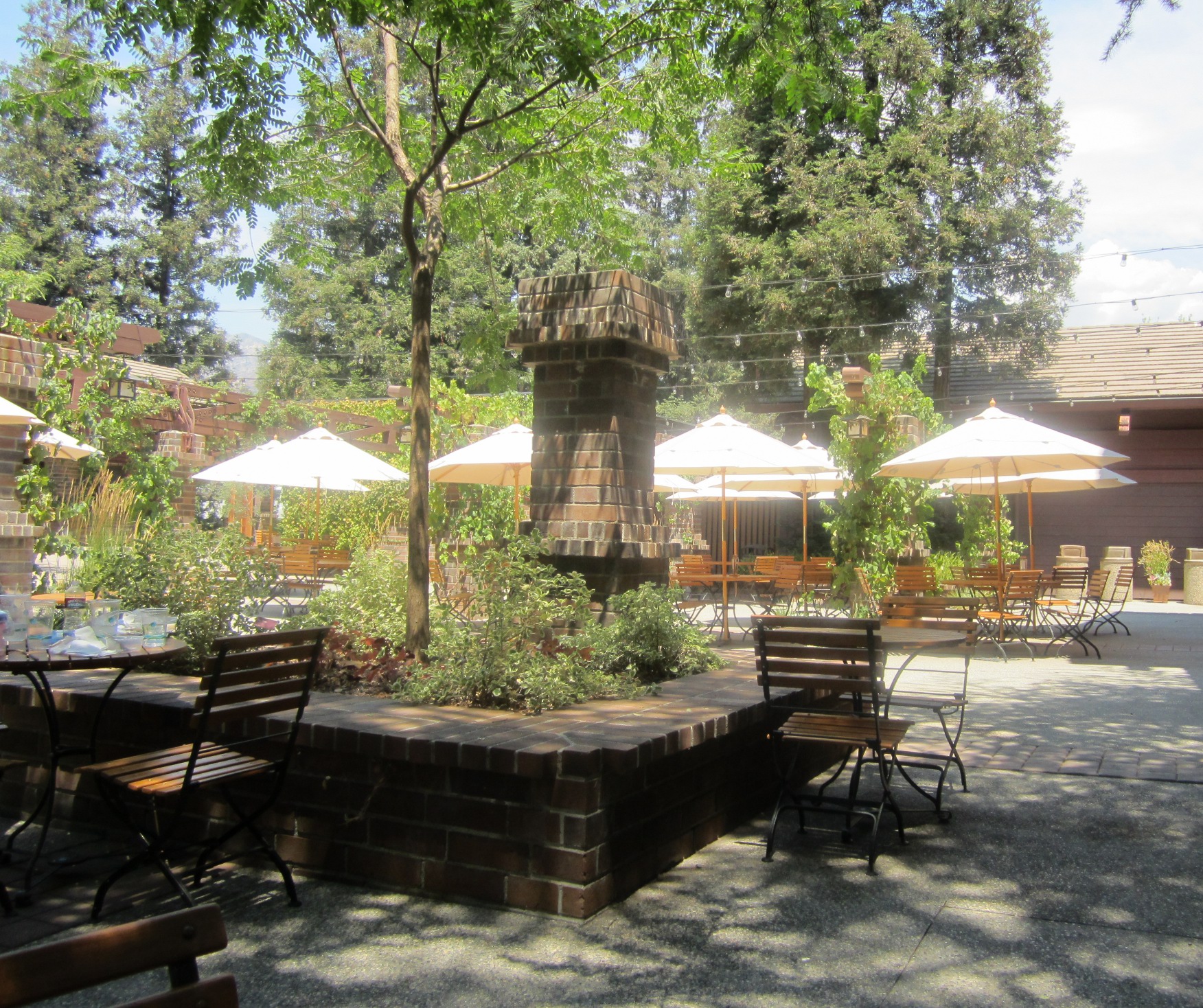
We also visited Cafe Descanso, a casual eatery located by the front entrance.  Operated by the Patina Restaurant Group, the cafe offers sandwiches and salads.  The seating is all outside, either on comfy cafe chairs, or brick benches.   On this rather hot day, I opted for the following:

  • Bottled water.
  • Chardonnay – I had one glass of their house white, which is Crane Lake Chardonnay.  Although more of a low-brow selection, this delicious chard is crisp and refreshing.  In stores, bottles of this usually run $3:00 – $6.00.  An excellent wine for the price.  A generous glass here is about $7.00.
  • Mushroom Panini – Served on a role with Portobello mushrooms, light pesto, and white cheese (I think it was fontina).  The sandwich was good and quite filling.

Later in the day, we paused for some cocktails at The Camellia Lounge.  Hidden in a tea house next to the Japanese Garden, this quaint hideaway offers a select Japanese menu, as well as beer, wine, and refreshing summer libations.  It has very limited hours, being only open three days a week, but definitely worth a visit.  Although we did not sample any of the food here, the aromas drifting on the air were mouth-watering.  Here’s what we had:

  • Camellia Collins – A take on the classic Tom Collins.  But here, they add chamomile tea to the composition, which was exquisite combined with the gin.  The beverage was cool, refreshing, and generous in size.  I could drink these all day.
  • Green Hornet – Andrea ordered this, and it was not to our liking, chiefly because sweet-and-sour mix was used in lieu of lime juice.  Not only is this a major faux pas from a taste perspective, it’s also bad feng shui.  When the option to use a natural ingredient over a not-so-natural alternative, it is always preferable to select the natural choice.  When we consume items into our body, we absorb the energy of that item.  Therefore, natural or organic ingredients are preferable to chemical or sugary alternatives.  Had the required lime juice been used, I’m sure the drink would have been wonderful.

Descanso also has a great gift shop, and offers a variety of events for the whole family, including live jazz concerts, tai chi classes, and story-time for kids.  I will most assuredly be coming back here, probably in March, when their lilac garden is in full bloom.   The grounds are also used as film locations for many television series and movies.  A large paved lot is provided for ample, free parking.  If you are looking to escape into a Secret Garden, and add some more creative and rejuvenating wood energy into your life, visit Descanso.

Descanso Gardens

1418 Descanso Drive, La Cañada Flintridge 91011

818 949-4200

Admission:  General $8.00   Senior/Students $6.00   Children (5 to 12 years) $3.00    Garden members and children under 5 are free.

Hours:  Open Daily from 9:00 to 5:00.  Closed Christmas.   (Hours extended during the summer and for special events – call ahead)

Boddy House and Sturt Haaga Gallery:  Open Tuesdays –  Sundays 10:00 to 4:00.   House tours given Saturdays and Sundays at 12:00.

Cafe Descanso:  Open Daily from 9:00 to 4:30.

Camellia Lounge:  Open Tuesdays – Thursdays 3:00 – 8:00, during the summer months.  (Call ahead to verify hours of operation.)

Home

A Feng Shui Cookbook!

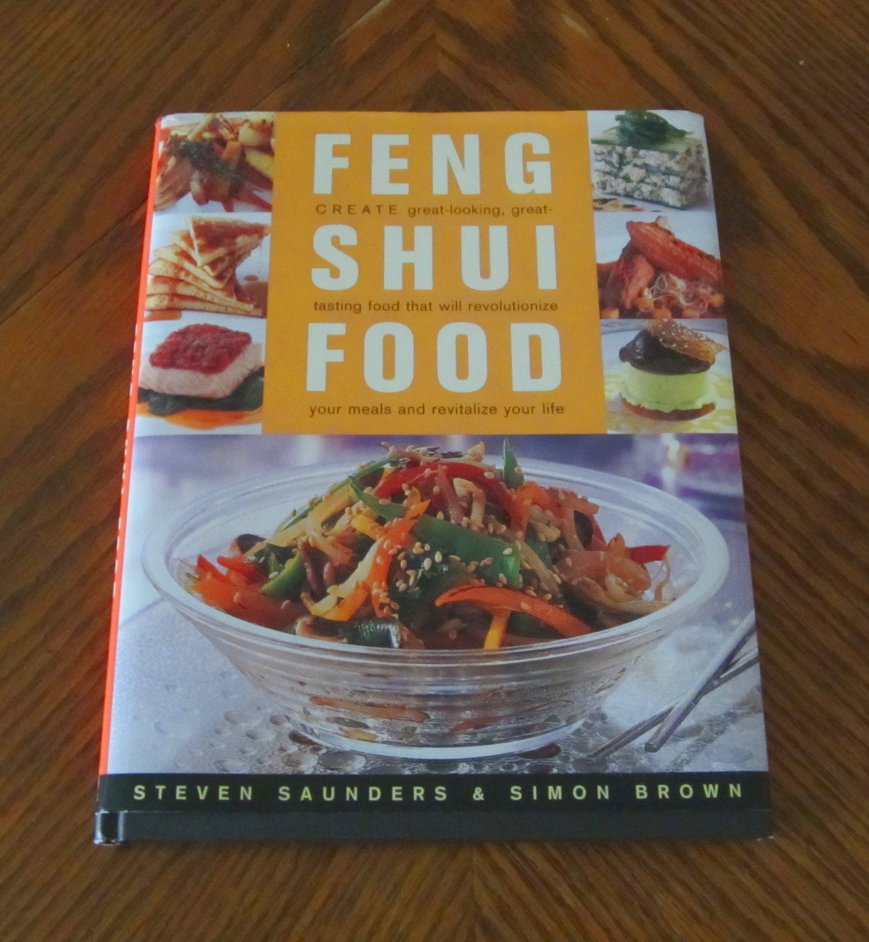
One of my favorite things to do is browse used bookstores.  I could do this for hours, and have – literally.  Or, if I don’t feel so inclined to leave the house, I do it online.  When browsing the plethora of books available on the world-wide web, I stumbled upon an intriguing and thought-provoking book called Feng Shui Food.  This cookbook is a collaborative effort between feng shui consultant Simon Brown,  and restaurant chef Steven Saunders.  Simon Brown has been a feng shui consultant since 1993, and operates Chi Energy, a holistic health institute in London.  He was also one of the first practitioners to bring feng shui classes to the United Kingdom.  Steve Saunders is a highly acclaimed chef.  Having worked on many televised cooking shows (including his own), he is the co-director of the Aspire Group, a restaurant company that has dining establishments all over the United Kingdom, as well as a few exotic locales.  Both gentlemen have authored numerous books, but this is their only joint venture.  So I purchased Feng Shui Food, and awaited its hasty arrival.

The book gives an intriguing, fresh perspective to cooking along feng shui guidelines.   Divided into five separate sections, the first chapter deals with feng shui basics, yin and yang theory, the five elements, as well as what things attract healthy chi to a kitchen.  The second chapter is nearly all recipes for appetizers and soups, entrees, side dishes, and desserts.  These are organized by yin and yang, with more yin items on the left side of the page, and yang items situated on the right.  Also, the two British authors give corresponding commentary about each dish, both from culinary and feng shui perspectives.

The third chapter, titled Menus for Success, looks at ways to create a certain kind of atmosphere, depending on what one is attempting to achieve.  From a romantic dinner for two, to a children’s lunch, to a meal for reconciliation.  In addition to even more recipes, this section also has a wide variety of tips and suggestions.  The fourth chapter goes into this further, for specific special events, such at weddings or Christmas dinner.  The fifth chapter is all about dining outside of the home.  They include ideas about selecting the right kind of environment for dining depending on the occasion.  An appendix is also located at the back, with even further recipes for oils, sauces, breads, desserts, and a few other items (some of which are required for recipes located elsewhere in the book).  Nearly all of the recipes in Feng Shui Food are vegetarian or pescatarean in nature.   Energy, or chi,  is in our food as well, and when one consumes animal flesh or animal products (dairy or eggs), we take in the energy of that creature.  A certain amount of “dead energy” comes with eating meat, hence why most of the recipes in this book are vegetable or fish based.  Although I support the vegetarian lifestyle completely, I am definitely a carnivore.  But, when I crave a hamburger or New York steak, I tend to look for more organic and humane options.  The book suggests – and I agree – that organic is the best way to go for all food items, when possible.

Many of the informative tidbits s in Feng Shui Food are highly valuable, especially when it comes to attaining a balanced meal from a feng shui perspective.  And all of the recipes are simply mouthwatering.   But then came the difficult part – which recipe do I start with?  I decided to go with Petit Pois a la Francaise, located on page 54 of the book.   I selected this side dish because I liked all of the ingredients, and it seemed rather easy to make.  Although I did play with some of the components.

2 pounds of fresh or frozen peas are the main act in this dish.  I opted for the frozen sweet peas from a fine French store I frequent known as Target  (Their Market Pantry selection of generic food items are very high quality – especially their instant oatmeal).  Rather than use the required shallots, I used finely diced scallions.  I also didn’t have any vegetable broth.  Since I had no present desire to my own, so I took a shortcut by way of beef bouillon.  I also neglected to purchase fresh mint,   so I opted for rosemary as a substitute.

One thing I loved about these peas is they use honey to add a distinct sweet flavor.  Although it requires only one tablespoon, I added a little over two.   I was also concerned about the heavy cream required.  I was expecting it to be cream laden, but the ratio of cream to peas is pretty sparse, so calorie-wise, it isn’t too bad.  Tahini can also be substituted for the cream.

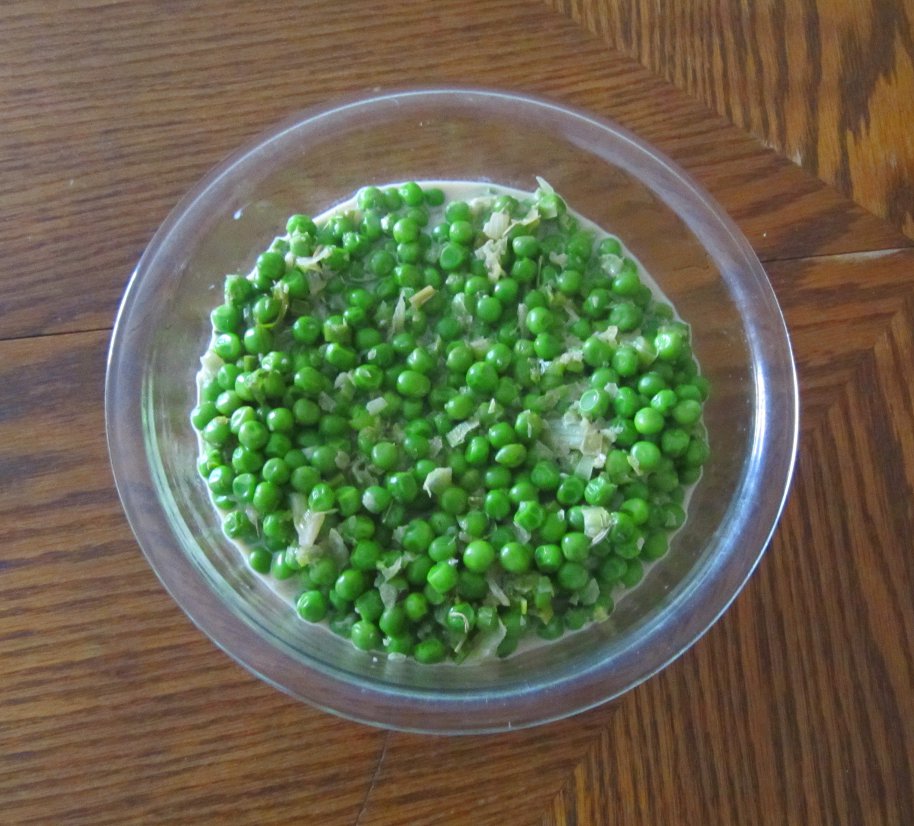
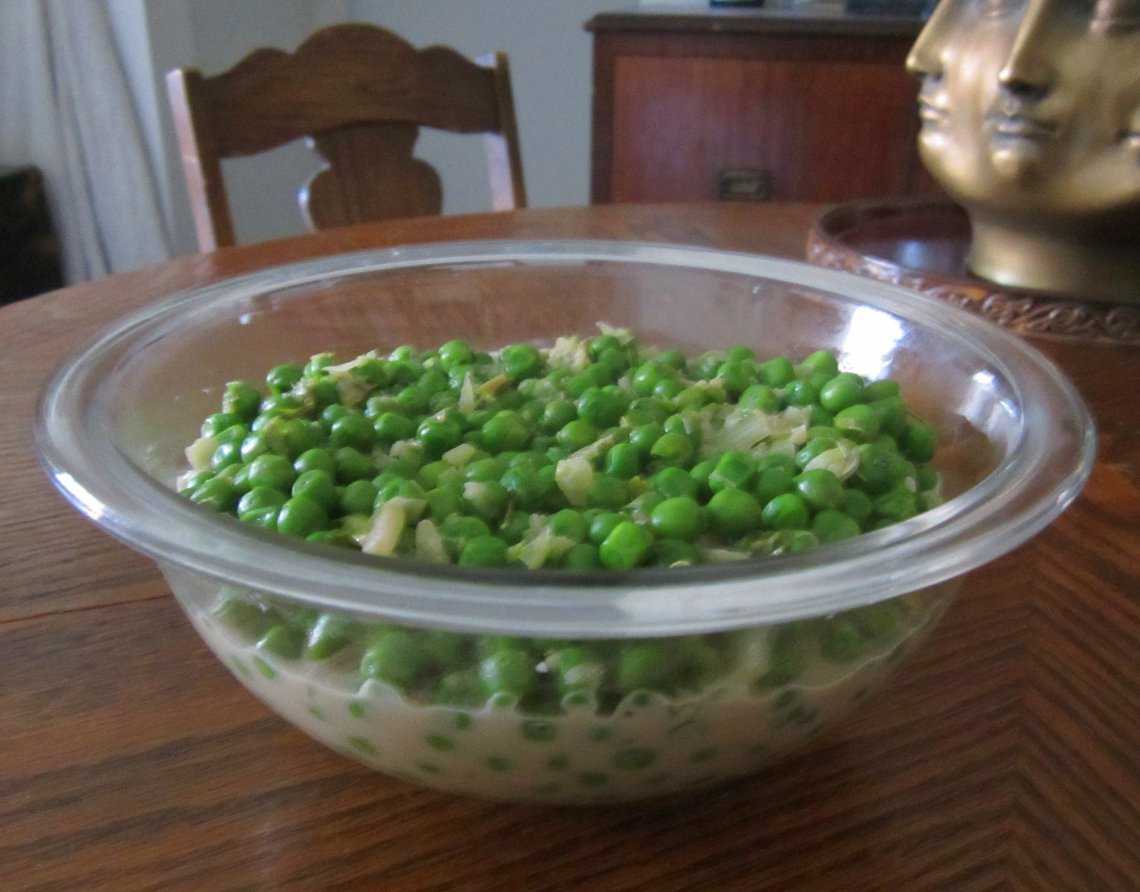
Other than my few alterations, I followed the recipe exactly.  The final product is pictured above.  The recipe states that it’s for four people (nearly all of the recipes in the book are for a party of four).  Here, I disagree.  This amount would easily serve anywhere between six to eight individuals.   While I enjoyed the rosemary, I feel the mint would have complimented the honey on the vegetables much better.  Element wise, I love how wood-based this meal is, with the greenery and fresh herbs.  Simon Brown also indicates this dish is great for wanting to be more creative or more inspired, and I agree completely.  I’ve been adding these peas to Chinese fried rice, macaroni and cheese, scrambled eggs, or leaving as is as the perfect side dish.

Where is the best place to get this wondrous book?  Published in the UK in 1999, and United States in 2000, one’s best bet would be online.  I’ve compiled a list of the most affordable places to order Feng Shui Food below:

This book is sensational, and I highly recommend it to any novice or experienced chef.  As for my further culinary adventures with Feng Shui Food, I plan on making their Lemon Oil and Basil Oil (or perhaps combining the two), Honey and Raspberry Fool, Fried Lentil Cakes with Cumin, and  Lasagna of Spinach Pasta and Wild Mushrooms.  I better get started cooking…

My Ninja, My Love…

Red Lego Ninja

My friend Kristin, a successful actress and model,  moved to France.  As models are sometimes apt to do, she moved to Paris for work, leaving me the sole custody of her Ninja.  No, it’s not a cat, dog, or turtle – but a blender.   I’ve had torn relationships with blenders in the past.  They always make promises to accomplish goals, then barely put in any effort to get them done.   Sometimes they refuse to do anything at all, and just sit there glaring at me as they repose on the formica.  The current blender I have has been exiled to the pantry – after it protested to blend ice for margaritas.   But then Kristin introduced me to the Ninja.  And other friends of mine had mentioned the Ninja as well; how it creates these dream-like smoothies and fantastic sauces.  Was this indeed an appliance I could count on?  So Kristin left the country and I got the blender.

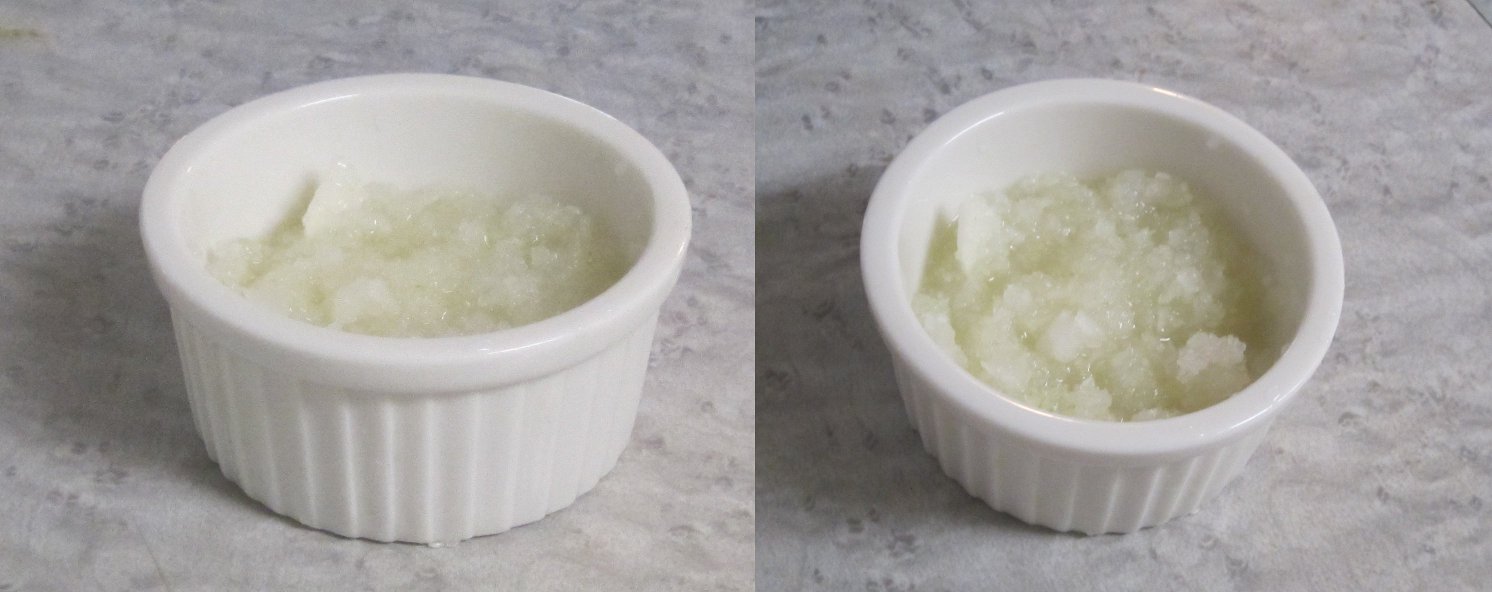
The model I have is the Ninja Pulse.  Pictured above, it comes with everything displayed, as well as a cookbook and instruction manual.  I felt immediately at ease with this appliance.  And then the experiments began.  Pasta sauces, smoothies, and soups are the main things I use it for; although it can also be used as a coffee bean grinder and mixer.  I also use it to dice onions and other vegetables into smaller morsels.  The key here is not to blend it too much, or it becomes more liquified than desired.  However, because of a very happy accident, I created an amazing sandwich spread:  pureed onion.  I was attempting to dice two white onions, and I blended it a little too heavily.   I decided to make the most of my mistake, added a little water, and processed it some more.  A smooth, low-calorie spread was born!  Not only is it good on sandwiches, it can also be used at a thickener for soups and sauces, and as a topping for potatoes.  One could add spices or Parmesan cheese to it as well, but I kept mine pure and basic.  Take a look at the finished product below.

Another recipe I invented was Creamy Curry Soup.  I took two broccoli stalks (sans the florets) and half a white onion.  I pureed both together until it was a nice thick paste.  Then, I heated up a can of cream of chicken soup.  Added to this was my broccoli paste, fresh spinach leaves, two sliced avocados, a myriad of spices, and yellow curry powder.  I like it spicy, so I added a lot of yellow curry, as well as cumin, chili powder, and dried cilantro.  Phenomenal was the word that sprang to mind as I savored the first taste of this creation.  This could also be made vegetarian easily, just substitute cream of mushroom or cream of celery for the soup.  Or one could go the other direction and add chicken breast to the brew.  I had mine with some fresh bread, but it would be equally good served over rice.

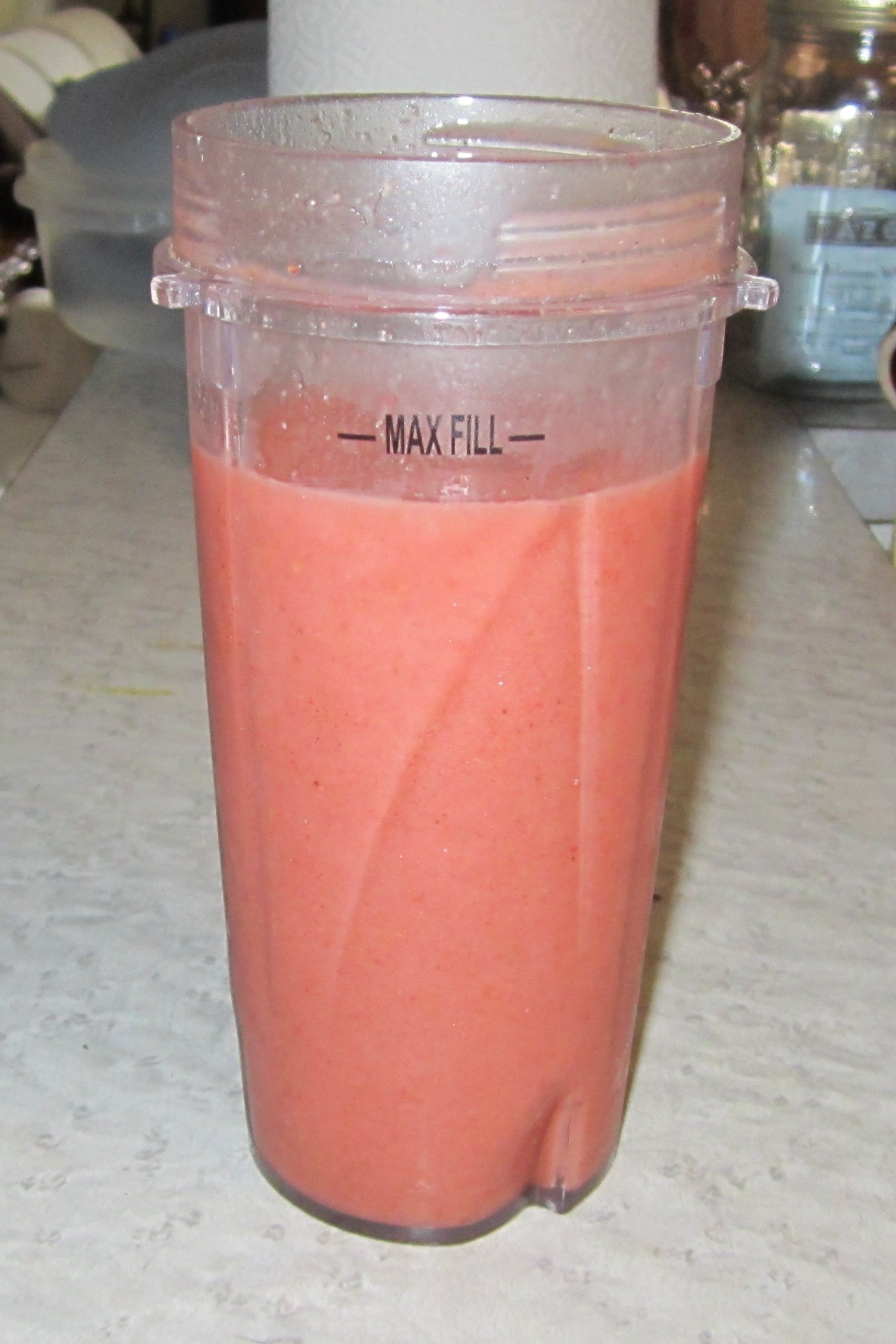
One smoothie recipe I love involves a banana, about a cup of frozen strawberries, six or so ice cubes, and cranberry juice.  Pulsed until liquid form, this can either be consumed right away as a beverage, or put in the freezer as a chilled dessert.  I haven’t done so yet, but it would be amazing with vodka or tequila added to it as well.  The finished product is pictured above.

How, exactly, this is blender feng shui?  Well, it falls into many categories.  For one, is a multifaceted kitchen machine, so it can perform a variety of tasks.  It also takes up very little space in the kitchen, thus avoiding clutter.  Also, the more healthy and taste-filled food and beverages are, the more abundant and auspicious they become.  It also makes eating healthy a lot easier.  If I’m not in the mood to eat more nutritious  items, I just chop and puree them down, and then add them to things.  My vegetable intake has tripled since the Ninja came to live with me.  Also, it adds a beneficial metal element to the kitchen, in both color and material.  However, most kitchens are usually brimming with metal energy due to the  other main fixtures in the room, such as the stove, refrigerator, and sink.

Because it is such an incredible product, the Ninja Pulse can be a little pricey.  I have searched the web, and here are the best places to capture this ninja online:

I have many activities planned for The Ninja and myself.   I foresee a long and blissful array of cookie dough combinations, home-made mashed potatoes, shredded zucchini browns, and dark chocolate raspberry pudding.   My Ninja, you are truly a one-in-a-million appliance.

Raphael: An Artist Studio

The color yellow in feng shui is an alluring example of the earth element, introducing a vibrant cheerfulness to any environment.  Some color researchers feel that this shade can  strengthen one’s immune system, confidence, and well-being.     For feng shui guidelines, it is best used in living rooms, kitchens, dining areas, and entry halls.   Yellow can work for other areas, too, but it depends on which pigment is selected for which location.  A primary yellow, for instance, would be much too yang in its energies for a bedroom; the occupant would have trouble sleeping and could become agitated.  But a pale yellow would work well for rest and rejuvenation.  Yellow can also bring a glowing fire element into a space, depending on the hue.  The luminosity of the various yellows in the painting above adds depth and sensuality to the piece without the effort of  reds or purples.   It also brings a brightness to the restaurant hallway in which it resides.   Be it citrine, amber, or goldenrod, the color yellow makes a valuable  impact to one’s surroundings.

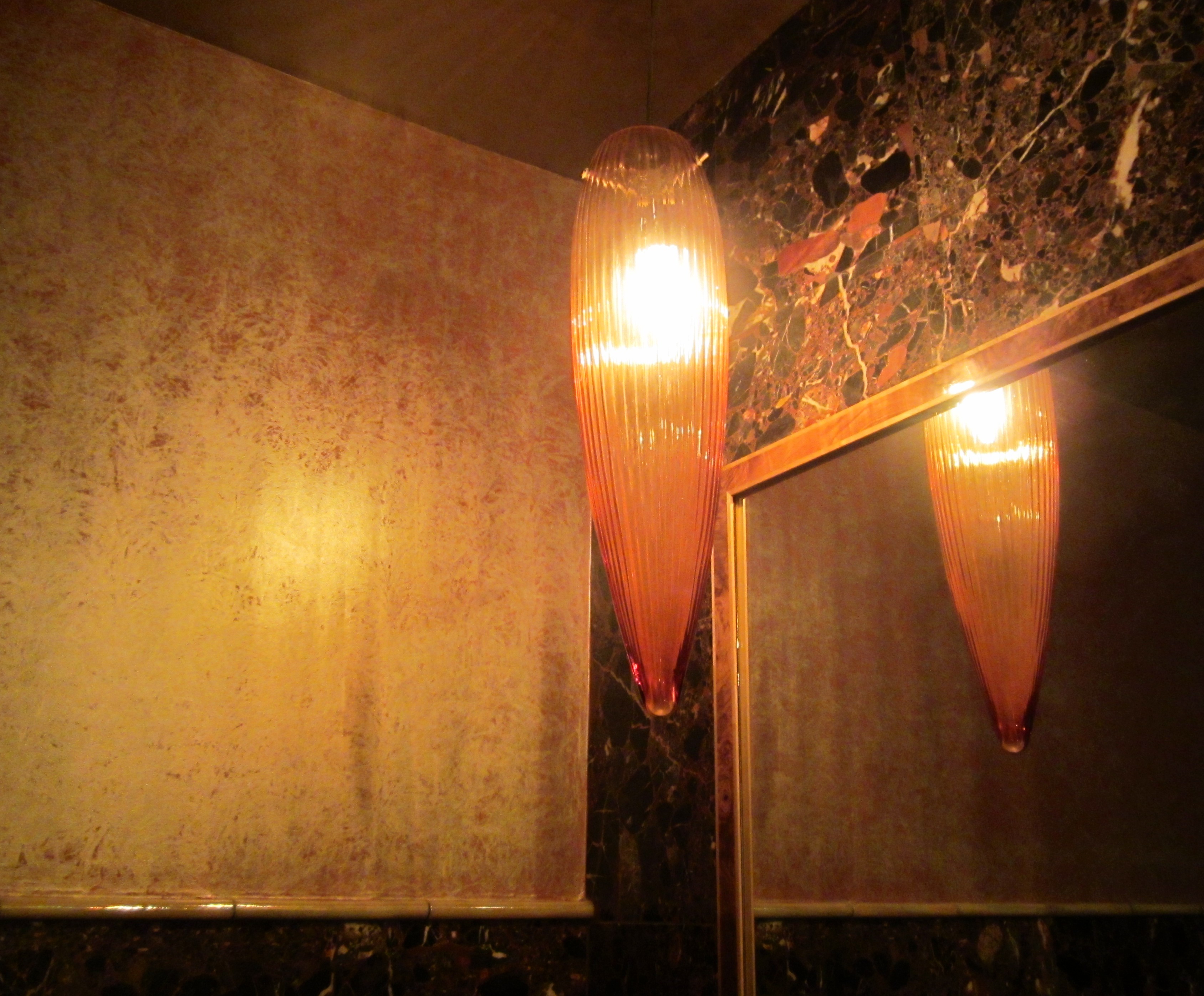
Nestled amidst the bustle of Ventura Boulevard lies an artistic oasis of the cultivated kind known as Raphael.   I came here the other day with my friend Hanh, and was highly impressed.  All of the elements here are beautifully displayed, and the use of color is that of a painter’s palette.   The main dining area of the restaurant is tastefully decorated.  Intriguing art, comfortable seating, and unique light fixtures are some of the striking features here.  One of my favorites was the lavish yellow wall panels.  These golden room dividers help to add a sense of warmth and luxury to the dining experience.   Another item that captivated my attention was a handmade glass light fixture.  With its fiery tints and triangular shapes,  it can act as one’s own personal sun if they sit at this specific table (pictured above).

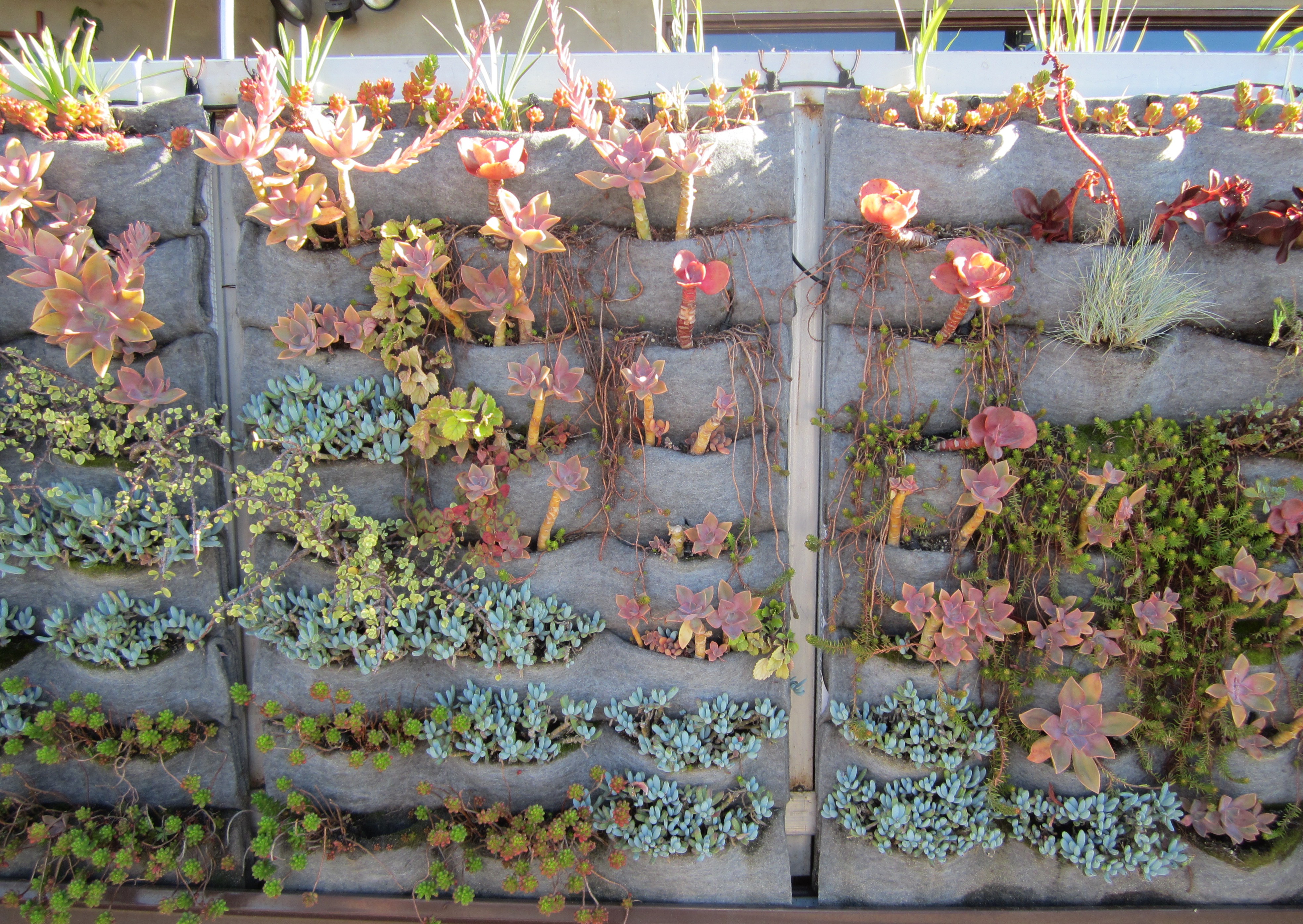
The outside of Raphael is a stoic stone edifice that masks the style and grandeur that awaits inside – until you see the succulents.  A massive wall of living plants encloses the outdoor terrace dining, adding a rich and lively wood element to the earthen structure.

In contrast to the robust yellows of the dining area, the lounge is hued in shades of blue and green, with wood-paneled walls and squared lighting.  I love the use of  rectangles and squares here, providing a stability while dining.   A medium-sized bar lies directly across.  One aspect here I did not care for – feng shui wise – was the mirrored ceiling, which can be glimpsed in the top left corner of the photo.  Reflective ceilings are considered very high energy, and will cause difficulty in one being able to rest.  However, being that this is a place of business and not a residence, I found this to be a rare exception to the rule.  But no one should hang a mirror over their bed on the ceiling – ever.  In addition to the tawdry tackiness of how it looks,  the occupant of the bed will suffer a variety of problems.  Don’t do it.

And now on to the food!  Raphael is experimenting with their Happy Hour at present, but we sampled their selection of three small plates for $12.00.  The selection of the three items changes daily upon the discretion of the artist, chef Adam Horton.  He combines various Asian cooking elements into his nouveau cuisine.  The three masterpieces above were sublime in both taste and presentation.

  • On the left we have Amberjack lounging about in a pool of delicious curry sauce, with baby carrots.  A coconut puree acted as garnish.  Incredible.
  • In the middle we have tomatoes, burrata cheese and kimchi, served warm under glass.  When I lifted the glass up, smoke billowed out.  Dinner and a show – I love it.  Tasty and tantalizing.
  • On the right we have Wagyu beef accompanied by bacon-onion jam.  The little half egg roll garnish is filled with a mellow bleu cheese.  Mouthwatering.

And below are the other things I sampled:

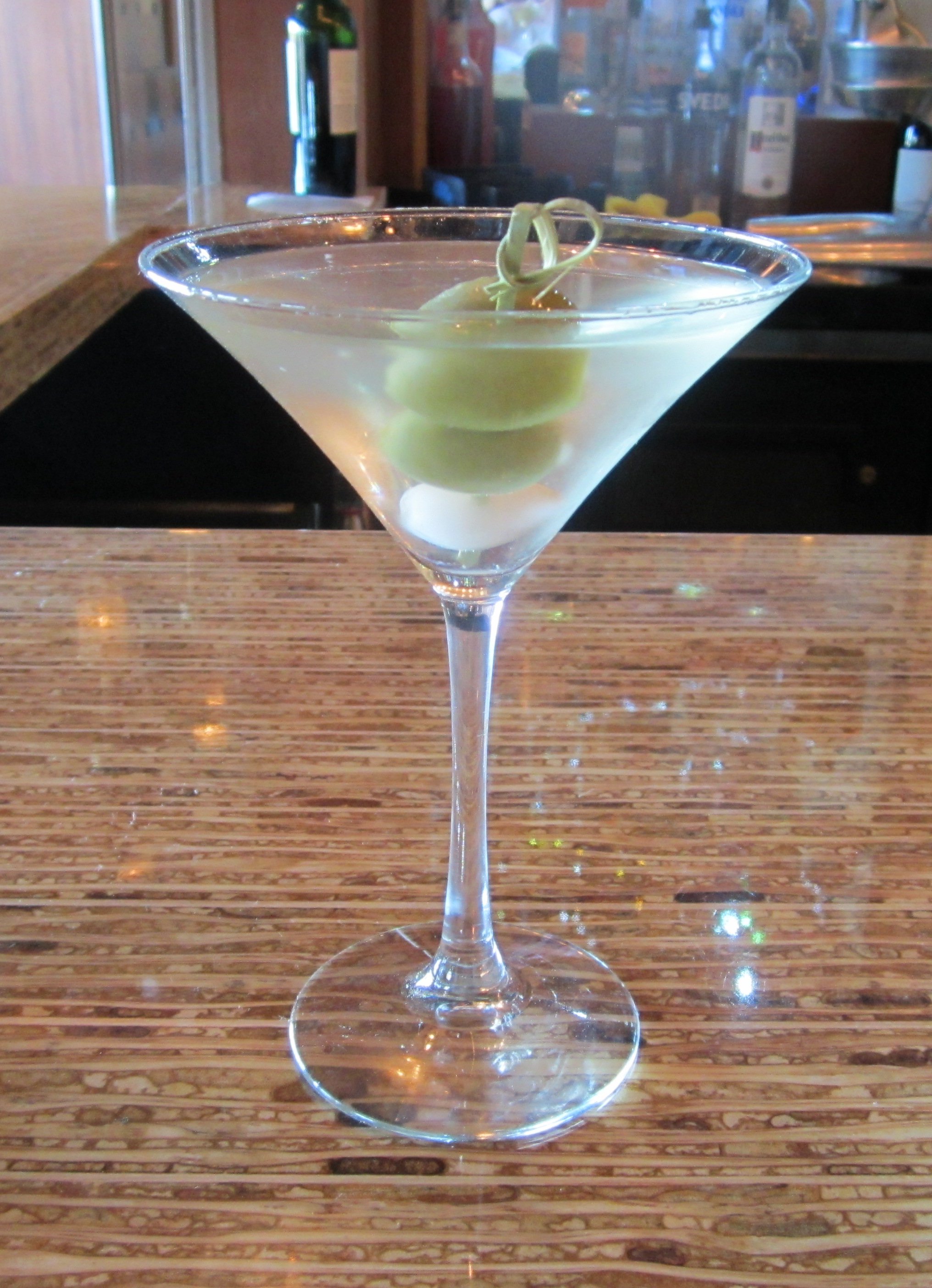
Savory Martini – A gin based martini with celery bitters, dry vermouth, Parmesan stuffed olives, and a solitary cocktail onion.  I love martinis – especially a Gibson – and this one combined my love for cheese into the concoction.  Also available with vodka.  Decadent and classy.

Roseberry – An ideal summer beverage!  Fresh pressed raspberries, lemon, and gin pool their talents together wonderfully.  Garnished with a sprig of fresh rosemary.  A prime example of yin and yang, with the savoriness of the gin and rosemary, and the sweetness of the fruit.  I love the ruby color of the drink as well.  Addictive.

Ginger Shandy – Ginger beer, vodka, Corona, and liquid ginger perform exquisitely in this lush summer cocktail.   I especially liked the use of yuzu foam across the top, giving it a nice froth.  These are dangerous – I could drink them all day.

Macaroni and Cheese – A small crock of steaming macaroni and cheese.  Comfort food at its finest.   Unlike other versions of this classic, Raphael uses jalapeno juice in the compound, adding a spicy yang element to the entrée.  Hanh and I were only going to share one order, but it was so good we couldn’t resist and enjoyed a second round.  Piping hot and satisfying.

Habanero Tincture
Photo courtesy of H. Nguyen

All of our beverages were created by our bartender, Chris Parke.  A true mixologist, Chris educated us on the ingredients on each drink, as Adam had on the food.  One interesting bit of knowledge I learned was what a tincture is.  In the world of mixology and bartending, a tincture is an essence of something to its most potent form.  Used in some of the libations at Raphael is their own homemade Habanero Tincture.  I sampled only a few drops, and it packed a powerful punch.  I quickly followed it with some water.   I can see how it would be amazing in a food or beverage, though, once it was diluted.  Hanh and Chris were much more courageous than I; they each took a whole shot of the tincture (pictured above).   It gives whole new meaning to the term fire-eater.   On my next visit, I plan on savoring some wine from their choice selection, and perhaps take in the best of all artistic creations:  Dessert.

Raphael, A Dining Experience

11616 Ventura Boulevard, Studio City, CA 91604
818 505-3337

Hours:  Lunch:  Monday – Friday 11:30 – 2:00,  Dinner:  Sunday – Thursday 5:30 – 9:00,  Friday – Saturday 5:30 – 10:00,  Happy Hour:  Tuesday – Friday 5:00 – 7:00

http://raphaelonventura.com/

Note:  Closed Mondays for Dinner, and weekends for Lunch.