Brussels Sprouts… Friend or Foe?

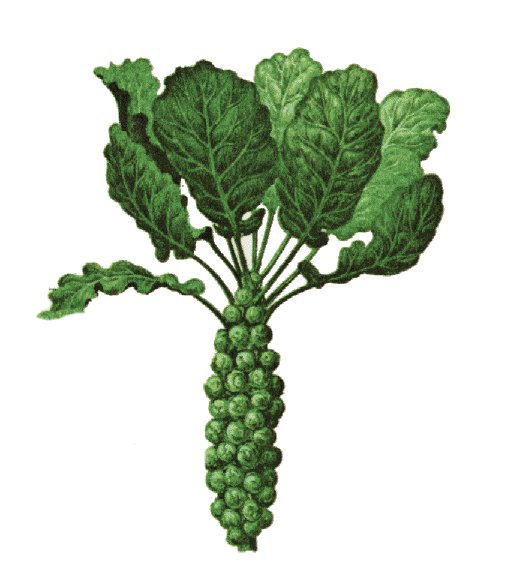
Vintage Brussels Sprouts

When I was a child, I loathed brussels sprouts.  I thought they looked cute, but they smelled disgusting.  I remember on the rare occasions I was coerced into having them, I was not impressed.  Usually the bribe here was a slice of chocolate cake or an ice cream sandwich.  However, as an adult, my tastes have changed.  So has the general opinion of brussels sprouts.  Many restaurants in Los Angeles have reinvented the way this Brassica vegetable is prepared in new, contemporary ways – such as wrapping them in bacon or prosciutto, grilling them in foil over an open flame, or tossing them into a salad whole.  Cleo, the restaurant in the Redbury Hotel, deflowers the brussel by shedding all of the leaves, and baking them like potato chips – making a very savory snack.  At a recent dinner party, I decided to sample a single brussel from a platter.  They had been baked in the oven, and smelled wonderful.   The taste was sensational and sultry.  I wondered exactly how one can make these at home, so online I went in search of a great brussels sprout recipe.
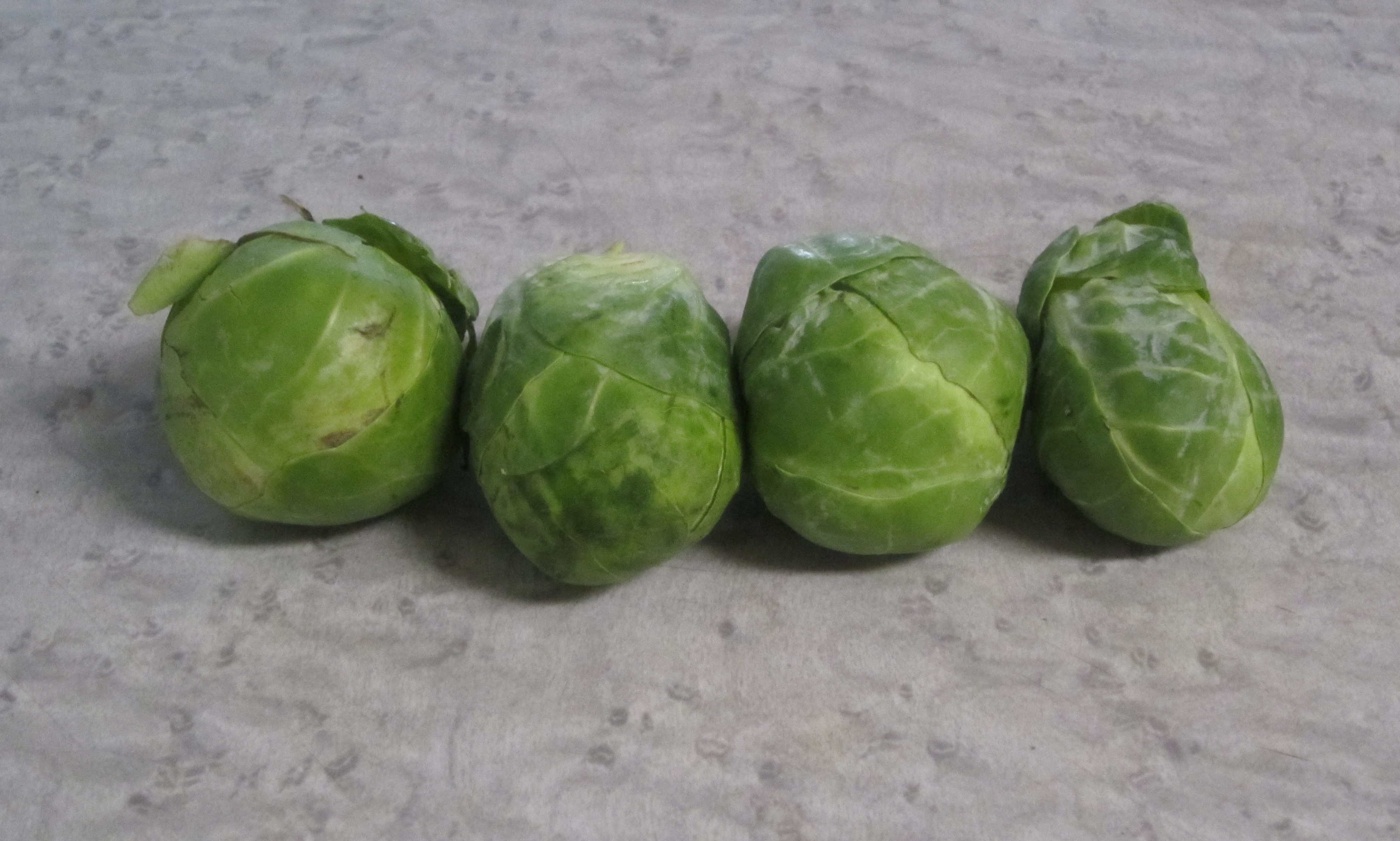
My findings took me to an incredible blog called Fannetastic Food.  Run by a dynamic, eclectic woman named Anne, her blogpost about brussels indicated that one has to cut off the nasty stalk of the sprout to avoid that sick, bitter taste many of us have experienced.  One can visit her brussels article here:  http://www.fannetasticfood.com/2011/03/30/how-to-make-brussels-sprouts-delicious/    Using her recipe and article as a base, I created my own recipe for Baked Brussels Sprouts, which I’ve made quite often recently, and they always turn out delicious.
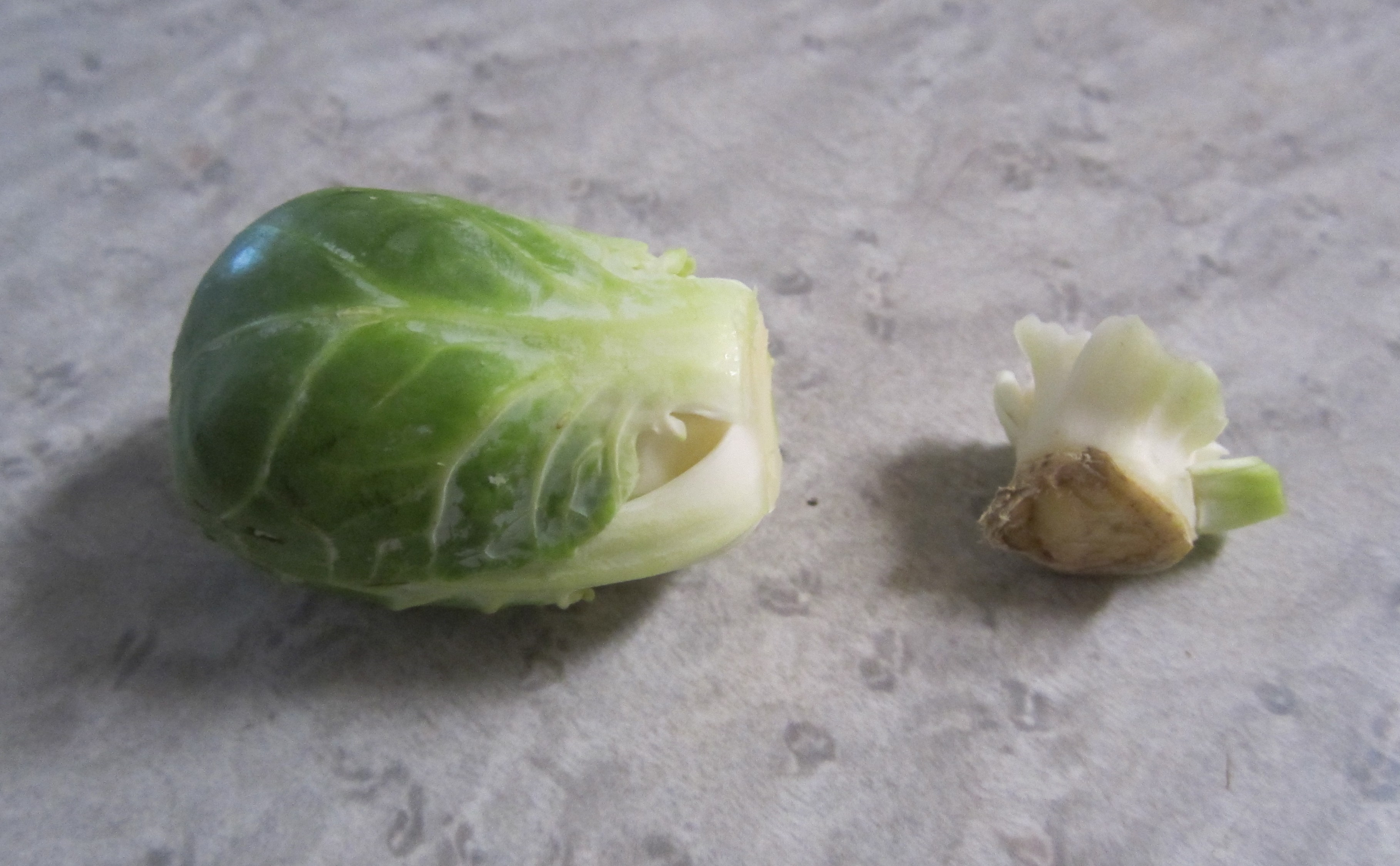
Gently wash all of the brussels sprouts. Then cut off the stalk of ill repute (above), and dispose of said stalks in the garbage.  Then, cut each brussel in half.  Some of the leaves may fall off – gather them together for later.  After the cutting is complete, take the random loose leaves and brussel halves and put them in a plastic bag.  A zip lock bag works well for this, or one can use a plastic grocery bag.  Drizzle some olive oil in the bag, and add imitation bacon bits, sea salt, lemon pepper, garlic powder, and a little chili powder to the mix.   (Feel free to play with the spices; I always do).  Then, move and shake the brussel mixture, until the olive oil and spice are covering each brussel part.

Pre-heat your oven to 400 – 425 degrees.   Oven temperatures vary, and I’ve tried both temperatures in mine, and each work equally well.  Next, take a cookie sheet and cover it with foil.  Grease the foil any way you would like.  I use a non-stick cooking spray, or olive oil.  Place the brussel halves and leaves upon the cookie sheet.  Bake the brussels uncovered for about 15 – 20 minutes , or until you feel they are done.  Play with it, and judge accordingly.  Below is an example of what my finished product typically looks like.

The Brussels Sprout earned its name from Brussels, Belgium, as they were one of the chief vegetables produced there in the sixteenth century.  The were introduced to the English and French in the nineteenth century, coming to the United States shortly thereafter in Louisiana.  By 1939, brussels were being grown in the central valley of California, where they are still primarily grown today for American consumers.  From a feng shui standpoint, the brussels sprout is a wonderful example of the wood element, being that it is derived directly from a plant, and for its calming green hues.  The shape of the brussel is more metallic.  Circles and spheres are metal in their elemental origin, and are considered very welcoming to people.  I think brussels are also very attractive – almost like pygmy cabbages.  They are also rich in Vitamins K, A, C , fiber and sulforaphane, and are excellent at lowering cholesterol.  For my next experiment in brussels cuisine, I’m going to try a brussels sprouts soup…which I think I will make later in the week.

Take a Bao

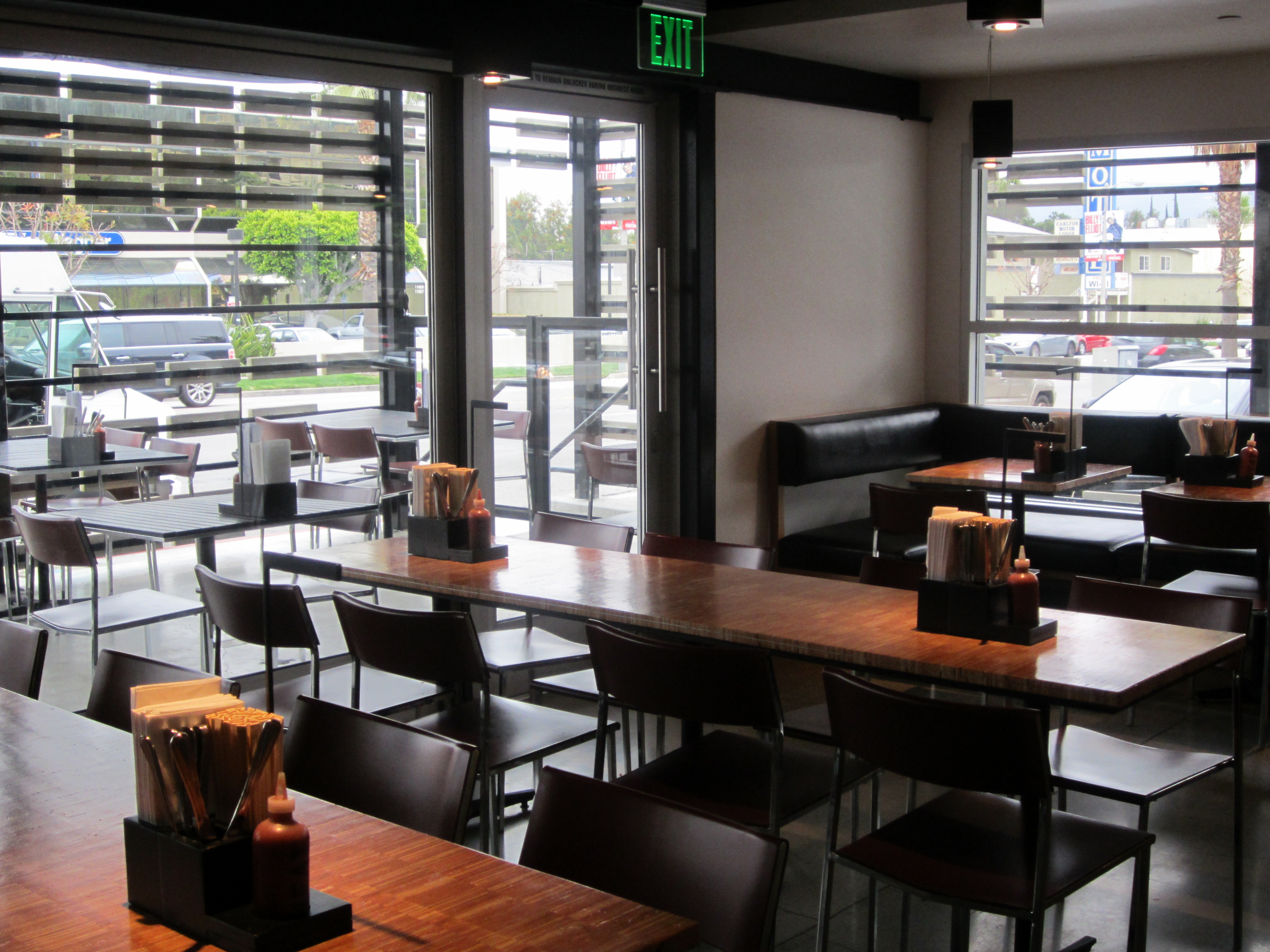
According to some, the term Dim Sum in Cantonese means Pointing to your Heart’s Desire.  To the more general populace, it is the name given to Chinese appetizers, snacks and some breakfast cuisine.  I found my heart’s desire in a quaint little bistro in Studio City called Take a Bao.  Located right on Ventura Boulevard, this restaurant offers a great Happy Hour that I was dying to check out.  I was also curious to see what feng shui elements are at play here, based solely on the use of rectangles.  Rectangles in feng shui are symbolic of the wood element.  The wood element is beneficial in a variety of ways, including new life, business growth, and stability in a nurturing environment.  It is also considered the ideal shape for a residential dwelling.  Wooden rectangles painted an earthy gray are the predominate decoration outside the bar.  And inside, the rectangle shape can be seen throughout.  Take a look at the the interior below.

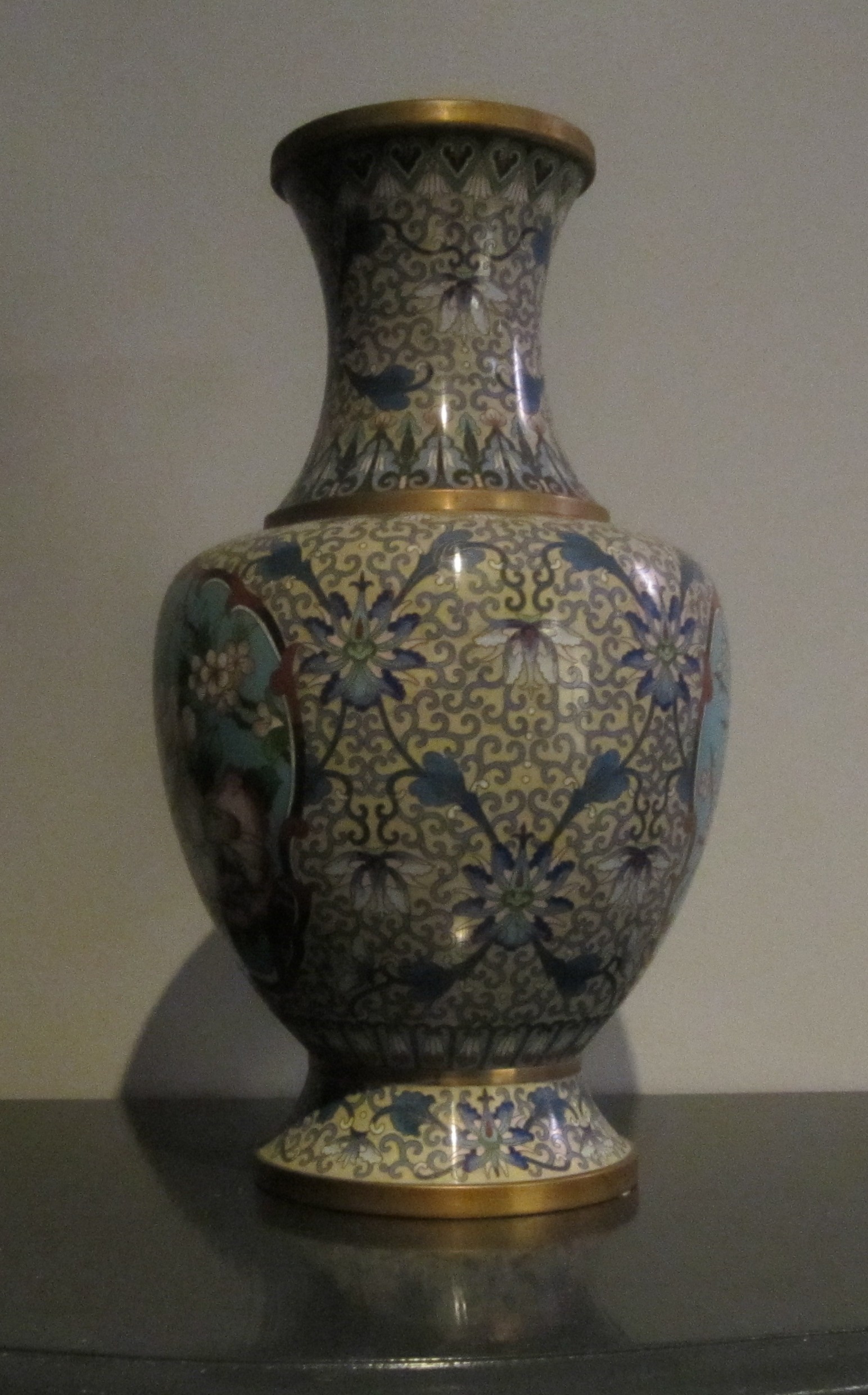
Rectangles are everywhere to be seen, from the tabletops, to the shape of the windows and doors,to the chair backs, and even on the table caddies.  Now while the restaurant is predominantly modern in its design, I really liked some of the vintage touches added to the environment – such as the elegant blue and white urn pictured here, and the carved side cabinets (painted black to match, of course.)  It’s a classy mixture of old and new items.

And now on to the food!  The Happy Hour at Take a Bao is quite good, with bao and small plates ranging in the $2.00 – $4.00 category, and alcoholic beverages from $4.00 – $7.00.  And their regular menu prices aren’t bad, either.  It is more of a casual style restaurant, where one orders from the register, and the items are brought to you.  We decided to sit at the bar. And here’s what we had:

Banh Mi Bao – Grilled pork, chiles, carrots, cilantro, bean sprouts and a spicy garlic aioli are the dominate headliners in this masterpiece.  Unlike other varieties, the bao here at Take is more like a mushu or a taco, with one’s choice of a white or wheat bun, stuffed with the desired filling, and presented on a wooden board.  Lettuce is also available if one doesn’t want the carb of the bun.  I opted for the wheat option, pictured above.   Savory and mouthwatering, I could have consumed these all night…but I only had the one.  Notice the green rectangle underneath the bao.  The wood element makes yet another appearance with the material of the cutting board, the rectangular shape of the little mat, and the green color of the little mat…intriguing.  The wood element also signifies freshness as well.

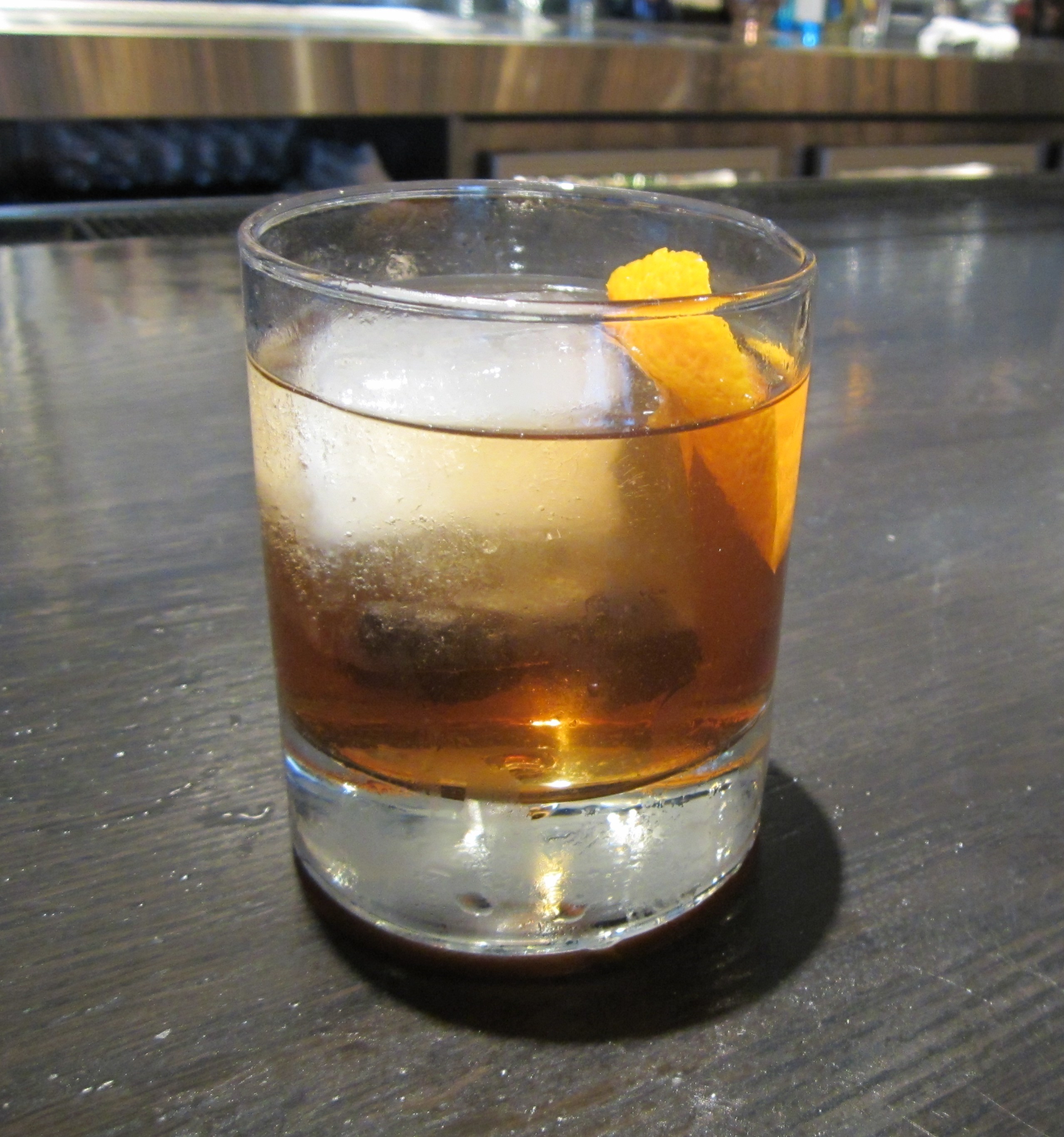
Old Fashioned – One of my favorite cocktails, this classic beverage is made with Maker’s Mark bourbon.  Notice the large, solitary ice cube in the glass.  With only one ice cube, the drink doesn’t get watered down as much as with multiple pieces of ice. Very stylish, this drink is strong and bold – definitely not for the faint of heart.

Tofu Popcorn – Bite-sized tofu cleverly deep fried into the most stunning snack.  Garnished with scallions, and served with a delectable cilantro-cashew sauce, these quickly disappeared into the cavernous realms of my stomach.  I would venture to say that even those who do not care for tofu would like this dish.  I highly recommend it.

Sumac Steak Fries – A timeless bar food classic!  These thick cut wands of potato goodness are seasoned to perfection, served with ketchup on the side.  Simply great.

The other drinks I had here were:

  • Raymond “R” Collection Field Blend – A rich and romantic red wine blend.  One can taste the cherry influence amidst the deep tannins
  • Gizz Fizz- Vanilla based beverage with Seagram’s Gin.  Sweet and refreshing.
  • Creamsicle – A dream come true!  An amazing mixture of fresh orange juice, vanilla, and vanilla vodka.  Not overly sweet, but just right.  A perfect dessert cocktail.

The bathrooms here are also a little more social than most.  The sink for both restrooms is a long, stainless steel tub located in the hallway with a large mirror above.  One aspect I really like here is the use of stones at the bottom of the sink.  Stones are an earth element, and when used correctly, can help ground the room from precious chi (energy) draining away down the drain.  This is also especially important in keeping abundance and wealth within an environment.  For most of my clients, I usually do not recommend stones for the bottom of a sink because they can be difficult to clean.  However, I love how it looks, and do this in my own home.  If one wants to use these to help keep abundant energy within a residence, I suggest getting smaller stones or river rocks and placing them in a wide bowl or container.  Place said container on top of the tank of the toilet, or on a shelf directly above the tank.  Rinse these stones out about once a month.  If you really like the idea of stones in the sink, I suggest getting perhaps four or five large, flat stones and placing them over the drain.  The flatness of the rocks will make them easier to clean, rather than lots of small stones or pebbles.  Also, notice the shape of the sink – it’s another rectangle.

Another thing I like about Take a Bao is the convenient parking.  In a city where everyone drives, finding parking is important.  A generous lot is provided for patrons – this becomes valet in the evening, but during Happy Hour it shouldn’t be an issue.  I found parking around the corner near Carpenter Elementary on a residential street.  This bar is definitely one of my new favorite spots.  Take a Bao deserves a standing ovation.

Take a Bao

11838 Ventura Blvd, Studio City, CA 91604

818 691-7223

Hours:   Happy Hour:  Monday – Friday 4:00 – 6:00,  Bar:  Monday – Saturday 11:30 – 11:00,  Sunday 11:30 – 10:00

Note:  Kitchen usually stops serving an hour before closing, except for their special late night menu on Friday and Saturday.

http://www.takeabao.com/

Victorian Los Olivos

The 1880s were a time of tremendous growth in California, with people immigrating here from the East, as well as various parts of Europe.  One Easterner who believed his future was in California was Alden March Boyd.  Due to health issues, he was forced to drop out of college.  He visited Europe, as well as various locales in The Sunshine State before purchasing a small ranch in the Santa Ynez Valley.  Wishing to improve the quality and landscape of his home, he planted an estimated five thousand olive trees, calling his estate Rancho de Los Olivos.  The name had a nice sound to it, and when the Pacific Coast Railway completed their line extension through the area in 1887, they decided to call the town Los Olivos.  Although more commonly known nowadays for its wineries rather than olives, the picturesque town is thriving with tourists and elegant architecture.  Most Victorian dwellings have high ceilings – usually around 9′ to 10 tall’.  The added ceiling height helps to regulate indoor temperatures.  It also, from a feng shui standpoint, helps to better circulate the flow of chi (energy) within the indoor environment.   Many of the new condo and apartment buildings being constructed today have returned to using historic design elements – including 9′ ceilings.   Those Victorians knew what they were doing.   Most modern ceiling heights are 8″, which is not bad.  But 9″ is more optimal for chi flow.

On my recent trip to Los Olivos, I visited the Qupe/Verdad/ Ethan Tasting Room.  Housed in a beautiful Victorian style building (above), the wines here were rich and luscious. This is a family business, with the patriarch of the family, Bob Linquist, as creator of Qupe Vineyards (pronounced cue-pay), while his wife Lousia makes the Verdad label, and his son Ethan makes – you guessed it – the Ethan label.   As impressed with the wine as I was, I was really taken with the layout of the tasting room.  They use a variety of vintage design styles here, especially focusing on that of Gustave Stickley.   A furniture designer, Stickley visited Europe in 1898, where he was introduced to the Arts and Crafts movement of the era.  The Arts and Crafts movement was somewhat of a rebellion against mass production, focusing more on products that were hand constructed by small groups or individuals rather than in factories.  The design style features simplistic lines and influences from natural surroundings.  Here at Qupe, it can be seen in many ways, from the classic mission style furniture, to the elegant Qupe motif of a poppy.   As you can see, wood and fire are the dominate elements used in the tasting room decor.  Nostalgic reproduction lamps act as a perfect example of fire energy, with the light green walls representing wood.  The wood furniture and bar are beautiful to behold.  I also really liked the carved front door, and the side table that uses a wine barrel end as its top surface.

As I meandered through the space, enjoying the tastings of the select wines I sampled, I noticed a bookshelf of wine.  I immediately felt comfortable and at home.  Of the wines I had, my two favorites were the Verdad 2009 Tempranillo, and the Verdad 2007 Tempranillo.  Both held a mellow and spicy appeal that warmed my soul.   A bottle of the latter came home with me.  The Qupe 2010 Viognier was also intriguing.

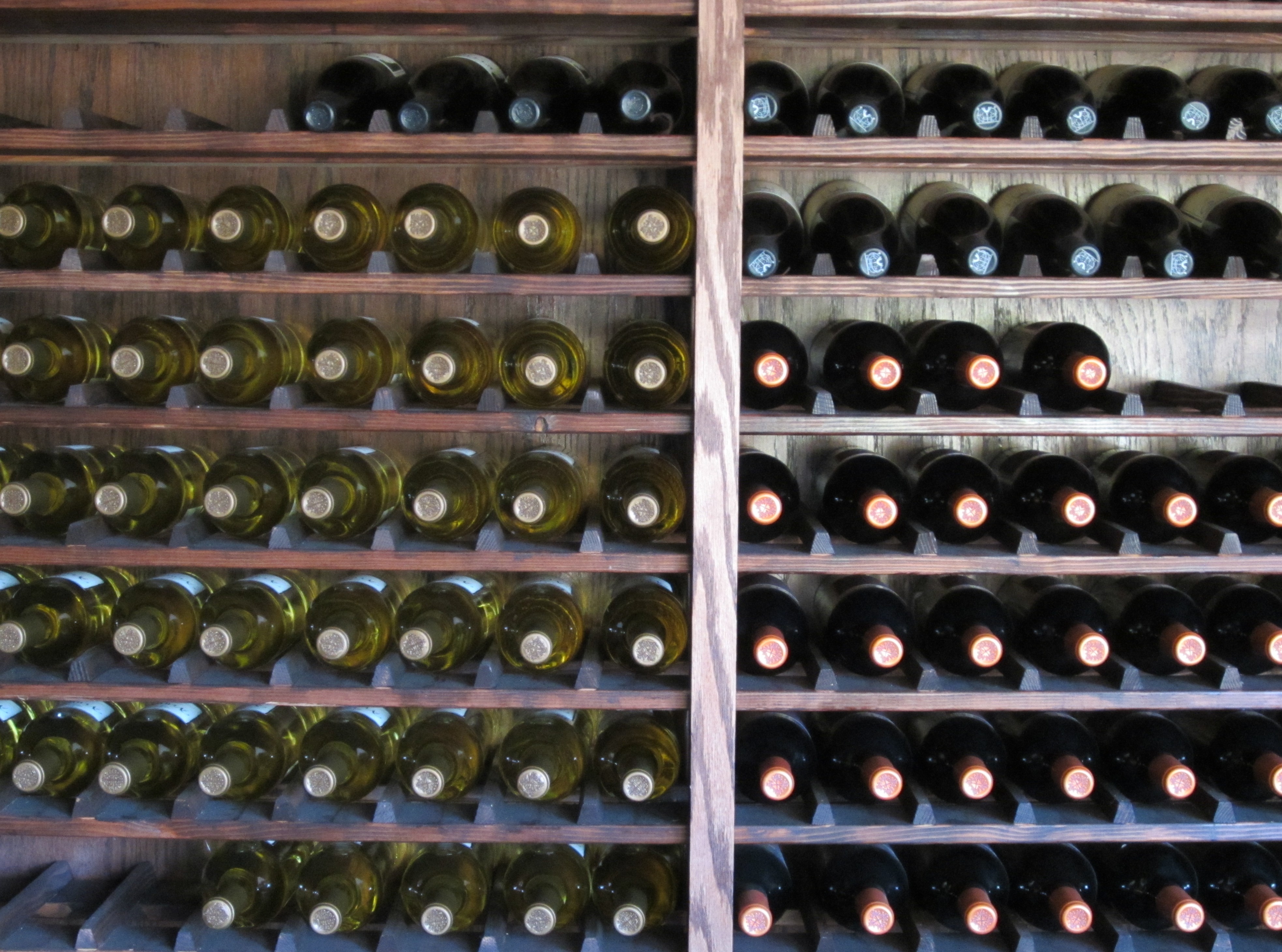
A private  chamber in the back provides more intimate tastings on the weekends.  Keeping true to the Arts and Crafts theme, I noticed a cunning wine rack made from barrel slates and reclaimed wood.  Not only it is green in its design, I’m guessing it’s also handcrafted locally, and fits in perfectly with the Stickley style.  I would have this in my home.

In feng shui folklore, the poppy is a symbol of romance and loyalty between lovers.   Displaying two together, especially in hues of red or orange, can help to draw romance to an area.  Poppies also symbolize sleep and rest.  Upon the suggestion of wine connoisseur Ann Johnson, Bob Linquist settled on the poppy motif in the window above to symbolize Qupe Wines.  Found in a vintage design book of the Stickley School of Design, the motif was meant to be embroidered on bed linens to help one sleep.   And Qupe is the Chumash word for poppy.    The elegant poppy motif is also on their over-sized wine glasses, which are available for purchase, or as a gift with a new wine club membership.

If you happen to be in the Los Olivos area, I highly suggest visiting the white Victorian house of Qupe/Verdad/Ethan Wines.  Unlike poppies, their wine will not put you to sleep – but could help to transport you to a more nostalgic time.

Qupe /Verdad / Ethan Tasting Room

2963 Grand Ave, Los Olivos, CA 93441

805 686-4200

Hours:  Tasting room open daily 11:00 to 5:00

http://qupe.com/

A Garden Oasis at Carhartt

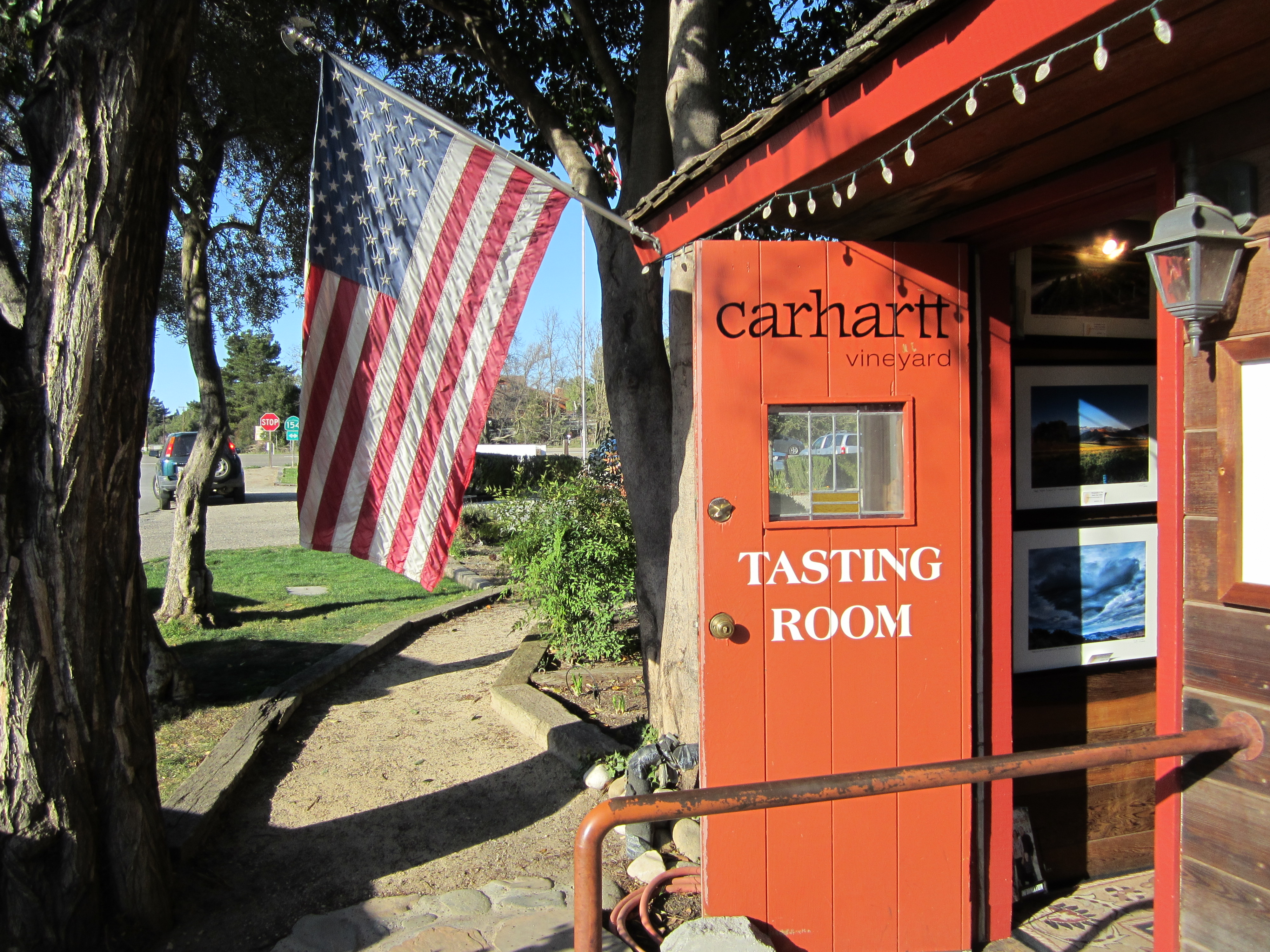
The bewitching grace of the colorful  fish called koi has long attracted mortals.  In the folklore of many eastern countries, koi is considered to be a symbol of strength, endurance, courage and abundance.  It was also believed that the larger the koi one owned, the more prosperous one would become.  As I was entering the Carhartt Tasting Room, I was immediately taken with the colossal fish sculpture acting as guardian to the establishment.  The intricate metalwork of the delicate fins and scales is a truly beautiful thing to behold.  I am honestly not certain what kind of fish it is, but it reminded me of the stately koi.  Also known as “swimming flowers,” koi are available in a wide variety of colors, usually white, yellow, orange, red, black, or any combination thereof.  If we can judge by the grandiose size of this fish, then Carhartt must be thriving in its prosperity.

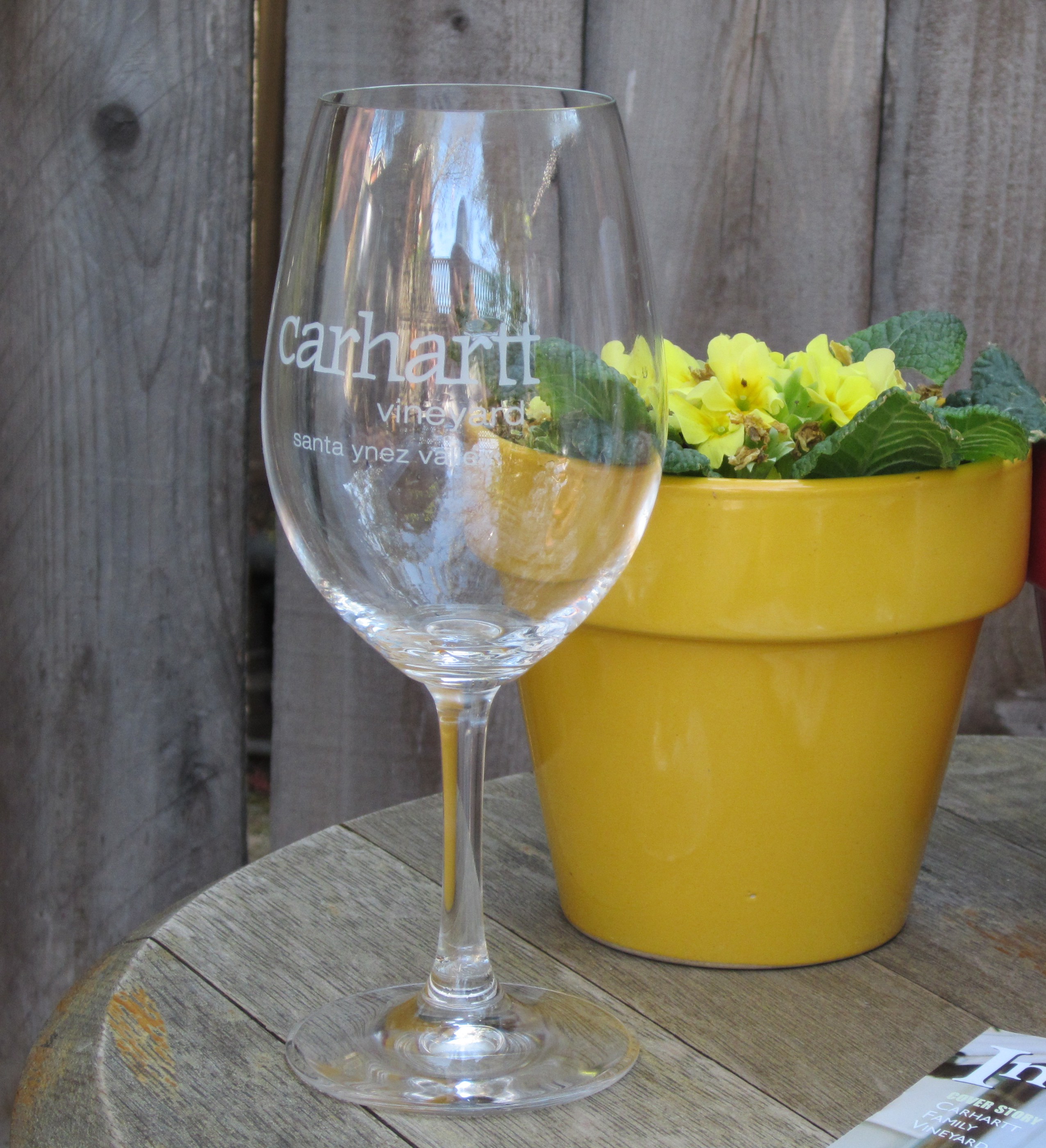
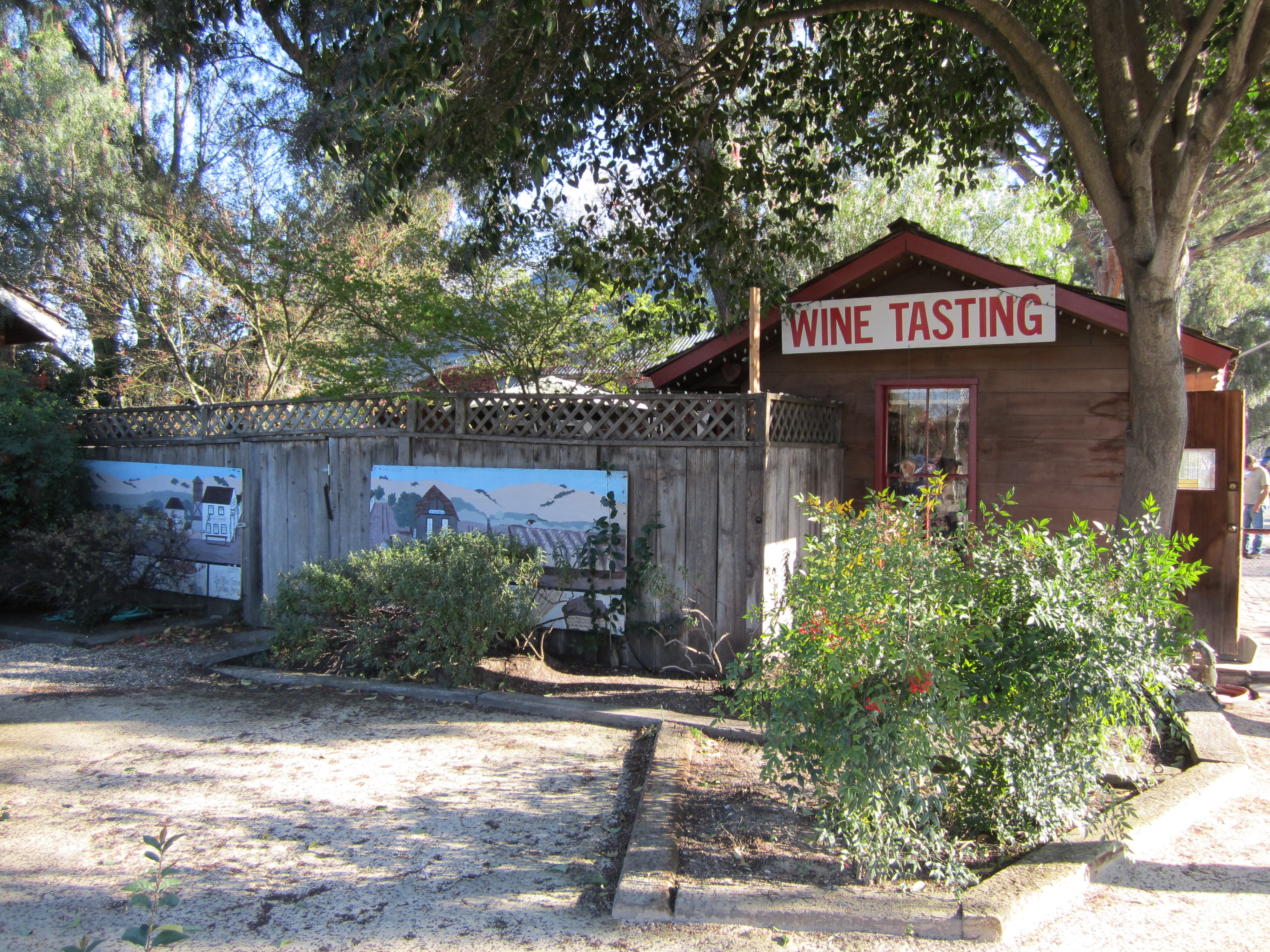
Located in the wine hamlet of Los Olivos, Carhartt is perhaps one of the smallest tasting rooms I’ve ever visited.  Photographs, mostly of the winemakers and nearby landscapes, adorn the walls of the matchbook-sized room.  But what really captured my attention was the heavenly garden in back.  Guests are invited to have their tastings out here when the weather is fine, as well as to just come and enjoy a glass or bottle at their leisure.  From a feng shui perspective, this tranquil oasis has all of the five elements represented, blending together in perfect unity:

  • Wood – The trees and lush plants in the garden.
  • Fire-The colors of the flowers and flower pots, as well as the wine in our glasses.
  • Metal -Parts of the fountain and patio furniture, and the metal signage
  • Earth – The stone of the fountain, the terra cotta flower pots, and brick tile on the ground.
  • Water – The elegant fountain, part of which is made from a wine barrel (pictured below)

Notice the little stone frog perched in the fountain.  Frogs, in feng shui folklore, attract luck and wealth, especially when paired with other items such as water and flowers.  Also, this specific frog is placed diagonally from the main entrance to the garden, which can help to attract wealth to the environment.  I think the frog is cute, and adds a healthy energy to the fountain and surroundings.  And I think I spot some real living fish in the pond, too.

And now on to the wine.  All six of the intricate wines we tried were intoxicating and lovely.  The two that really impressed me were the 2010 Sangiovese and the 2009 Syrah.  The Sangiovese had a deep, silky sheen in color and tasted divine, with hints of strawberry and oak.

The Syrah won my heart, however.  A deep, blood red wine with suggestions of chocolate, pepper, and blackberry.  It was love at first taste.  A bottle of this fine liquid gem accompanied me back home.  I will most assuredly be purchasing this again.

Another aspect I love about Carhartt wines are the labels on the bottle.  Each varietal has a different animal on it.  The Syrah has a pig, the Merlot a pheasant, the Sangiovese a rooster.  All of these animals have different meanings and symbolism, both in feng shui and other historical avenues.

The rustic class and simplicity of Carhartt made for a wonderful wine savoring experience.  They also played amazing music during the tasting, including some selections from the Oh Brother, Where Art Thou? soundtrack, most of it being a fusion of mellow bluegrass and jazz.   For a truly excellent outdoor wine tasting experience, visit the fine people at Carhartt.  And, don’t forget to pay homage to the giant metal fish in front.

Carhartt Tasting Room and Winery

2990A Grand Avenue, Los Olivos, CA 93441

805 693-5100

Hours:  Tasting room open daily 11:00 to 5:00.

http://www.carharttvineyard.com

How to Choose a Dining Table

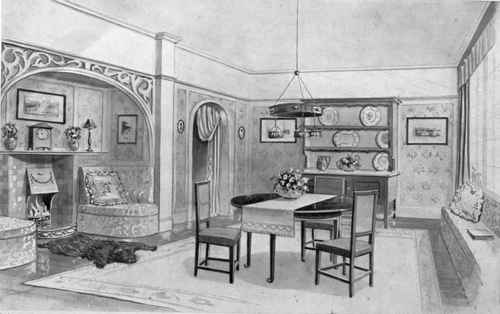
Once upon a time, in an age before the term TV Dinner was coined, people actually had most of their meals in a room devoted to dining:  The Dining Room.   Can you imagine that?  All kidding aside, due to our fast-paced modern world, most of us rarely have time to sit down with our loved ones around a large table and catch up over food at home.  The Dining Room in feng shui is one of the most important rooms in the home that often gets overlooked.  For example, most condos and apartments do not have a separate dining room, but a dining area or breakfast nook.  Not having a separate dining area is neither good or bad, it’s what one does with the dining space that is important.

There are many aspects to the dining room that need attention, but the one we’re going to look at today is the star attraction of any dining room – the dining table.  A round or oval table is considered to be the best by feng shui guidelines, as the smooth flow of the curves can be relaxing to the diner.  Square and rectangular are tables are not as good; the harsh corners can affect how people interact within the space negatively.  Also, children (and some adults) can bump into the sharp corners, causing pain.   Two ways to fix the “harsh corners” would be to select a table with softened or rounded edges.  The other way is to put a tablecloth on the table.

In feng shui, we generally like  some open space in the middle of each room or area.  One of the few exceptions to this is in the dining room.  The table should be placed within the direct center of the room (or close to it) with enough space for each guest to move from seating to standing position around the table and not bump into anything.  If you have more of an open floor plan with a dining area rather than a separate room, try looking for a light source – such as a chandelier or ceiling light.  The table would then be placed underneath it, with the light over the center of the table.  Enclosed dining rooms should have a light source as well; this can help in finding the best location for the table.

Below are some examples of the best tables I could find currently for purchase, and all of them are under $250.00 (shipping and taxes excluded).

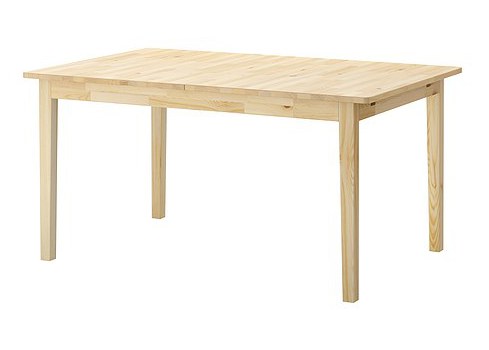
The Svalbo table from Ikea is an excellent choice.  Although it is more rectangular in shape, the corners have been completely rounded, making it more harmonious for any room.  Also, it comes in unfinished pine, which can be left as is, or finished to one’s desire.  Four sturdy legs support the table top, and an extra leaf is included, so the table may accommodate four to six people.

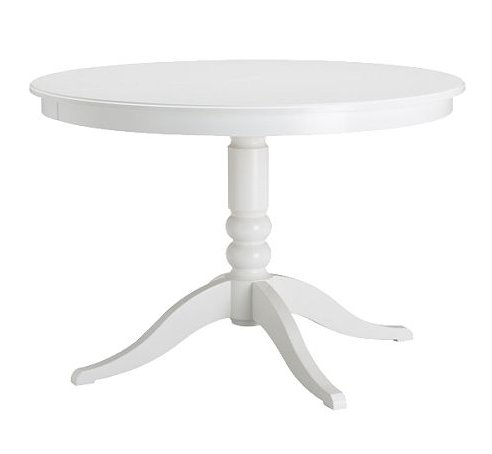
Another Ikea option is the Liatorp.  Curves abound in this charming white table that can easily blend into most environments.   A pedestal base acts as support, with an extra leaf for additional table space, altering the circle to more of an oval.  Both of the pieces above are available at Ikea.com.

Amazon Tables 01

Amazon.com also has a few choice selections.  From International Concepts comes their Dual Drop Leaf Table (left).  Ideal for apartments, this little table has two leaves that fold down, as well as softened edges all around.  The item also comes unfinished.   The Light Oak Dining Table (right) from Winsome Wood is also a great piece.  In addition to the two drop leaves, the legs fold inward, making it perfect to store away if need be.

Another example is the Brannan Pedestal Dining Table by Coaster.  The elegant curves and ideal size make this a classic table for any home.  Available in Cappuccino (pictured) or Dark Oak.

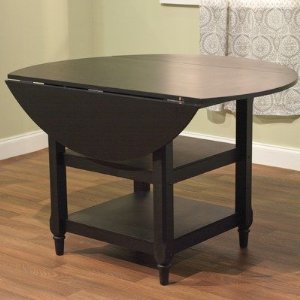
And for those who are in need of extra storage space, the Cottage Drop Leaf Table by TMS comes with two large square shelves in the support base of this round table.   The shelving here would be an ideal storage space for table linens or pottery.  All four of the above mentioned tables can be found at Amazon.com

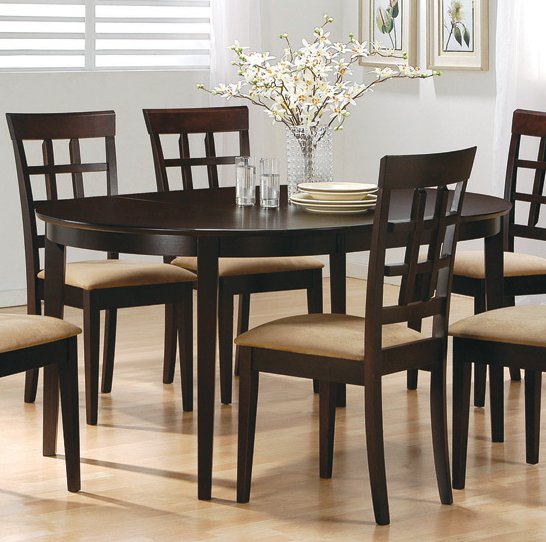
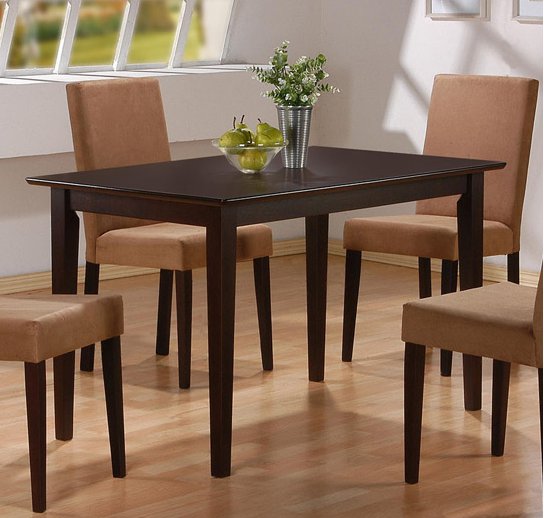
Home and Living.com is an excellent online source for furniture, and they offer free shipping for most of their items.  The Rich Cappuccino Table is an excellent choice if one is looking for a more oval table with a contemporary feel.  And, for those who want a more rectangular table, The Cappuccino Finish Dining Table (below) is another prime selection, with its softened corners and beautiful finish.

I have perhaps neglected the most important thing when selecting a good dining table.  It’s important that you like your selection.  If you purchase a dining table that you’re not thrilled about, chances are you will rarely use the table.  Stay on the lookout for my article on how to select the best dining chair, which will be posted shortly.