A Feng Shui Cookbook!

One of my favorite things to do is browse used bookstores.  I could do this for hours, and have – literally.  Or, if I don’t feel so inclined to leave the house, I do it online.  When browsing the plethora of books available on the world-wide web, I stumbled upon an intriguing and thought-provoking book called Feng Shui Food.  This cookbook is a collaborative effort between feng shui consultant Simon Brown,  and restaurant chef Steven Saunders.  Simon Brown has been a feng shui consultant since 1993, and operates Chi Energy, a holistic health institute in London.  He was also one of the first practitioners to bring feng shui classes to the United Kingdom.  Steve Saunders is a highly acclaimed chef.  Having worked on many televised cooking shows (including his own), he is the co-director of the Aspire Group, a restaurant company that has dining establishments all over the United Kingdom, as well as a few exotic locales.  Both gentlemen have authored numerous books, but this is their only joint venture.  So I purchased Feng Shui Food, and awaited its hasty arrival.
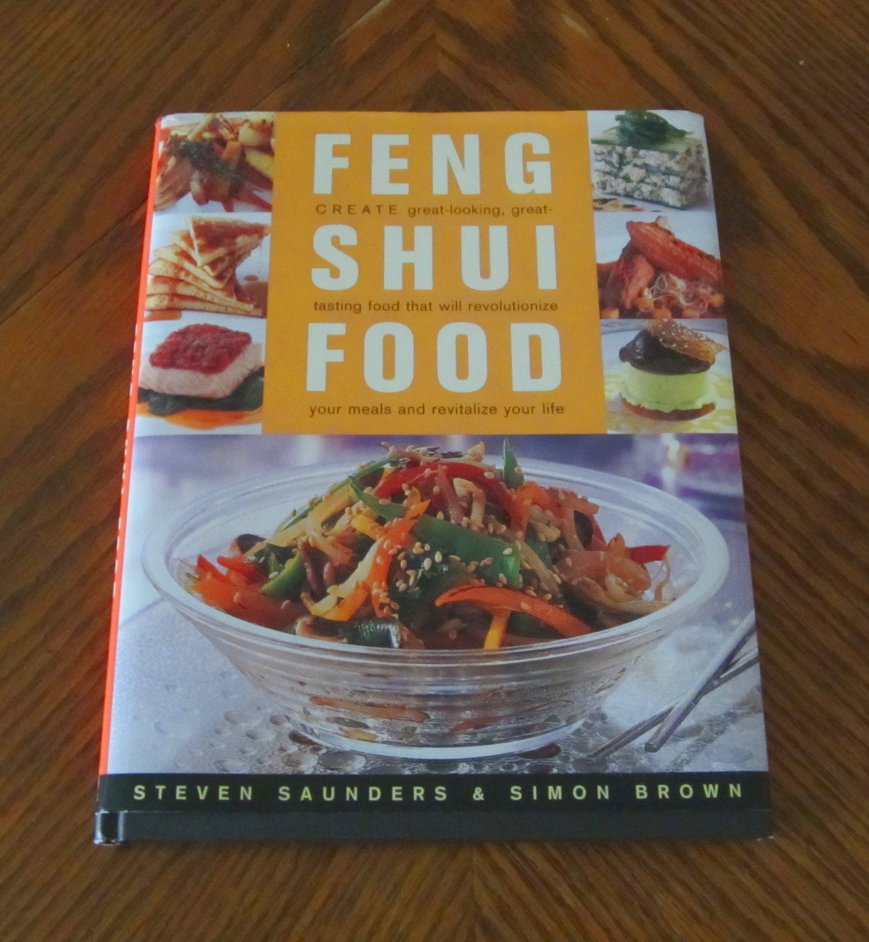
The book gives an intriguing, fresh perspective to cooking along feng shui guidelines.   Divided into five separate sections, the first chapter deals with feng shui basics, yin and yang theory, the five elements, as well as what things attract healthy chi to a kitchen.  The second chapter is nearly all recipes for appetizers and soups, entrees, side dishes, and desserts.  These are organized by yin and yang, with more yin items on the left side of the page, and yang items situated on the right.  Also, the two British authors give corresponding commentary about each dish, both from culinary and feng shui perspectives.

The third chapter, titled Menus for Success, looks at ways to create a certain kind of atmosphere, depending on what one is attempting to achieve.  From a romantic dinner for two, to a children’s lunch, to a meal for reconciliation.  In addition to even more recipes, this section also has a wide variety of tips and suggestions.  The fourth chapter goes into this further, for specific special events, such at weddings or Christmas dinner.  The fifth chapter is all about dining outside of the home.  They include ideas about selecting the right kind of environment for dining depending on the occasion.  An appendix is also located at the back, with even further recipes for oils, sauces, breads, desserts, and a few other items (some of which are required for recipes located elsewhere in the book).  Nearly all of the recipes in Feng Shui Food are vegetarian or pescatarean in nature.   Energy, or chi,  is in our food as well, and when one consumes animal flesh or animal products (dairy or eggs), we take in the energy of that creature.  A certain amount of “dead energy” comes with eating meat, hence why most of the recipes in this book are vegetable or fish based.  Although I support the vegetarian lifestyle completely, I am definitely a carnivore.  But, when I crave a hamburger or New York steak, I tend to look for more organic and humane options.  The book suggests – and I agree – that organic is the best way to go for all food items, when possible.

Many of the informative tidbits s in Feng Shui Food are highly valuable, especially when it comes to attaining a balanced meal from a feng shui perspective.  And all of the recipes are simply mouthwatering.   But then came the difficult part – which recipe do I start with?  I decided to go with Petit Pois a la Francaise, located on page 54 of the book.   I selected this side dish because I liked all of the ingredients, and it seemed rather easy to make.  Although I did play with some of the components.

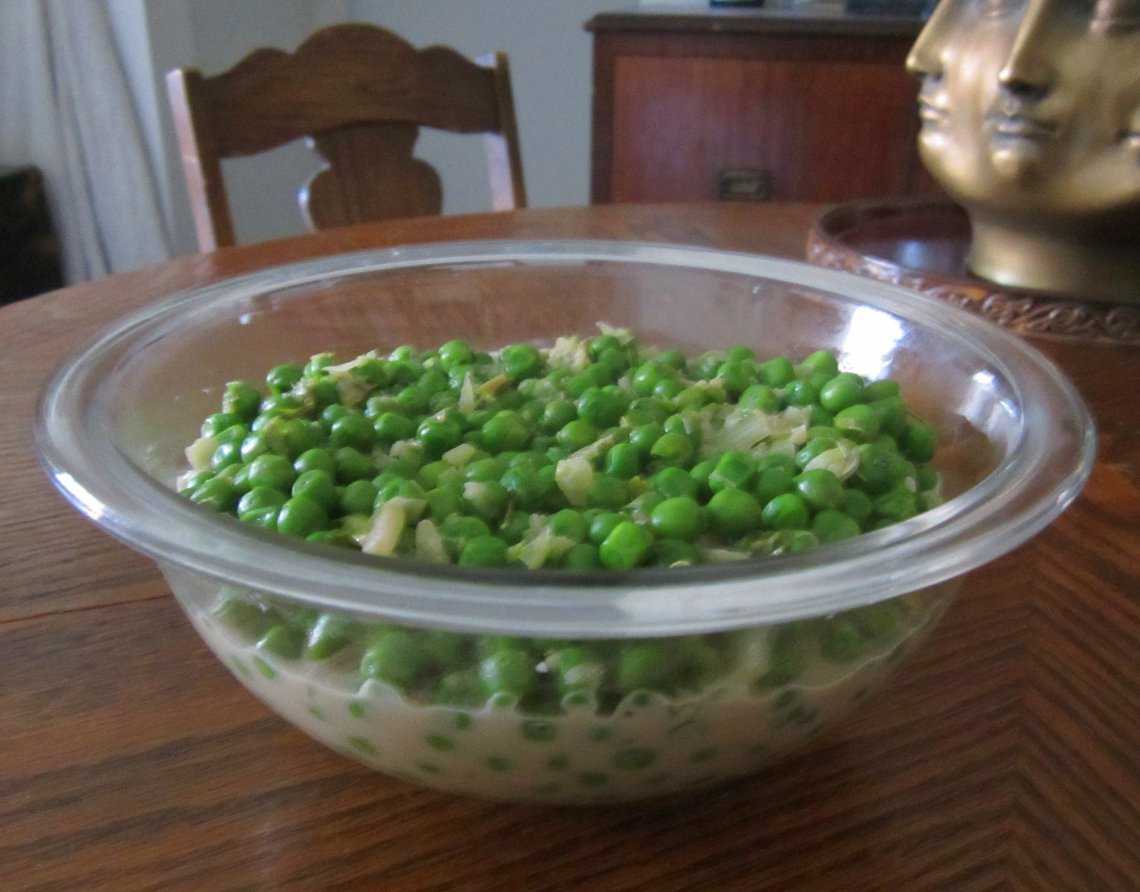
2 pounds of fresh or frozen peas are the main act in this dish.  I opted for the frozen sweet peas from a fine French store I frequent known as Target  (Their Market Pantry selection of generic food items are very high quality – especially their instant oatmeal).  Rather than use the required shallots, I used finely diced scallions.  I also didn’t have any vegetable broth.  Since I had no present desire to my own, so I took a shortcut by way of beef bouillon.  I also neglected to purchase fresh mint,   so I opted for rosemary as a substitute.

One thing I loved about these peas is they use honey to add a distinct sweet flavor.  Although it requires only one tablespoon, I added a little over two.   I was also concerned about the heavy cream required.  I was expecting it to be cream laden, but the ratio of cream to peas is pretty sparse, so calorie-wise, it isn’t too bad.  Tahini can also be substituted for the cream.
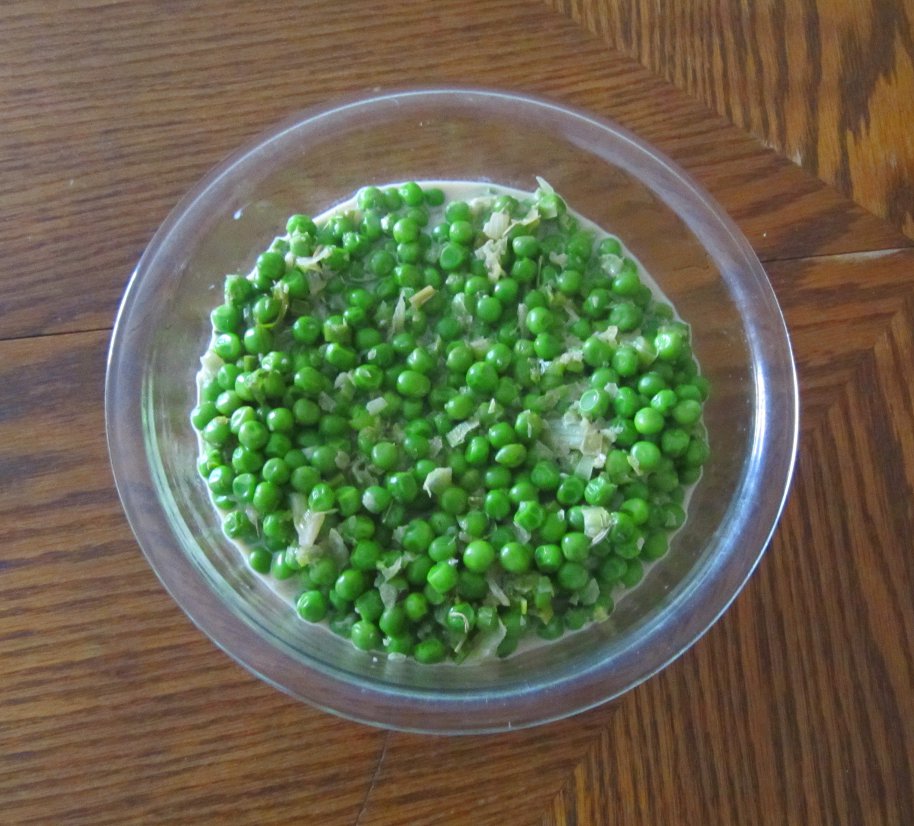
Other than my few alterations, I followed the recipe exactly.  The final product is pictured above.  The recipe states that it’s for four people (nearly all of the recipes in the book are for a party of four).  Here, I disagree.  This amount would easily serve anywhere between six to eight individuals.   While I enjoyed the rosemary, I feel the mint would have complimented the honey on the vegetables much better.  Element wise, I love how wood-based this meal is, with the greenery and fresh herbs.  Simon Brown also indicates this dish is great for wanting to be more creative or more inspired, and I agree completely.  I’ve been adding these peas to Chinese fried rice, macaroni and cheese, scrambled eggs, or leaving as is as the perfect side dish.

Where is the best place to get this wondrous book?  Published in the UK in 1999, and United States in 2000, one’s best bet would be online.  I’ve compiled a list of the most affordable places to order Feng Shui Food below:

This book is sensational, and I highly recommend it to any novice or experienced chef.  As for my further culinary adventures with Feng Shui Food, I plan on making their Lemon Oil and Basil Oil (or perhaps combining the two), Honey and Raspberry Fool, Fried Lentil Cakes with Cumin, and  Lasagna of Spinach Pasta and Wild Mushrooms.  I better get started cooking…
My Ninja, My Love…

Red Lego Ninja

My friend Kristin, a successful actress and model,  moved to France.  As models are sometimes apt to do, she moved to Paris for work, leaving me the sole custody of her Ninja.  No, it’s not a cat, dog, or turtle – but a blender.   I’ve had torn relationships with blenders in the past.  They always make promises to accomplish goals, then barely put in any effort to get them done.   Sometimes they refuse to do anything at all, and just sit there glaring at me as they repose on the formica.  The current blender I have has been exiled to the pantry – after it protested to blend ice for margaritas.   But then Kristin introduced me to the Ninja.  And other friends of mine had mentioned the Ninja as well; how it creates these dream-like smoothies and fantastic sauces.  Was this indeed an appliance I could count on?  So Kristin left the country and I got the blender.

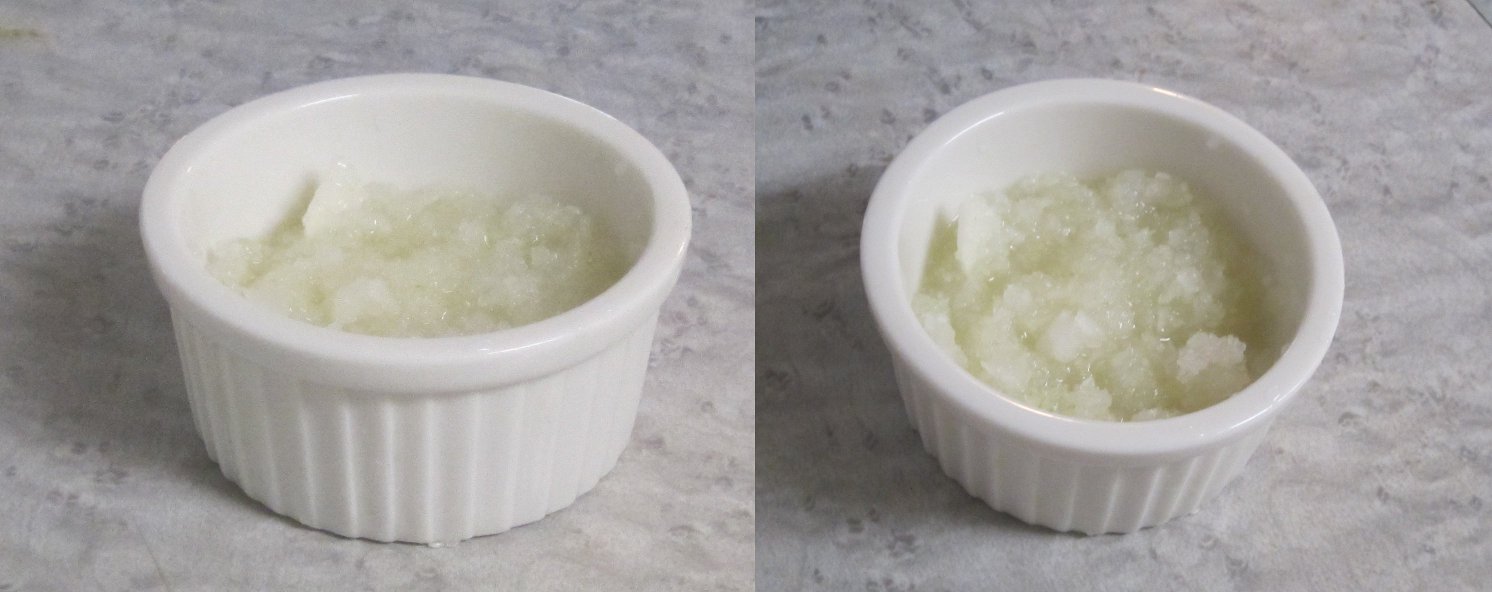
The model I have is the Ninja Pulse.  Pictured above, it comes with everything displayed, as well as a cookbook and instruction manual.  I felt immediately at ease with this appliance.  And then the experiments began.  Pasta sauces, smoothies, and soups are the main things I use it for; although it can also be used as a coffee bean grinder and mixer.  I also use it to dice onions and other vegetables into smaller morsels.  The key here is not to blend it too much, or it becomes more liquified than desired.  However, because of a very happy accident, I created an amazing sandwich spread:  pureed onion.  I was attempting to dice two white onions, and I blended it a little too heavily.   I decided to make the most of my mistake, added a little water, and processed it some more.  A smooth, low-calorie spread was born!  Not only is it good on sandwiches, it can also be used at a thickener for soups and sauces, and as a topping for potatoes.  One could add spices or Parmesan cheese to it as well, but I kept mine pure and basic.  Take a look at the finished product below.

Another recipe I invented was Creamy Curry Soup.  I took two broccoli stalks (sans the florets) and half a white onion.  I pureed both together until it was a nice thick paste.  Then, I heated up a can of cream of chicken soup.  Added to this was my broccoli paste, fresh spinach leaves, two sliced avocados, a myriad of spices, and yellow curry powder.  I like it spicy, so I added a lot of yellow curry, as well as cumin, chili powder, and dried cilantro.  Phenomenal was the word that sprang to mind as I savored the first taste of this creation.  This could also be made vegetarian easily, just substitute cream of mushroom or cream of celery for the soup.  Or one could go the other direction and add chicken breast to the brew.  I had mine with some fresh bread, but it would be equally good served over rice.

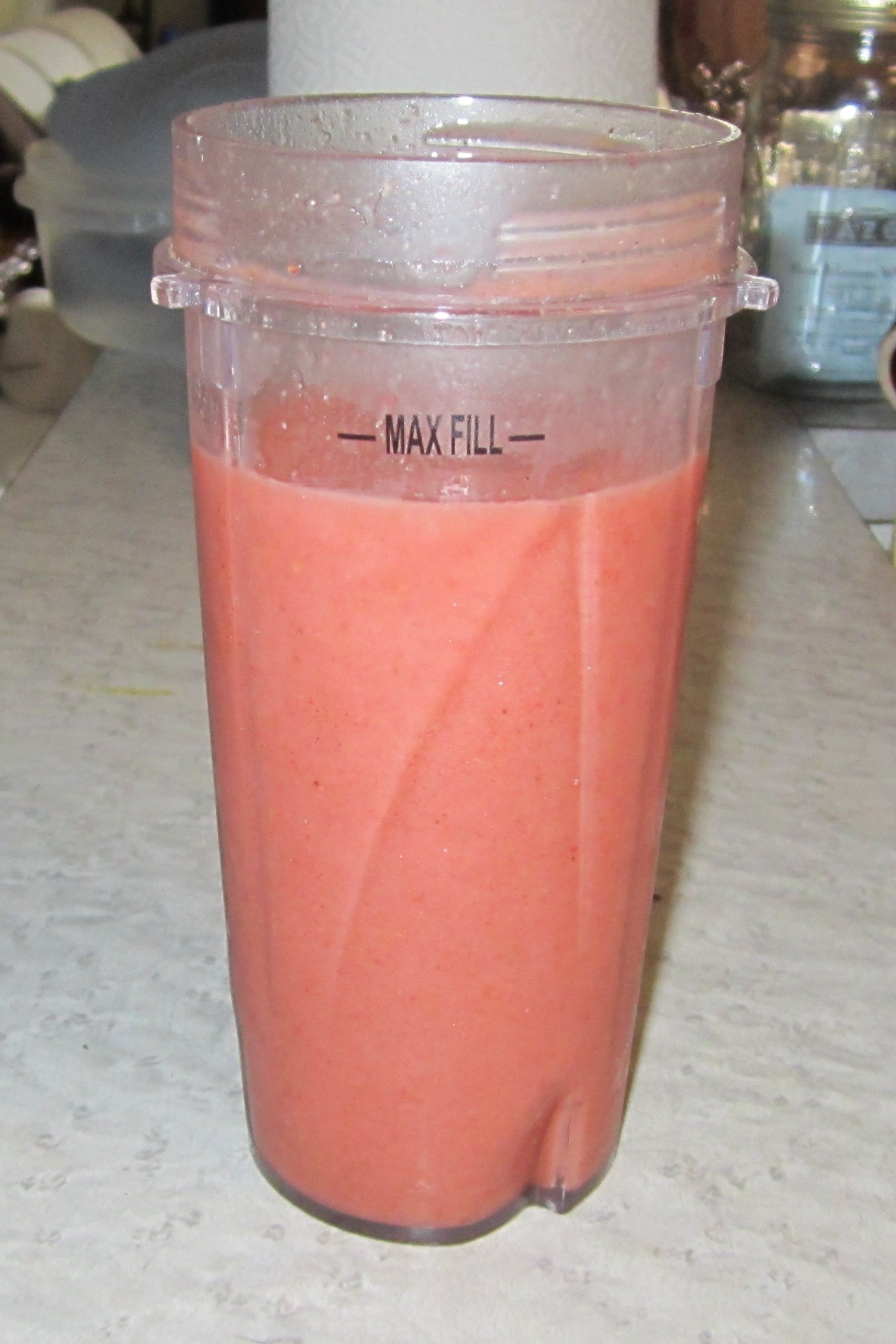
One smoothie recipe I love involves a banana, about a cup of frozen strawberries, six or so ice cubes, and cranberry juice.  Pulsed until liquid form, this can either be consumed right away as a beverage, or put in the freezer as a chilled dessert.  I haven’t done so yet, but it would be amazing with vodka or tequila added to it as well.  The finished product is pictured above.

How, exactly, this is blender feng shui?  Well, it falls into many categories.  For one, is a multifaceted kitchen machine, so it can perform a variety of tasks.  It also takes up very little space in the kitchen, thus avoiding clutter.  Also, the more healthy and taste-filled food and beverages are, the more abundant and auspicious they become.  It also makes eating healthy a lot easier.  If I’m not in the mood to eat more nutritious  items, I just chop and puree them down, and then add them to things.  My vegetable intake has tripled since the Ninja came to live with me.  Also, it adds a beneficial metal element to the kitchen, in both color and material.  However, most kitchens are usually brimming with metal energy due to the  other main fixtures in the room, such as the stove, refrigerator, and sink.

Because it is such an incredible product, the Ninja Pulse can be a little pricey.  I have searched the web, and here are the best places to capture this ninja online:

I have many activities planned for The Ninja and myself.   I foresee a long and blissful array of cookie dough combinations, home-made mashed potatoes, shredded zucchini browns, and dark chocolate raspberry pudding.   My Ninja, you are truly a one-in-a-million appliance.

Brussels Sprouts… Friend or Foe?

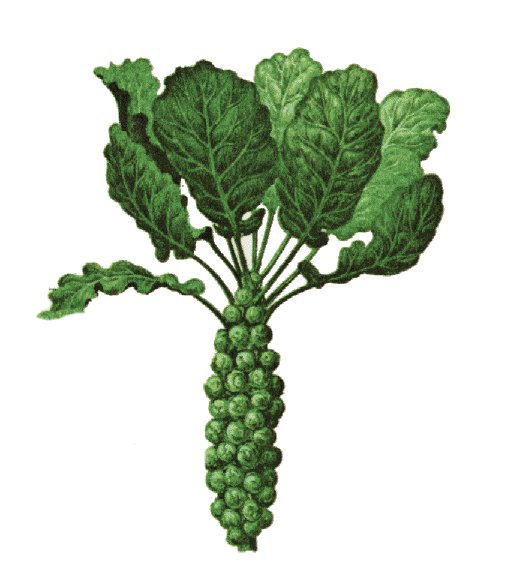
Vintage Brussels Sprouts

When I was a child, I loathed brussels sprouts.  I thought they looked cute, but they smelled disgusting.  I remember on the rare occasions I was coerced into having them, I was not impressed.  Usually the bribe here was a slice of chocolate cake or an ice cream sandwich.  However, as an adult, my tastes have changed.  So has the general opinion of brussels sprouts.  Many restaurants in Los Angeles have reinvented the way this Brassica vegetable is prepared in new, contemporary ways – such as wrapping them in bacon or prosciutto, grilling them in foil over an open flame, or tossing them into a salad whole.  Cleo, the restaurant in the Redbury Hotel, deflowers the brussel by shedding all of the leaves, and baking them like potato chips – making a very savory snack.  At a recent dinner party, I decided to sample a single brussel from a platter.  They had been baked in the oven, and smelled wonderful.   The taste was sensational and sultry.  I wondered exactly how one can make these at home, so online I went in search of a great brussels sprout recipe.

My findings took me to an incredible blog called Fannetastic Food.  Run by a dynamic, eclectic woman named Anne, her blogpost about brussels indicated that one has to cut off the nasty stalk of the sprout to avoid that sick, bitter taste many of us have experienced.  One can visit her brussels article here:  http://www.fannetasticfood.com/2011/03/30/how-to-make-brussels-sprouts-delicious/    Using her recipe and article as a base, I created my own recipe for Baked Brussels Sprouts, which I’ve made quite often recently, and they always turn out delicious.

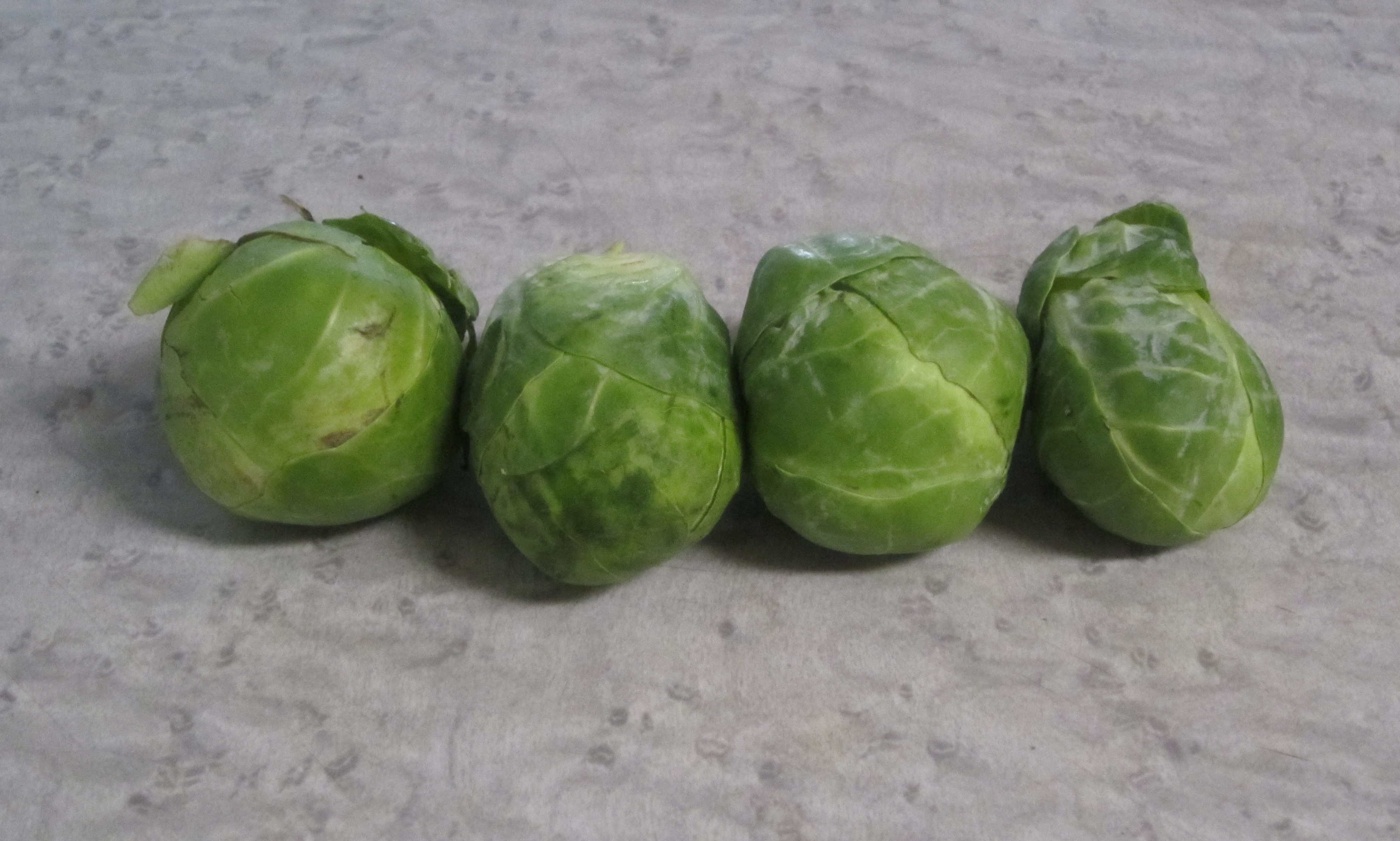
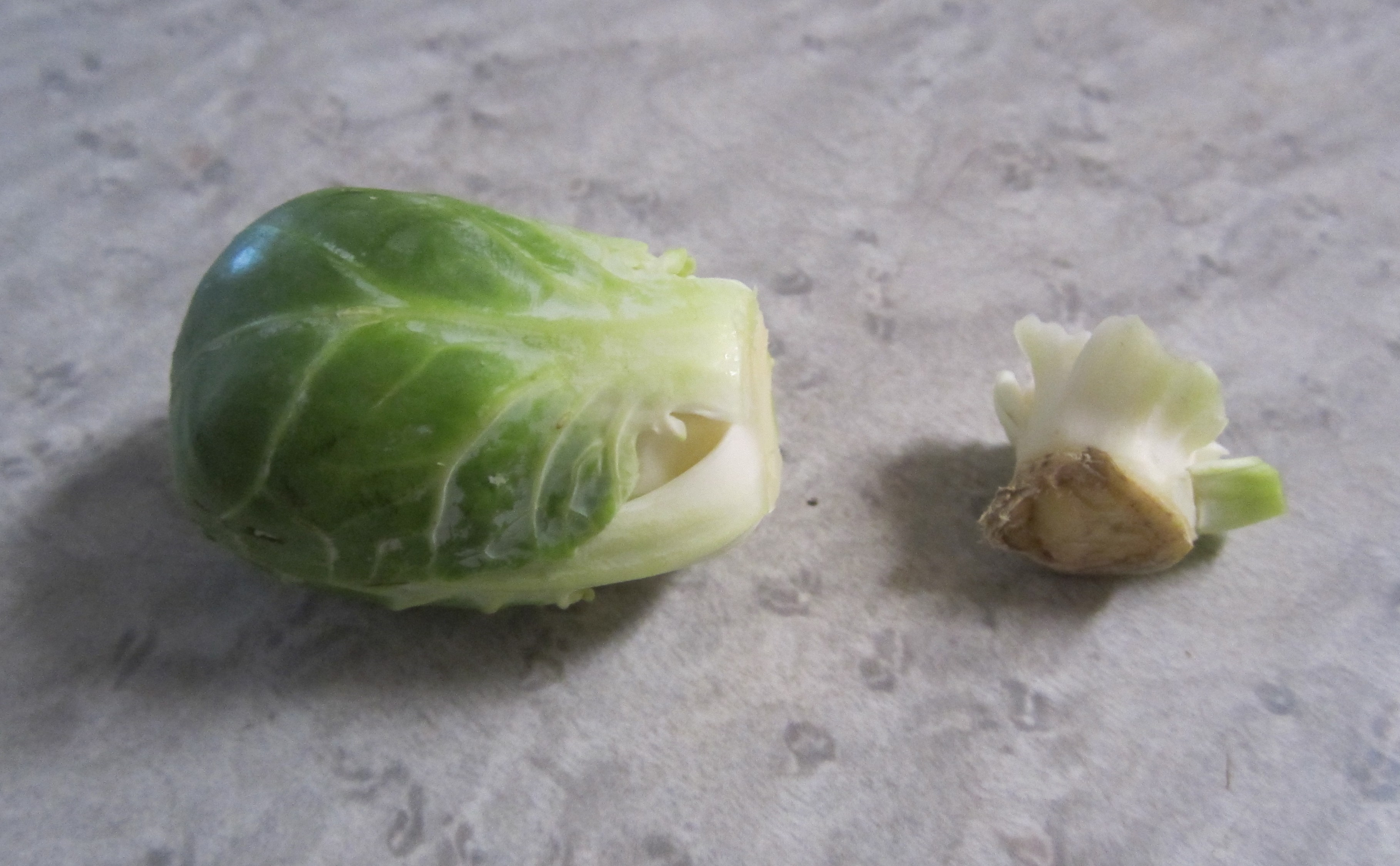
Gently wash all of the brussels sprouts. Then cut off the stalk of ill repute (above), and dispose of said stalks in the garbage.  Then, cut each brussel in half.  Some of the leaves may fall off – gather them together for later.  After the cutting is complete, take the random loose leaves and brussel halves and put them in a plastic bag.  A zip lock bag works well for this, or one can use a plastic grocery bag.  Drizzle some olive oil in the bag, and add imitation bacon bits, sea salt, lemon pepper, garlic powder, and a little chili powder to the mix.   (Feel free to play with the spices; I always do).  Then, move and shake the brussel mixture, until the olive oil and spice are covering each brussel part.

Pre-heat your oven to 400 – 425 degrees.   Oven temperatures vary, and I’ve tried both temperatures in mine, and each work equally well.  Next, take a cookie sheet and cover it with foil.  Grease the foil any way you would like.  I use a non-stick cooking spray, or olive oil.  Place the brussel halves and leaves upon the cookie sheet.  Bake the brussels uncovered for about 15 – 20 minutes , or until you feel they are done.  Play with it, and judge accordingly.  Below is an example of what my finished product typically looks like.

The Brussels Sprout earned its name from Brussels, Belgium, as they were one of the chief vegetables produced there in the sixteenth century.  The were introduced to the English and French in the nineteenth century, coming to the United States shortly thereafter in Louisiana.  By 1939, brussels were being grown in the central valley of California, where they are still primarily grown today for American consumers.  From a feng shui standpoint, the brussels sprout is a wonderful example of the wood element, being that it is derived directly from a plant, and for its calming green hues.  The shape of the brussel is more metallic.  Circles and spheres are metal in their elemental origin, and are considered very welcoming to people.  I think brussels are also very attractive – almost like pygmy cabbages.  They are also rich in Vitamins K, A, C , fiber and sulforaphane, and are excellent at lowering cholesterol.  For my next experiment in brussels cuisine, I’m going to try a brussels sprouts soup…which I think I will make later in the week.

The Power of Pumpkin

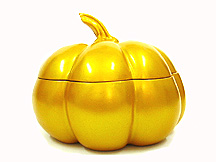
I made the most amazing dish in my kitchen the other night – Pumpkin Pasta. I love anything pumpkin, and eat it not just in autumn months, but all year long. In feng shui folklore, the pumpkin has a very unique and rich history. A symbol of prosperity and wealth, the pumpkin was favored by the housewives of ancient China. They believed that this golden fruit would bring luck and abundance to all those that lived in the home, especially when placed in the Southeast area of a room or dwelling.

In modern times, the pumpkin is a universal symbol for Thanksgiving and All Hallows Eve. But the pumpkin also has amazing health benefits as well. Loaded with fiber, vitamins A and C, magnesium, and potassium, this golden wonder fruit is also very low in calories. The seeds have all of these benefits as well, and possess essential fatty acids good for brain activity and healthy skin. The flesh of the pumpkin also contains L-tryptophan, a natural chemical that stimulates feelings of happiness and contentment – helping to rid one of depressive and negative feelings

Some feng shui practitioners will suggest using pumpkin boxes filled with certain items to attract wealth. Personally, I feel pumpkin shaped boxes are just pretty to look at, and useful for storage. They would make great additions to a kitchen or dining area to conceal spices, toothpicks, or other small items.

Gold Pumpkin Box

To make the Pumpkin Pasta Sauce, take equal parts pumpkin puree and tomato-based pasta sauce. The puree and sauce can both be made from scratch, if desired, but I usually get the canned pureed pumpkin from the supermarket (along with a store-bought pasta sauce).  But the final ingredient that I feel makes this a well-balanced dish is red wine. Depending on how much I’m making, I usually add half a cup of wine to the mix, or more if making a substantial amount of sauce. The yin of the pumpkin and tomato co-habitat well with the yang energy of the red wine.  Spice it up the way you like.  Some things I’ve added in the past are diced tomatoes, peas, minced garlic, garlic powder, sea salt, cumin, nutmeg, cinnamon, and pieces of chicken breast.  Experiment and have fun.Pumpkin Card Seed Packet