Mochas Among the Greenery

Wendy and Colorful Trees

“If you have a garden and a library, you have everything you need.”  Now, while I agree wholeheartedly with Cicero here, I feel he may have omitted a few other necessities in life – such as one’s morning cup of coffee.  I function much better after I’ve had two cups of that delicious brew.  It awakens my senses as part of my daily ritual for facing the world.   Coffee can be highly useful and beneficial in a variety of manners.  One of the many ways I use coffee is to reuse it’s byproduct – coffee grounds.  I have a small garden on my balcony at home, and I have found used coffee grounds are excellent as plant food, due to its high levels of potassium, nitrogen, and other trace minerals – all of which are important for healthy plant growth.  But is there such a place where coffee and plants come together in a beautiful, harmonious environment?  Yes, there is.
Grubb Nursery 01

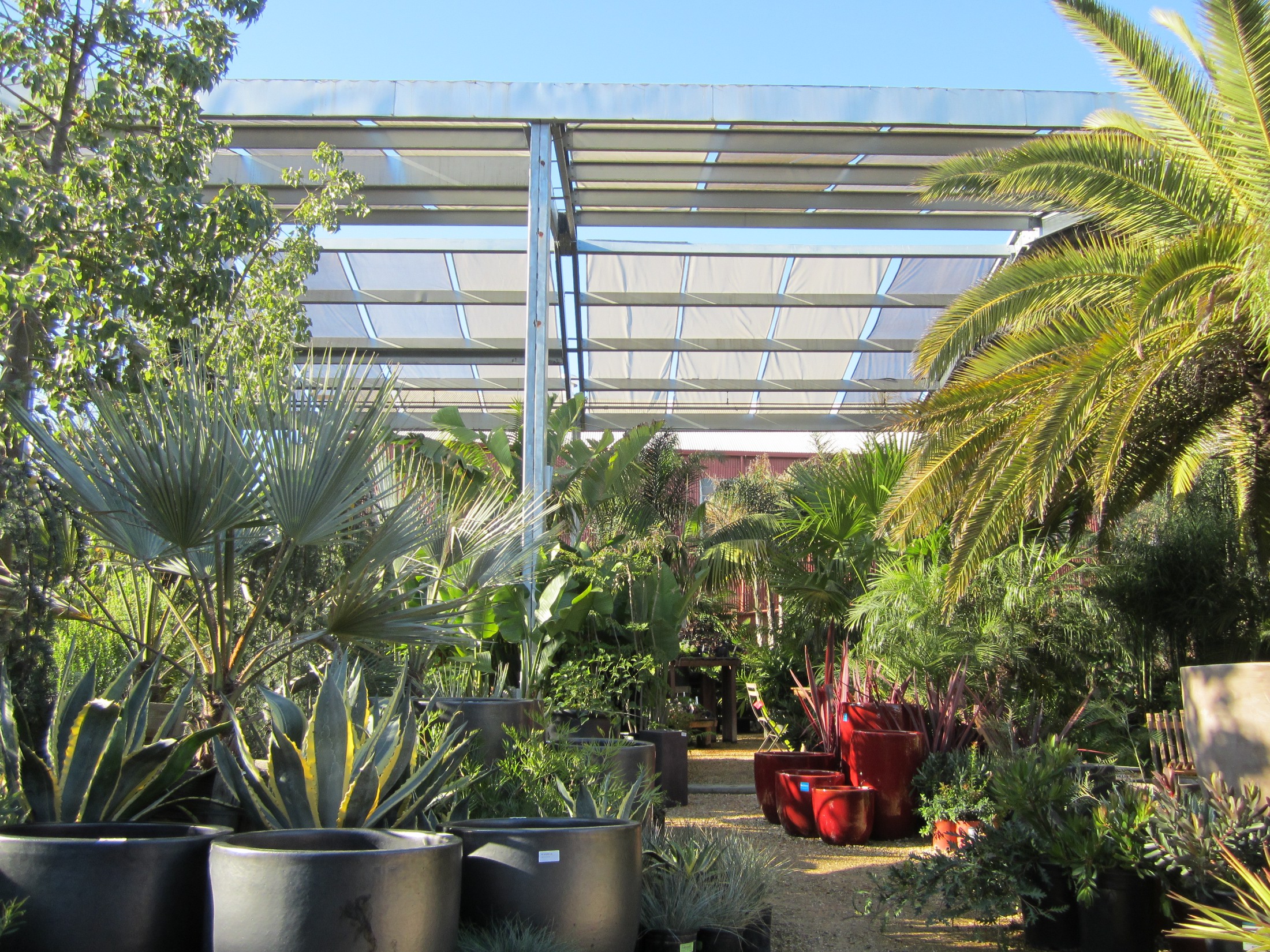
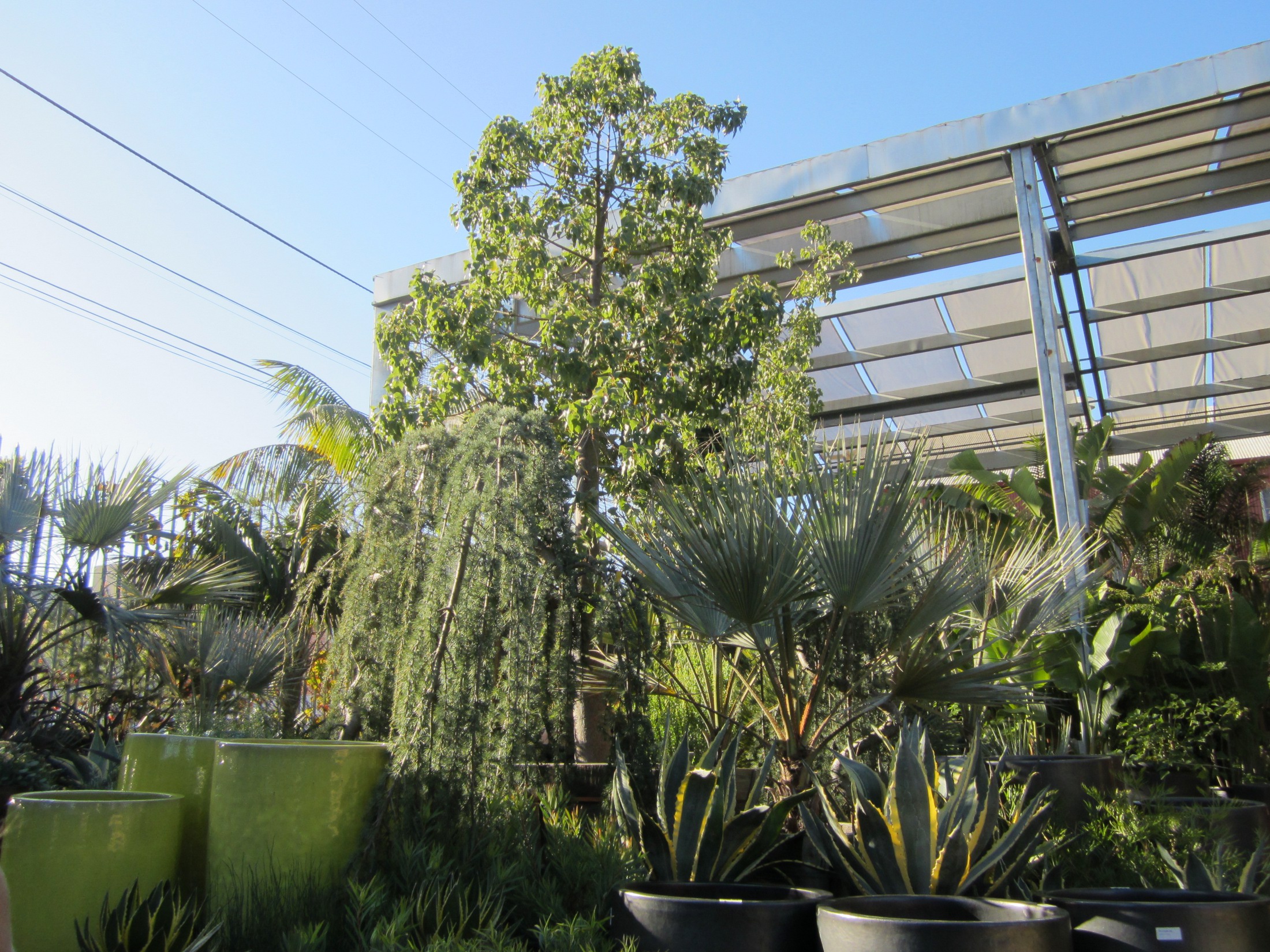
Located in the Bayview area of San Francisco, there lies a hidden garden of wondrous delights known as Flora Grubb Gardens.  Established by landscape designer Flora Grubb (yes, that is her real name) and French chef Saul Nadler in 2003, this charming array of plants and plant accoutrement is a feast for the senses.   There is also a fountain within the garden, in the form of Ritual Coffee Roasters,  a coffee distributor that has one of its stores inside. Established in 2005 and launching a coffee revolution, Ritual’s main goal is “to craft the very best cup of coffee available anywhere.  Period.”   One may get tea or coffee, and wander about the luscious grounds, admiring the elegant plants and handiwork of clever artisans.  I ordered a mocha from the friendly and attentive barista.  It was that flawless cup of perfection true coffee connoisseurs seek.  I sipped my beverage and began my journey among the greenery.

Vertical Garden on Metal Wall

One of my current obsessions is vertical gardens.  They provide a beautiful, living wall of art, and introduce the wood element to an environment in a chic and unexpected way.  Pictured above is a grouping of six vertical panels of rich succulents.   Each panel measures 20″ by 20″ and is available for purchase at Flora Grubb, or at their online store (plants not included).  I’d love to try my hand at creating a vertical herb garden perhaps using one of these boxes.  More information about the D.I.Y. vertical garden panel is available here:  http://shop.floragrubb.com/vertical-succulent-garden-d-i-y-panel/  Flora Grubb also offers a great tutorial on making you own vertical garden:  http://floragrubb.com/florasblog/?p=894

Grubb Furniture 03

Since Christmas, I’ve been debating what to do with my leftover string  lights.  I’m thinking of draping them along some kind of metalwork, like the beautiful filigree pieces above,  Using reclaimed scraps from a variety of sources, they make great conversation pieces, and work well indoors or out.  Although more intended for vines and foliage, I think string lights would adorn them quite nicely.  Classy and colorful Fermob garden furniture can be seen throughout.  The neon green-yellow chair on the right is part of their Luxembourg Collection, while the other pieces are all part of their Bistro Collection, which is based on the original French design patented in 1889.   I’ve been thinking about acquiring some of those folding chairs, too.  I really like the blue one in the bottom left.   More information about their Bistro furniture can be found here:  http://floragrubb.com/florasblog/?p=2450

Buick Planter

Broken items or things in disrepair often attract sha, negative energy, into an environment.  Is it always important to either fix the damaged item, or re-purpose it in a new and fashionable way.  This classic car, a functional beauty in its heyday, has been reincarnated as a planter.  It’s almost apocalyptic in how the plants, a wood element, have taken over this very metal automobile.  It works brilliantly in this space because you have the other three elements working together in harmony alongside the wood and metal (the sunlight and red wall representing fire, the earth below, and the water sustaining the plants).  I like how they use every available area in the car to house a plant.  There are even trees growing through it!  A miraculous and thought-provoking piece of living art.
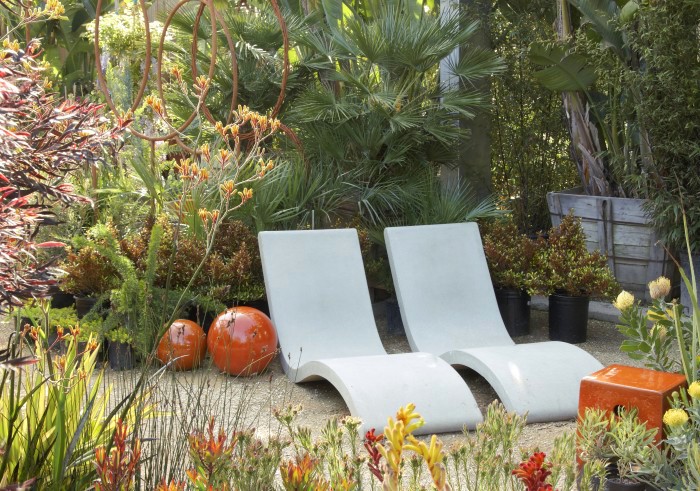
Comfy Concrete Chaises.  Photo courtesy of Flora Grubb Gardens.

Comfy Concrete Chaises.  Photo courtesy of Flora Grubb Gardens.

These concrete chaises were deceptively comfortable.  I sat here for a while with my mocha and didn’t want to get up.   Many people have mixed opinions about this pair of cement seating, but I like it.  However, I imagine they would be difficult to move around the property.

Justina, Plant and Coffee

Pictured above is my friend Justina with her coffee and a new addition to her plant family.  It’s a crassula of some kind, but I cannot tell you which one.  It’s cute, though.
Grubb Nursery O2

Gardening is one of those activities that is life-affirming and nourishing at the same time.  From a feng shui perspective, it is one of the few actions that incorporates the physical touch of all five of the elements:

  • Wood – The plants themselves
  • Fire – The sunlight for the plants to grow
  • Earth – The soil in which it grows
  • Metal – Gardening tools and implements
  • Water – Also needed for plants to grow

Yin and yang theory also plays a part here.  Many people use gardening as a stress reducer from their hectic, technological yang-filled lives.  Gardening can be a relaxing yin activity, which helps to replenish and balance out stress levels, bringing one back to nature and away from a highly mechanical world.  In addition to being a creative outlet, gardening is also good exercise for people of every age, from young children to retirees.  Not to mention one can grow their own fruits, vegetables and herbs.  Most home-grown veggies taste far better than the store bought varieties.   There is also aromatherapy of sorts working outdoors provides – the various scents of the soil, plants, flowers and air can literally invigorate the soul through olfactory means.  (The smell of fresh-cut grass is a proven aphrodisiac.)

Grubb Plants

The scenery and items at Flora Grubb Gardens are constantly changing and evolving, with new wares coming in almost every day.   I plan on returning here on my next business trip to San Francisco, to see what is currently being offered.  And to have more Ritual Coffee.  (Used coffee grounds also act as a bug repellent, for insects that meander through the soil, such as ants and slugs.  It’s not toxic to them, but will definitely keep them away.)  Come of think of it, I may not be able to wait that long for Ritual’s fine roasts – thankfully, one can order all of their coffee right here:    http://www.ritualroasters.com/store/  I believe is was Thomas Jefferson who said, “Coffee – the favorite drink of the civilized world.”

Flora Grubb Gardens

1634 Jerrold Avenue, San Francisco, CA 94124

415 626-7259

Hours:  Monday – Saturday  9:00 am – 5:00 pm,  Sunday 10:00 am – 5:00 pm

http://www.floragrubb.com/idx/index.php

Ritual Coffee Roasters (located inside Flora Grubb)

415 694-6448

Hours:  Monday – Thursday 9:00 am – 4:00 pm, Friday – Saturday  9:00 am – 4:30 pm,  Sunday 10:00 am – 4:30 pm
http://www.ritualroasters.com/

Food and Coffins

There are a variety of different schools of thought when it comes to feng shui.  I practice Compass School Feng Shui, which is directly connected to the compass directions of the earth.  Under the Compass School, there are two kinds of feng shui.  I am certified in Yang House Feng Shui, which is feng shui for the living.  But there is also what is known as Yin House Feng Shui; feng shui for the deceased.   Consultants certified in Yin House work primarily with funeral homes and cemeteries in planning the ideal environment for rest of the dead, as well as creating a serene place for the living to deal with the departure and separation of loved ones. This also includes finding the right coffin for the individual, as this is the main environment for the deceased’s body.

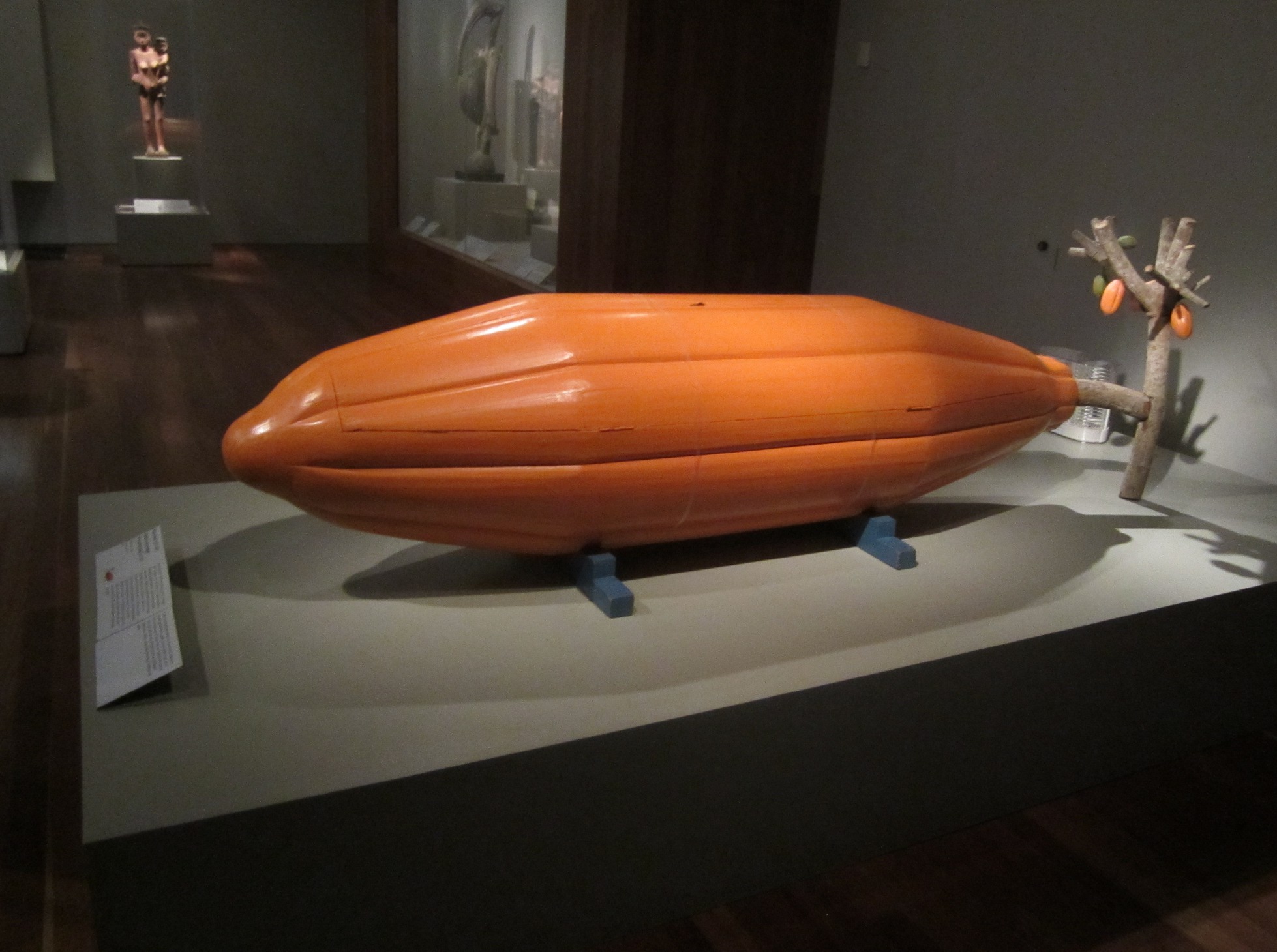
There are many cultures and individuals who have very distinct plans for the type of coffin they would like.  On my recent trip to San Francisco, I visited the De Young Museum and was astounded by what I saw around a corner:  A coffin in the shape of a cocoa pod.   Beginning in the 1950’s in the Accra section of Ghana, an artist and craftsman by the name of Seth Kane Kwei began making custom coffins, each specified to the wishes of its future occupant.  The cocoa pod below was commissioned from Kwei in 1970, when Ghana was one of the world’s leading cocoa distributors.   The one pictured below is on permanent display at the De Young.

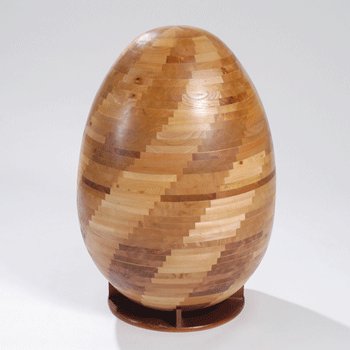
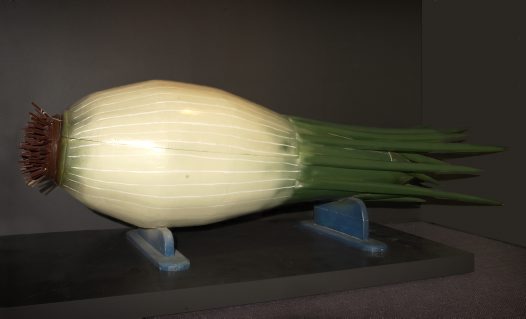
Each one is made using various soft woods native to Ghana, and then formed into a cylinder-canoe shape.  Artisans then craft the vessel using European furniture construction techniques to the client’s specifications, taking sometimes three months to complete.  Each coffin is upholstered inside, usually with satin or velvet.  And many of these coffins are food or food-related items, the most popular being onions, cocoa pods, fish, chickens and boats.   The Southbank Centre in London has many of these unique coffins on display, although some are of British origin.   On display is a replica of a yet-to-be-used coffin, commissioned by a woman who wants to spend eternity inside an egg.   I love the symbolism of rebirth and purity that both the egg and the cocoa pod represent.   Unlike most of its counterparts, this one is made of elm.

Below is another version of the cocoa pod coffin, but in shades of yellow and green.  I love the symbolism that each of these caskets offers.  For example, the onion (pictured at top) was revered by the ancient Egyptians.  They believed that the various layers of the onion symbolized eternal life, sometimes burying Pharaohs and other royals with the revered vegetable.

Photos Courtesy of the Southbank Centre, London

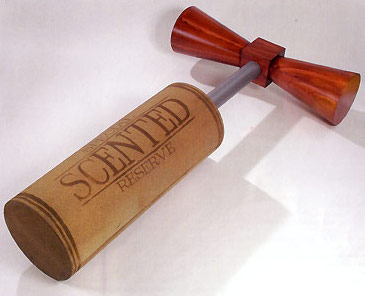
For the wine connoisseur, this a large cork coffin, complete with a wine opener sticking out.  This was commissioned by the County of  Cork in Ireland.

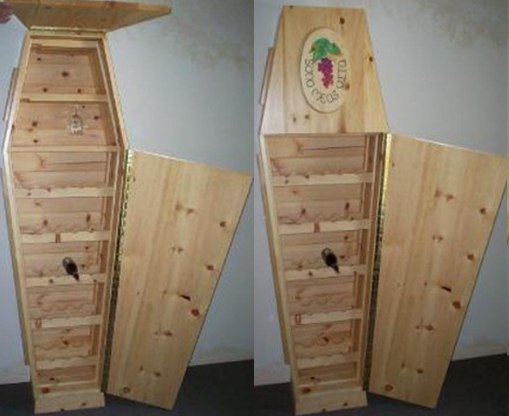
This next  model looks pretty traditional from the outside, but it was the inside that moved me.  While I do not condone having coffins in one’s home under normal feng shui guidelines, I couldn’t help but be enamored with the Vinters Vessel.  Made by The Old Pine Box Company of Edgewood, New Mexico, they offer a beautiful all pine coffin with a wine rack inside.  The lower two-thirds of the box houses nineteen bottles of wine, and top third used as storage space for glasses.  When needed as a funerary box, the inside framework can be removed to create a free standing wine rack, so that one’s wine collection may be displayed.  Each casket comes with a hand-painted emblem with grapes and the Latin phrase  Sono Meus Vita, meaning Celebrate My Life.  This coffin retails for about $1400.00.   For more information, please check out their website http://www.theoldpinebox.com/vintner.html   If  one wants to place this beautiful box inside their home, I suggest either a wine cellar or library, but make sure that it’s always filled with wine, and kept free of dust.

The Vinter’s Vessel.  Photo Courtesy of The Old Pine Box Company

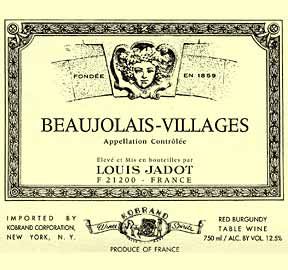
As for myself, I’m not sure what kind of coffin – if any – I’ll be acquiring yet.  But if I had to select a food-shaped one, I would probably go with a man-sized bottle of Louis Jadot Beaujolais,  mostly due to the delicious taste of the wine and the prettiness of the label.

Wine: An Old School Perspective

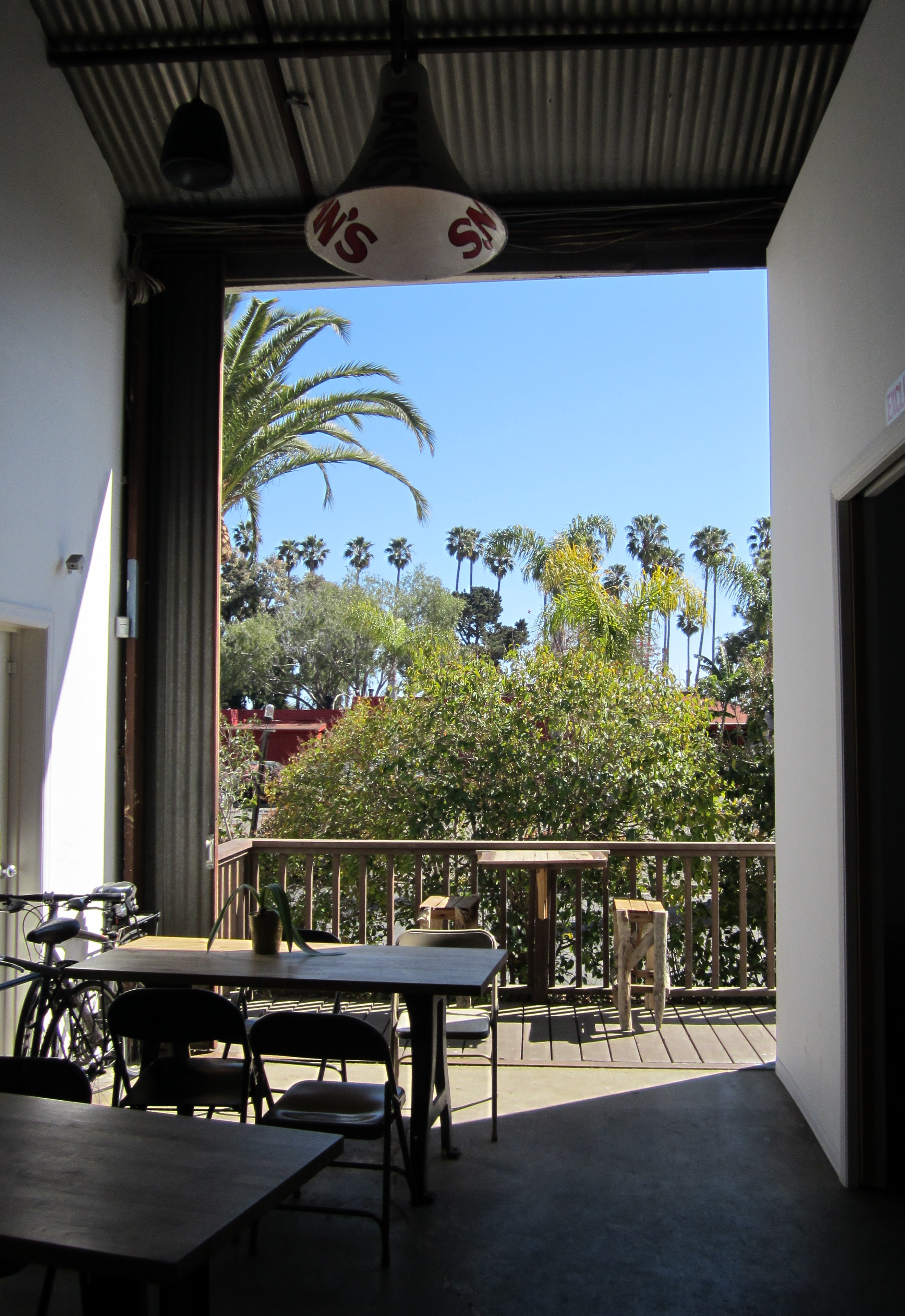
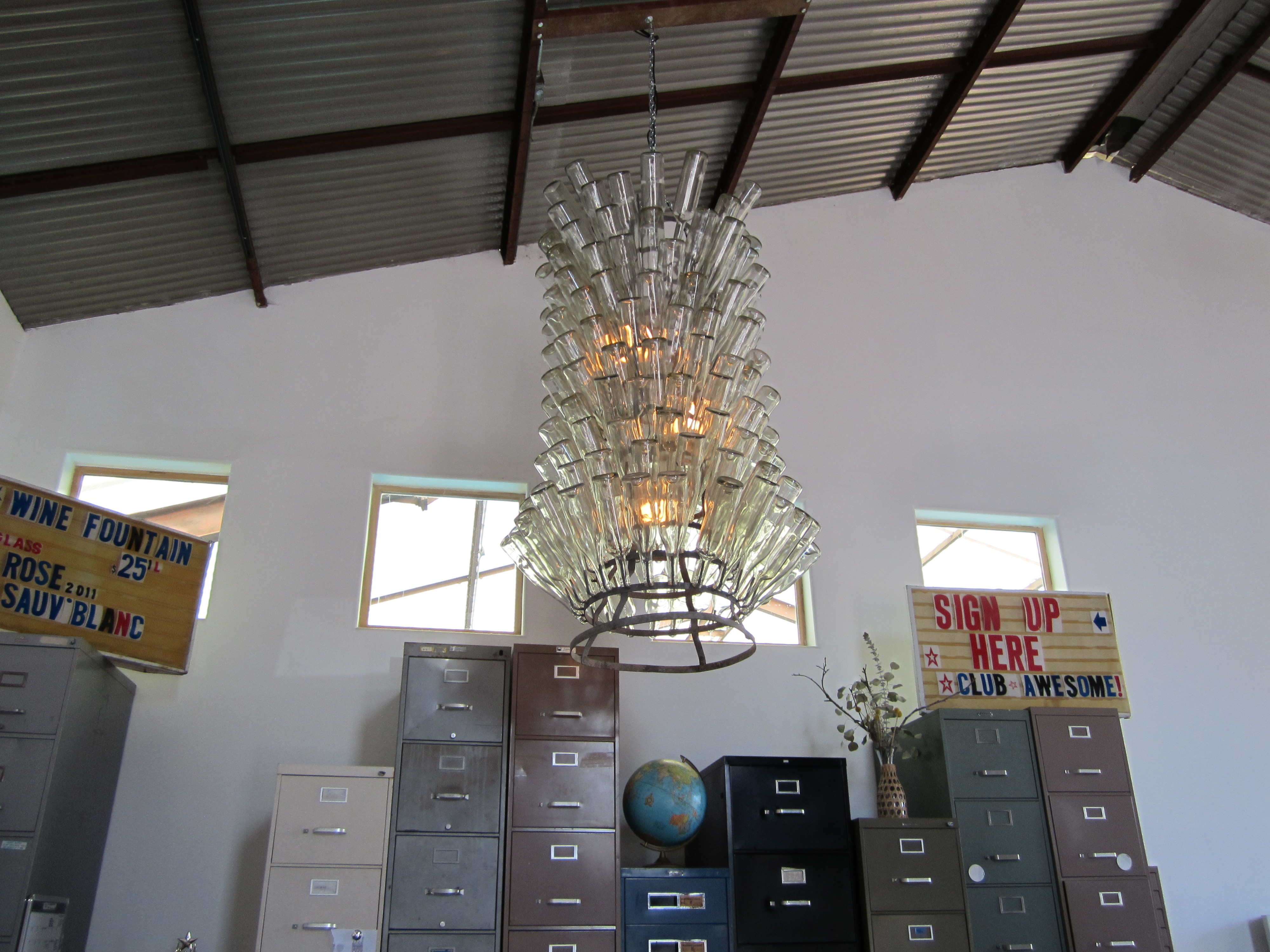
On a recent trip to Santa Barbara, I was introduced to an unusually captivating wine merchant known as Municipal Winemakers.   While I was waiting for my friends to arrive, I grabbed a glass of their robust MCS, and perused my surroundings.  The tasting hall here promotes comfort in an artistic and environmentally-conscious fashion.  A large warehouse door (pictured above) opens up to the outside world letting in light and fresh ocean air. Surplus wine bottles and tasting glasses are stored in upcycled file cabinets. The seating is a mixture of reclaimed wood benches, padded folding chairs and classic science lab stools.  Bookshelves constructed of wooden crates are laden with 1980’s textbooks and vintage high school trophies.  One of the many items that captured my attention was the illustrious chandelier (pictured below).  This is actually constructed using a wine bottle washer, which is the large metal frame holding all the bottles in place.   Lovely and enigmatic, this piece is a wonderful example of water, metal and fire elements.  This also helps to counteract the negative influence of the beams present.  I am not a fan of exposed beams in any environment.  From a feng shui standpoint, they create negative influences in health and relationships.  The fastest way to alter the beams here would be to paint them and the ceiling the same color; thus making them symbolically disappear into the ether.  However, the various lighting in the space helps to soften the unfavorable effects of the beams.

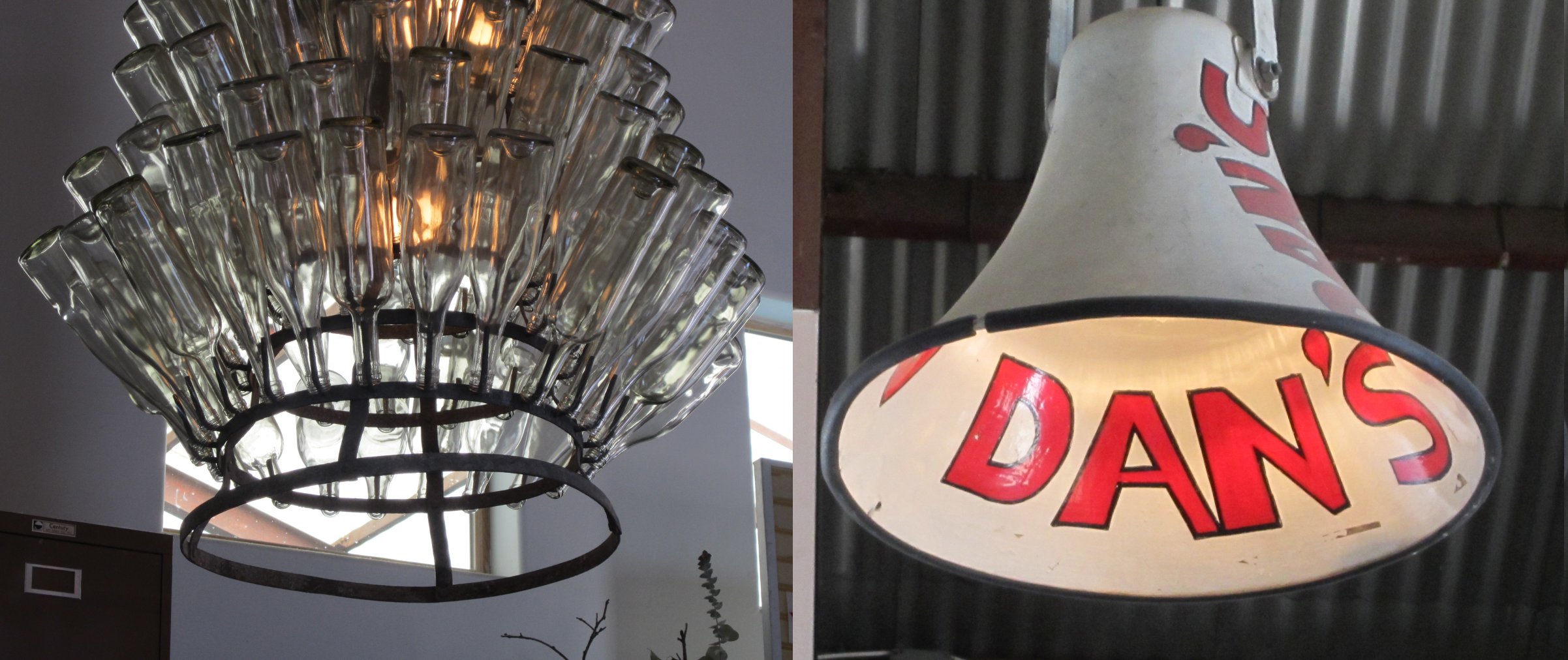
On the right we have a more detailed image of the wine bottle chandelier.  On the left are the metal lanterns inscribed with Dan’s in primary red, which hang about most of the ceiling.  My guess is they reclaimed them from somewhere, but I’ve no idea where.

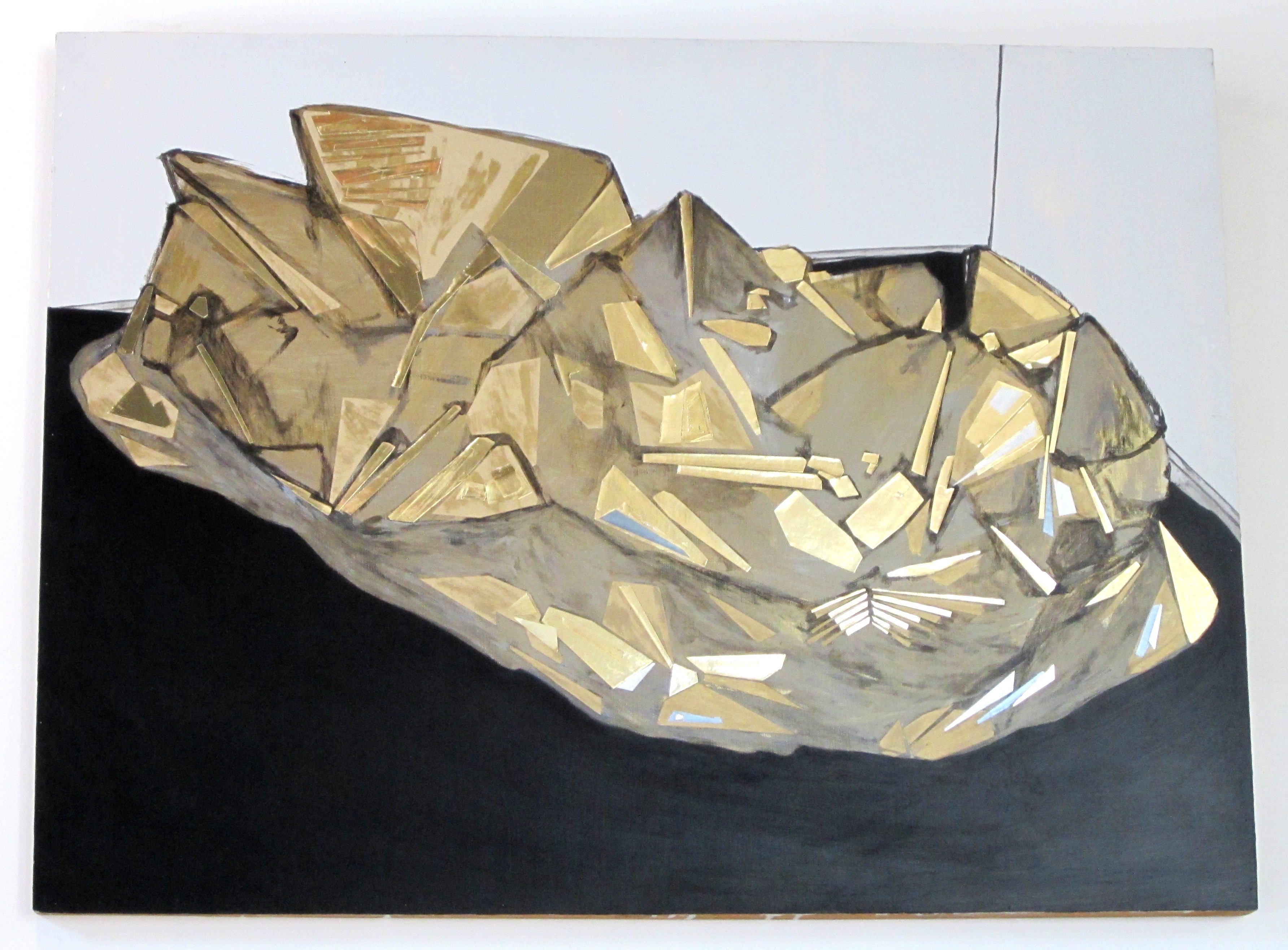
The momentous piece of art above is actually raised a bit, encompassing paint and other materials.  The gold pieces in the ore are shards of brass veneer from vintage high school sports trophies.  From a feng shui perspective, the environment at Municipal captures most of the five elements beautifully:

  • Wood –The art hanging about the walls, and the plants located directly outside.
  • Fire – The nostalgic wood-burning stove situated in one corner of the room.
  • Metal – The art, tables,chairs, chandelier, roof, and file cabinets.
  • Earth –  The rich colors of browns, grays, and earthy reds.
  • Water – The glass bottles, the horse painting in the bathroom, and the blue and slate gray hues.

Now while the metal, water, and fire elements are displayed here quite well, the room is lacking a little wood and earth energy for my liking.  Even though they have a lot of wonderful wood furniture – which is best material for furniture in my opinion – it cannot be considered a wood element because the wood is dead.  However, the sheer amount of art from various craftsmen, displayed around the environment, helps to foster the creative wood energy.  As for earth, the main examples here are in the form of different colors.  But I do love the classic globe perched atop one of the file cabinets.  So here symbolically, the earth is also present.

And now on to the wine.   I sampled six delicious wines, and fell for each one of them:

  • 2011 Bright White – an arid riesling with hints of tart citrus.  Perfect for a summer day.
  • 2011 Sweetness Reisling – Sweet and clandestine, this white wine has an alluring bouquet with hints of honey and orange.  Intoxicating.
  • 2011 Rose – A refreshing, subtly sugared beverage.   Cool and crisp.
  • 2010 Bright Red – An amazing classic red blend with strong hints of dried herbs and cranberry.  It reminded me of good holidays past.
  • 2010 Grenache – Chocolate nuances abound in this rich and robust elixir.  A must for any red wine aficionado.
  • 2010 MCS – My favorite of the group.  A complex blend of Mouvedre, Carignane, and Syrah grapes.  This is a bold and brazen red that will make your head turn.  A bottle of this came home with me, and I’m saving it for a special occasion.

In addition to their retro-esque decor, another aspect I love about Municipal are the hours.   The tasting room is open from 11:00 to 6:00 daily – where as most tasting rooms close at 5:00.  And on Thursday, Friday and Saturday, they stop tastings promptly at 6:00, but remain open until 11:00, transforming into a wine bar!   Wine, by either the glass or bottle, is available to drink on the premises.  Pre-made cheese plates from C’est Cheese are available if one is feeling peckish, and classic board games lie about for one’s leisure  (A very studious couple was playing chess in the corner)  Unlike my other wine adventures, I visited Municipal twice in one weekend.  I experienced the wine bar environment on Friday night, and then returned Sunday afternoon for tastings.  They also offer free local delivery to patrons who arrive on a bicycle.  The metropolitan class of Municipal Winemakers will leave you with a feeling of warmth and abundance.  I’m very much looking forward to my next visit.

Municipal Winemakers Tasting Room

22 Anacapa Street, Santa Barbara CA 93101

805 931-6864

Hours:  Open Daily from 11:00 – 6:00,  Wine Bar:  Thursday – Saturday 6:00 – 11:00

http://www.municipalwinemakers.com/

Finding a Place to Sit

It was the legendary architect Frank Lloyd Wright who put it most eloquently:  “Dining is and always was a great artistic opportunity.”  One piece of furniture that often gets overlooked in a home is the dining chair.  Most people will go out, buy a table, and the chairs come with it.  No muss, no fuss.  However, in many of these prefabricated sets for sale, usually the chairs aren’t the most optimal option by feng shui guidelines.  In fact, at times they can be downright uncomfortable or ugly.  To add some more artistic opportunity to one’s dining room, here are my suggested specifications for getting the right kind of dining chair:

  1. You need to like the chair!  If one doesn’t like the shape, size, color, etc. of the dining chair in question, it will never be used.  Or on the rare occasions when the chair is used, negative feelings will arise.  It should be something stylish that reflects one’s own personal taste.
  2. The chair should be comfortable.  No one likes to sit in discomfort.  The chair should have  a comfy seat.  Upholstered seating rarely has this problem, but some wood, plastic and metal seating can cause inadequate relaxation.  A quick way to fix this issue is to add a seat cushion.
  3. The chair needs a solid back.  In feng shui folklore, it was believed that one’s enemies could stab you much easier if there were openings in the back of the chair. While I may not necessary follow that line of thinking, I do believe in back support.  The more solid the back of any seating, the better the reinforcement.  Also, having a solid chair back can make the occupant of the chair feel much more secure and at ease than sitting on a stool or ladder-back chair.
  4. Choose comforting materials.  Generally, a chair should ideally be constructed of wood, or upholstered in some way.  While there are some exceptions to this rule, I find these are the best choices.  Keep the weight of the chair not too heavy.  Avoid getting white or cream-colored chairs, as these tend to get dirty much faster than their darker counterparts  – especially if there are children, pets, or unruly people in the home.

Now, where does one find a nice chair?  A good quality dining chair can be somewhat expensive.  I would first suggesting acquiring chairs from estates sales, Craigslist, or consignment stores.   One can find much better quality of a chair for far less money.   As always, use your best judgement.  (All of my dining chairs I’ve either purchased at gently used thrift stores, or have been given to me by friends)  As for buying new, I’ve comprised a collection of some the best dining chairs currently available, all of which are under $80.00 each (excluding shipping and taxes) that are ideal feng shui selections:

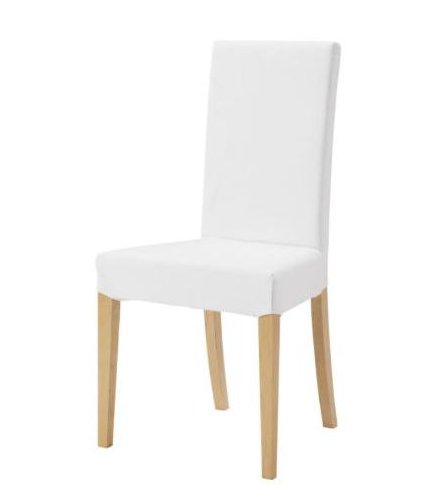
The Harry from Ikea is a standard classic, at the affordable price of $49.99 each.  The cover can be removed easily for washing, or one can cover it in the fabric of their choice.  This chair is comfy and lightweight.

From Overstock.com we have the Classic Parson Red and Gold Damask Chair.  Each individual chair sells for $76.09, and is upholstered in a rich red and gold paisley design.  This chair would bring a wonderful fire and earth element to any dining area.  One reason I love Overstock.com is their shipping prices.  No matter how large or small the order, the total shipping is only $2.95.

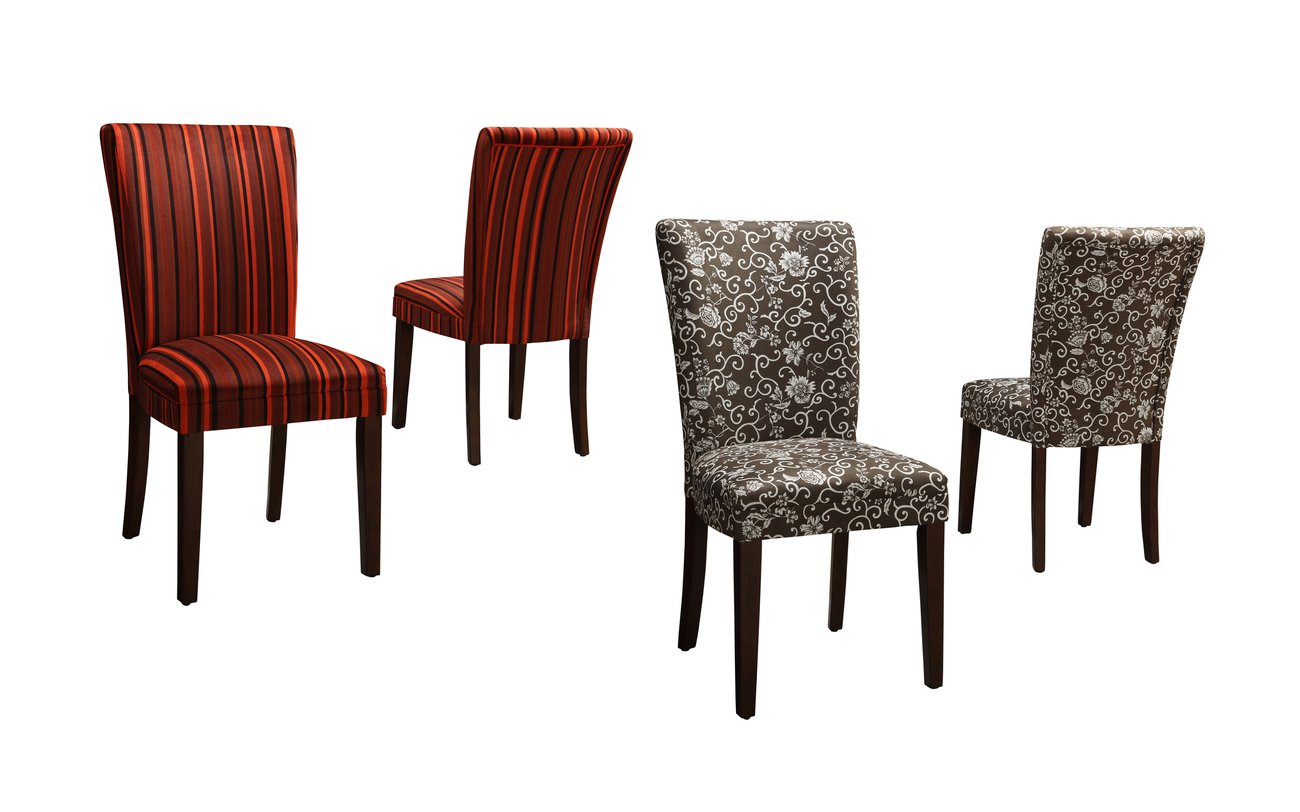
The Decor Dining Chairs also from Overstock.com come in three different upholstery options.  However, I did not care for the third one, so I only posted the two I liked.  The first is a contemporary red striped pattern, adding passion and fire to any room  on the left.  On the right, we have flowers covering a chocolate background.  This would bring a beautiful earth and wood element to a space.  Either of these options are sold in pairs for $135.00, plus the $2.95 shipping fee.

For a more masculine feel, this set of two Black Walnut Dining Chairs, offered by Coaster Home Furnishings runs at $127.00.  The warm walnut hues add a dramatic richness to any environment.  These are available at Amazon.com, and I believe are eligible for free shipping.

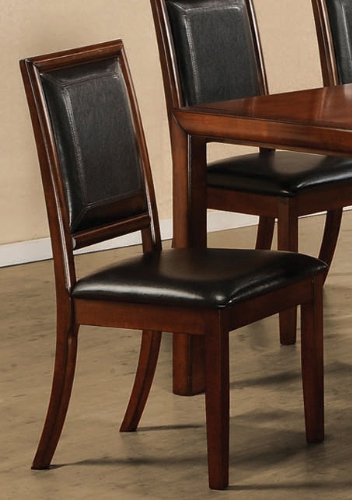
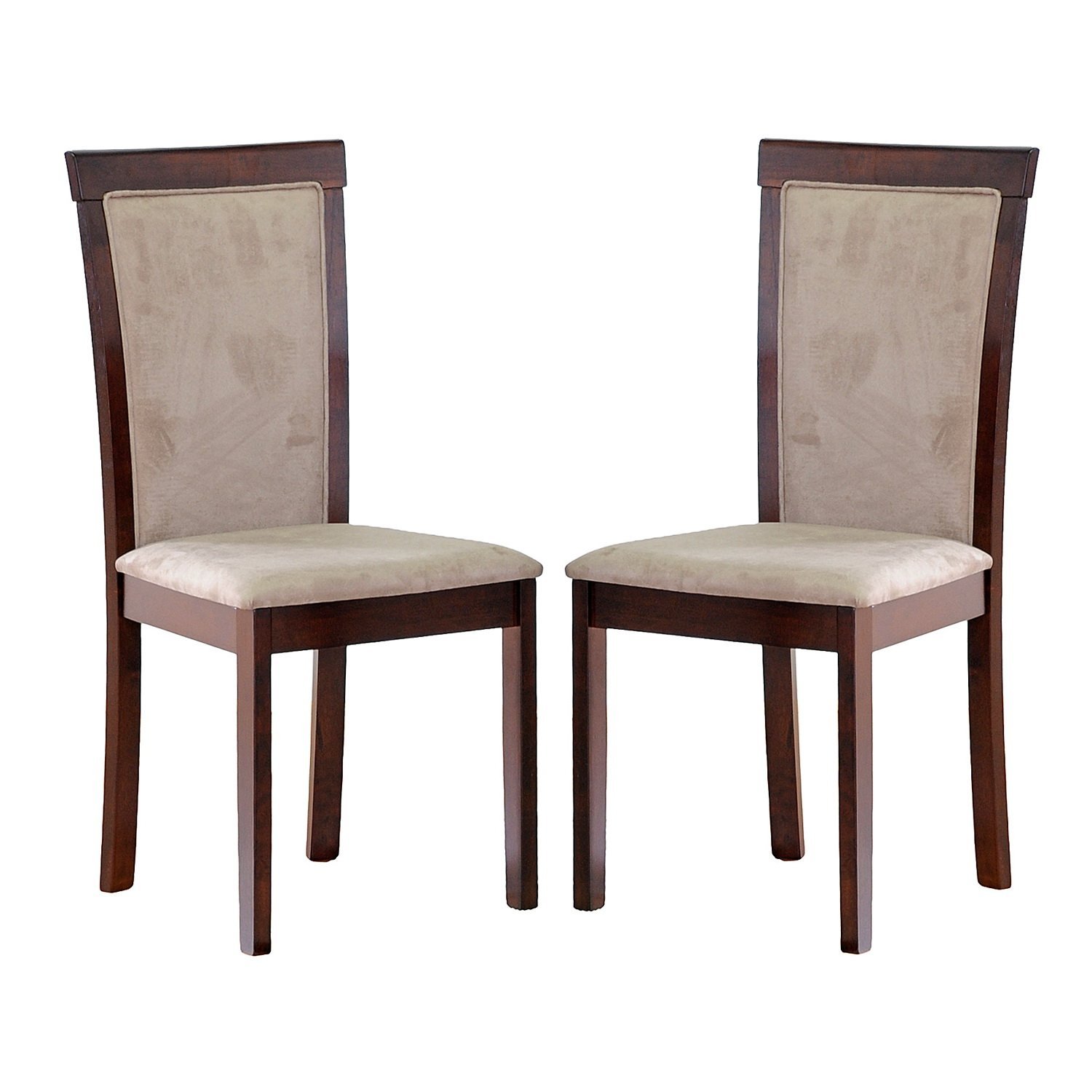
This set of two Cappuccino Finish Dining Chairs, also by Coaster Home Furnishings are priced at $66.67.  Although these chairs do not have a completely solid back, they are mostly solid, which provides more security and stability to the chair’s occupant than say a chair with many more open areas.  This specific style and type of chair is available all over the internet from various distributors.  I found the Amazon.com price to be the best, but it does not include free shipping.

From Baxton Studio we have the Spain Dark Brown Modern Dining Chairs.  A pair of these elegantly refined chairs is $148.00 from Amazon, with free shipping.  I like the taupe microfiber as the upholstery, which adds a tactile, nurturing earth element to the dining experience.

Target.com is currently having a furniture sale.  Of the many offering of dining chairs there, I really like the Oval Back Chair.   The oval shape and the gray/dark blue of the fabric brings water and metal to the party in high elemental fashion.  A pair of these beauties sells for $139.99.

But how many chairs do I purchase?  Well, that is entirely up to you.   If one has a circular or oval table, any amount of chairs will work.  If one has a square or rectangular table, the number of dining chairs should be an even number.  As for chairs having arms or not, that is also entirely up to one’s own taste.   In most formal dining rooms, the seating at the ends of the table will have arms, while the ones flanking the sides will not.  For more information about selecting a prosperous dining table, take a look at my article here:  https://fengshuifoodie.com/2012/04/22/how-to-choose-a-dining-table/   If you don’t currently have the right kind of seating, don’t worry – chair covers and seat cushions can go a long way in improving the energy quality of a space, and make the seating much more desirable.  Having the correct dining chairs and table in your environment will bring further prosperity to one’s dining experience.

Victorian Los Olivos

The 1880s were a time of tremendous growth in California, with people immigrating here from the East, as well as various parts of Europe.  One Easterner who believed his future was in California was Alden March Boyd.  Due to health issues, he was forced to drop out of college.  He visited Europe, as well as various locales in The Sunshine State before purchasing a small ranch in the Santa Ynez Valley.  Wishing to improve the quality and landscape of his home, he planted an estimated five thousand olive trees, calling his estate Rancho de Los Olivos.  The name had a nice sound to it, and when the Pacific Coast Railway completed their line extension through the area in 1887, they decided to call the town Los Olivos.  Although more commonly known nowadays for its wineries rather than olives, the picturesque town is thriving with tourists and elegant architecture.  Most Victorian dwellings have high ceilings – usually around 9′ to 10 tall’.  The added ceiling height helps to regulate indoor temperatures.  It also, from a feng shui standpoint, helps to better circulate the flow of chi (energy) within the indoor environment.   Many of the new condo and apartment buildings being constructed today have returned to using historic design elements – including 9′ ceilings.   Those Victorians knew what they were doing.   Most modern ceiling heights are 8″, which is not bad.  But 9″ is more optimal for chi flow.

On my recent trip to Los Olivos, I visited the Qupe/Verdad/ Ethan Tasting Room.  Housed in a beautiful Victorian style building (above), the wines here were rich and luscious. This is a family business, with the patriarch of the family, Bob Linquist, as creator of Qupe Vineyards (pronounced cue-pay), while his wife Lousia makes the Verdad label, and his son Ethan makes – you guessed it – the Ethan label.   As impressed with the wine as I was, I was really taken with the layout of the tasting room.  They use a variety of vintage design styles here, especially focusing on that of Gustave Stickley.   A furniture designer, Stickley visited Europe in 1898, where he was introduced to the Arts and Crafts movement of the era.  The Arts and Crafts movement was somewhat of a rebellion against mass production, focusing more on products that were hand constructed by small groups or individuals rather than in factories.  The design style features simplistic lines and influences from natural surroundings.  Here at Qupe, it can be seen in many ways, from the classic mission style furniture, to the elegant Qupe motif of a poppy.   As you can see, wood and fire are the dominate elements used in the tasting room decor.  Nostalgic reproduction lamps act as a perfect example of fire energy, with the light green walls representing wood.  The wood furniture and bar are beautiful to behold.  I also really liked the carved front door, and the side table that uses a wine barrel end as its top surface.

As I meandered through the space, enjoying the tastings of the select wines I sampled, I noticed a bookshelf of wine.  I immediately felt comfortable and at home.  Of the wines I had, my two favorites were the Verdad 2009 Tempranillo, and the Verdad 2007 Tempranillo.  Both held a mellow and spicy appeal that warmed my soul.   A bottle of the latter came home with me.  The Qupe 2010 Viognier was also intriguing.

A private  chamber in the back provides more intimate tastings on the weekends.  Keeping true to the Arts and Crafts theme, I noticed a cunning wine rack made from barrel slates and reclaimed wood.  Not only it is green in its design, I’m guessing it’s also handcrafted locally, and fits in perfectly with the Stickley style.  I would have this in my home.

In feng shui folklore, the poppy is a symbol of romance and loyalty between lovers.   Displaying two together, especially in hues of red or orange, can help to draw romance to an area.  Poppies also symbolize sleep and rest.  Upon the suggestion of wine connoisseur Ann Johnson, Bob Linquist settled on the poppy motif in the window above to symbolize Qupe Wines.  Found in a vintage design book of the Stickley School of Design, the motif was meant to be embroidered on bed linens to help one sleep.   And Qupe is the Chumash word for poppy.    The elegant poppy motif is also on their over-sized wine glasses, which are available for purchase, or as a gift with a new wine club membership.

If you happen to be in the Los Olivos area, I highly suggest visiting the white Victorian house of Qupe/Verdad/Ethan Wines.  Unlike poppies, their wine will not put you to sleep – but could help to transport you to a more nostalgic time.

Qupe /Verdad / Ethan Tasting Room

2963 Grand Ave, Los Olivos, CA 93441

805 686-4200

Hours:  Tasting room open daily 11:00 to 5:00

http://qupe.com/